Trump Attributes Public Nodding Off to Extreme Boredom in Meetings
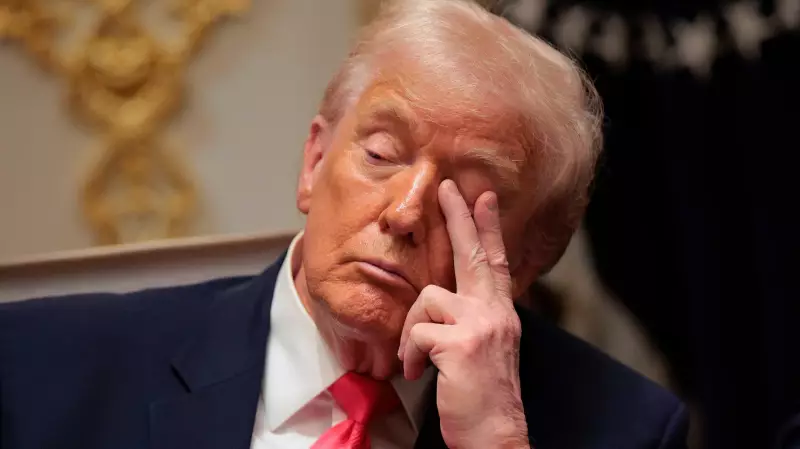
Recent public appearances by former President Donald Trump, where he has been observed apparently nodding off or closing his eyes, have sparked significant concern among various medical professionals and political observers. These incidents, occurring during high-profile events and lengthy governmental gatherings, have prompted questions about his health and attentiveness.
'Boring as Hell' Meetings Prompt Presidential Shut-Eye
In a candid and revealing profile published by New York Magazine this Monday, Trump offered his own straightforward explanation for these moments of apparent drowsiness captured on camera. The former president directly addressed the speculation surrounding his closed eyes during extended Cabinet meetings, which can last for several hours.
'It's boring as hell,' Trump told the magazine during the extensive health-focused interview. He elaborated on the tedious nature of these governmental gatherings, describing a typical scenario: 'I'm going around a room, and I've got 28 guys — the last one was three and a half hours.'

Trump further explained that these meetings often involve what he characterized as 'copious sucking up' by his officials, creating an environment he finds particularly monotonous. Despite this, he maintains his engagement through subtle physical cues.
A Presidential Listening Strategy or Cause for Concern?
'I have to sit back and listen, and I move my hand so that people will know I'm listening,' Trump added, suggesting his closed eyes might be part of an active listening posture rather than actual sleep. 'I'm hearing every word, and I can't wait to get out.'
This personal explanation contrasts with the growing unease expressed by healthcare experts who have observed Trump's public behavior in recent weeks. Medical professionals have raised legitimate questions about what these episodes might indicate regarding his overall health and cognitive state during important public functions.
Interestingly, not all interpretations have been negative. Secretary of State Marco Rubio offered a more charitable perspective in the same New York Magazine profile, proposing that Trump's public shut-eye might actually represent 'a listening mechanism.' This suggests the former president could be employing an unconventional but deliberate strategy to process information during lengthy discussions.
The Broader Implications of Presidential Health Transparency
The discussion surrounding Trump's apparent drowsiness touches on several important themes:
- The physical and mental demands placed on public figures during extended official duties
- The balance between personal health privacy and public transparency for political leaders
- How different observers interpret the same behavior through varying professional and political lenses
- The significance of non-verbal communication in high-stakes political environments
While Trump's explanation focuses on the mundane nature of governmental meetings, medical experts continue to emphasize that consistent public drowsiness in someone of his age and position warrants appropriate medical attention and evaluation. The contrast between Trump's casual dismissal and professional concern highlights the ongoing debate about how we assess and discuss the health of public figures.
As this conversation develops, it raises fundamental questions about leadership stamina, the authenticity of political explanations, and the medical community's role in observing public figures' wellbeing. The full New York Magazine profile provides additional context and details about Trump's current health perspective and how he manages the rigorous demands of his public life.