Trump's AI-Generated Christ Image Creates Political and Religious Stir
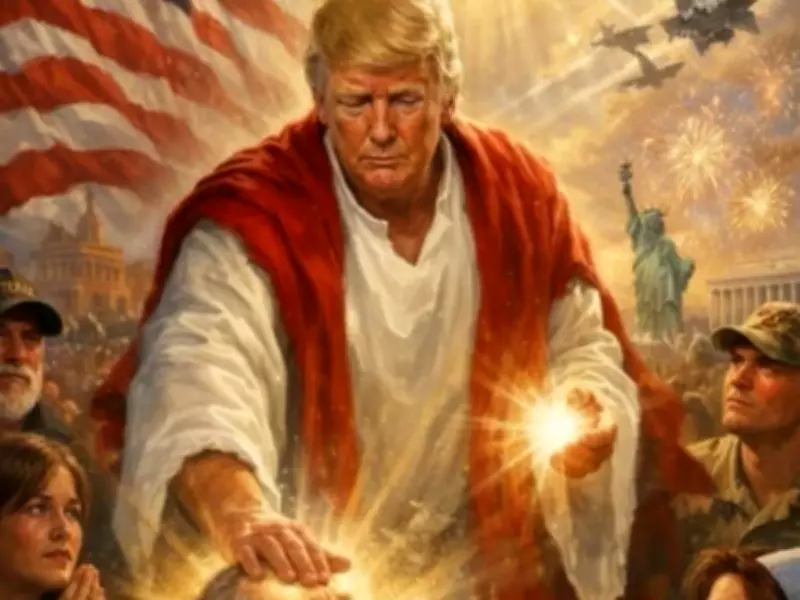
One of the enduring lessons from Donald Trump's political career has been the effectiveness of shameless self-promotion. When the former president confidently asserts his own greatness, this often translates into perceived charisma among his supporters. This dynamic was highlighted recently when Trump shared an AI-generated image depicting himself as Christ on his social media platform.
The controversial image showed Trump dressed in red and white robes, appearing to heal a man with his hand while an American flag was displayed over his shoulder. The timing of the Sunday post added another layer of significance to the religious imagery.
The Political Strategy of Excessive Self-Praise
Colby Cosh, writing about the incident, noted that Trump's entire public persona revolves around pushing boundaries of self-praise. The immediate reaction of thinking "he's gone too far this time" must be corrected by remembering that exceeding reasonable limits is precisely Trump's technique as a political figure.

The image was eventually removed from the internet early Monday following backlash from evangelical Republicans, who represent a crucial segment of Trump's political base according to most polling data. This reaction suggests even Trump's most loyal religious supporters found the Christ comparison problematic.
Possible Defenses and Historical Precedents
Trump could potentially defend the image by claiming he never personally compared himself to Jesus, suggesting it was merely an AI creation by a well-meaning supporter. He might reference historical examples like basketball legend Michael Jordan being called "Black Jesus" without similar controversy.
However, this incident raises questions about the depth of Trump's religious convictions. Even staunch evangelical supporters might reasonably suspect his proclamations of faith are superficial at best. Some analysts suggest Trump appeals to male voters who maintain a pragmatic, almost Nietzschean view of religion as something for the weak or needy.
Broader Political Context and Implications
The controversy emerges during a challenging political period for Trump. Americans are reportedly concerned about foreign policy challenges including tensions with Iran, and there's growing disapproval of his tariff policies. A conventional politician might respond to such challenges by emphasizing traditional religious messaging rather than engaging in provocative imagery.
Instead, Trump's decision to post the Christ-like image suggests either a strategic miscalculation or a deliberate escalation of his characteristic approach to self-presentation. Some observers interpret this as potential "last-days-in-the-bunker" behavior, while others see it as consistent with his established pattern of boundary-pushing self-promotion.
The incident highlights ongoing questions about how religious imagery functions in American politics and whether the United States has developed elements of civil religion that Trump might be attempting to harness for political purposes. Regardless of interpretation, the AI-generated Christ image has successfully generated the attention and controversy that often characterizes Trump's political communications.