Women Bear Brunt of First Major Cabinet Shakeup in Trump's Second Term
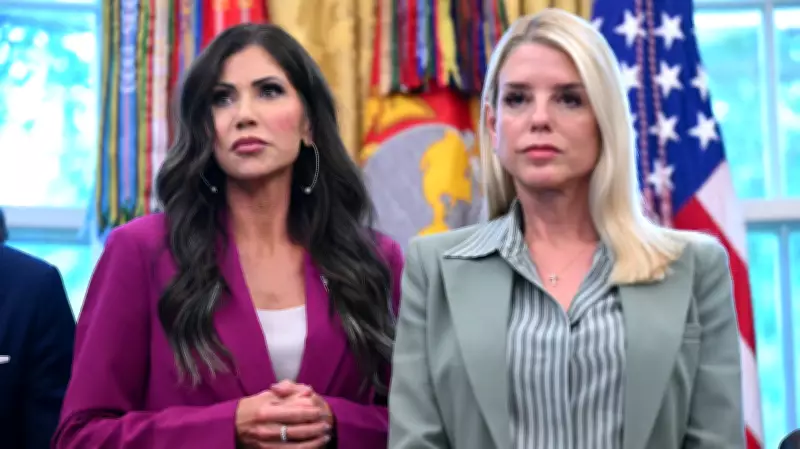
The initial significant personnel changes within President Donald Trump's second administration have exclusively targeted female officials, raising pointed questions about gender dynamics in high-level government positions. Former Attorney General Pam Bondi received notification of her termination last week following reported presidential dissatisfaction with her management of sensitive Epstein case documents. This dismissal occurred merely weeks after Kristi Noem's abrupt removal as secretary of homeland security, announced through a Truth Social post that simultaneously revealed her replacement.
Controversial Tenures End Abruptly
Both Bondi and Noem presided over departments embroiled in significant controversy during their leadership periods. Noem oversaw an aggressive immigration enforcement initiative that deployed federal agents into multiple states, resulting in community disruptions and fatal encounters with Minneapolis residents. Bondi faced sustained criticism regarding her office's handling of Justice Department files concerning convicted sex offender Jeffrey Epstein, with accusations spanning the political spectrum that she prioritized protecting presidential interests over supporting victims.
Additional allegations surfaced that Bondi's Justice Department targeted political opponents of the administration and monitored the digital activities of Democratic lawmakers examining Epstein-related materials. The simultaneous departures of these two high-ranking women mark a notable departure from the relatively stable Cabinet composition characterizing Trump's current term, especially when contrasted with the frequent turnover that defined his first administration.

Gender Dynamics Under Scrutiny
Political observers and commentators have highlighted the gendered dimension of these personnel decisions. Conservative analyst Bill Kristol remarked publicly that while Bondi performed poorly, her performance arguably matched that of FBI Director Kash Patel, who retains his position despite ongoing criticism regarding his qualifications. Similarly, Kristol noted that Noem's problematic tenure paralleled that of Defense Secretary Pete Hegseth, a former television host now managing complex military operations in Iran.
"The pattern suggests that within an administration containing numerous underperforming officials, women face disproportionate vulnerability when leadership failures require accountability," observed Caroline Heldman, professor of political science and gender studies at Occidental College. "Gendered perceptions of legitimate leadership create environments where women in power positions appear inherently more expendable than their male counterparts."
The Glass Cliff Phenomenon
Academic experts identify these firings as illustrating the "glass cliff" dynamic frequently encountered by women in leadership roles. Zeynep Somer-Topcu, government professor at the University of Texas at Austin, explains this concept as describing how women often assume leadership during periods of heightened risk or organizational difficulty, increasing their likelihood of receiving blame when outcomes prove unfavorable.
"Female leaders frequently operate within more precarious environments where support erodes rapidly compared to male colleagues facing similar challenges," Somer-Topcu noted. "Scrutiny intensifies for women in power, and their perceived legitimacy often remains fragile from the outset of their appointments."
Patriarchal Bargaining and Its Limits
The dismissals reveal the limitations of what gender scholars term "patriarchal bargaining"—the strategy where women align themselves with male-dominated power structures in exchange for career advancement. Heldman points to Noem as a particularly stark example: "She restricted reproductive rights in South Dakota, performed political aggression on behalf of a leader who publicly denigrates women, and reshaped her public persona around securing his approval, including the controversial story about shooting her dog as a demonstration of ruthless commitment."

Despite these efforts to demonstrate loyalty through policy alignment and personal transformation, neither official retained their position. Laurie Essig, Middlebury College gender studies professor, interprets these events as reflecting the broader movement's fundamental disregard for women: "This administration and its supporting movement demonstrate consistent devaluation of women and feminized identities, influenced by religious perspectives that marginalize female participation in public life."
Broader Implications for Women in Power
The firings carry significance beyond individual career trajectories, challenging assumptions about what constitutes feminist progress in political representation. Heldman emphasizes that "the mere presence of women in powerful positions does not automatically advance feminist objectives, particularly when those individuals actively work to undermine other women's rights and autonomy. Noem and Bondi never symbolized women's advancement; rather, they demonstrated how patriarchal systems strategically deploy female presence to legitimize existing power structures while maintaining male dominance."
Other women within the administration now face increased uncertainty about their positions. During a recent press conference, President Trump joked about press secretary Karoline Leavitt's performance while questioning whether she should retain her role as she stood nearby. Additionally, reports indicate the president has privately polled Cabinet members about potentially replacing Director of National Intelligence Tulsi Gabbard, though no successor discussions have reportedly occurred.
These developments underscore a persistent reality within contemporary political structures: even demonstrated loyalty and ideological alignment provide limited protection for women navigating leadership roles in environments where traditional gender expectations continue to shape professional outcomes and career longevity.