Trump's Late-Night Social Media Outburst Criticizes Supreme Court Over Birthright Citizenship
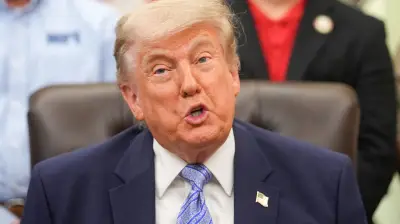
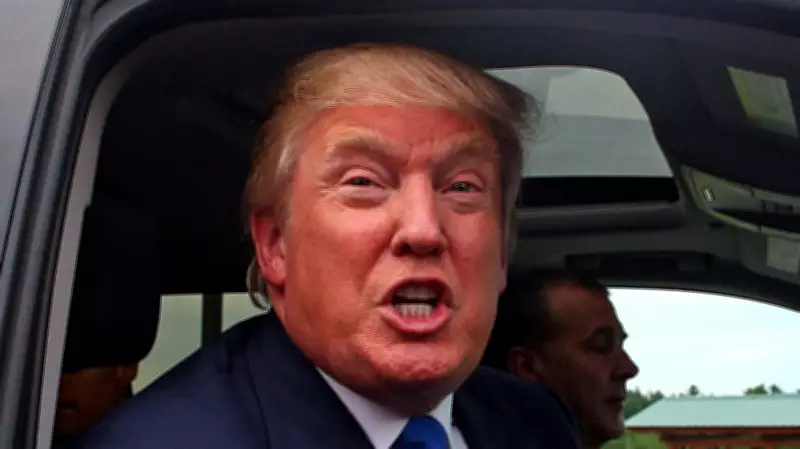
In the early hours of Monday morning, former President Donald Trump unleashed a fiery social media post targeting the U.S. Supreme Court as it deliberates a landmark case that could potentially overturn birthright citizenship protections. The post, published at 12:57 a.m., employed dramatic language and referenced a Fox News segment to argue against constitutional provisions that have stood for over 150 years.
Referencing Television Commentary in Legal Critique
Trump's message began by scolding Supreme Court justices for not watching a specific episode of "The Mark Levin Show" that aired on Sunday night. "It's too bad that the Supreme Court can't watch and study the Mark Levin Show tonight on the Birthright Citizenship Scam," Trump wrote. "If they saw it they would never allow that money making HOAX to continue. THEY SHOULD USE THEIR POWERS OF COMMON SENSE FOR THE GOOD OF OUR COUNTRY."
The former president's argument aligns with Levin's on-air commentary, which questioned the application of the 14th Amendment to children of undocumented immigrants. Levin told his audience, "You on the court, you get to decide now on a big issue. You should leave it to the people and our elected representatives, or the amendment process with a legislative process. But you, if you rule on this and constitutionalize this, will be known as the most activist court in the history of the Supreme Court, and the damage is incalculable."

Constitutional Foundations of Birthright Citizenship
Birthright citizenship was established in the Constitution following the Civil War as part of the Reconstruction Amendments. Section 1 of the 14th Amendment clearly states, "All persons born or naturalized in the United States, and subject to the jurisdiction thereof, are citizens of the United States and of the State wherein they reside."
The Trump administration and commentators like Levin have focused their argument on the phrase "and subject to the jurisdiction thereof," claiming it should not apply to children born to undocumented immigrants. This interpretation represents a significant departure from longstanding legal precedent and constitutional understanding.
Supreme Court Hearings and Judicial Skepticism
Last week, the Supreme Court heard oral arguments regarding whether the United States should cease granting citizenship to children of undocumented immigrants. The case stems from an executive order signed by Trump during his presidency that seeks to reinterpret birthright citizenship provisions.
Trump attended the proceedings in person at the Supreme Court building, observing the arguments firsthand. However, reports from the courtroom indicated that even justices appointed by Trump appeared highly skeptical and sometimes irritated by the arguments presented by his legal team. The judicial skepticism suggests significant hurdles for the administration's position despite the former president's personal involvement.
Broader Complaints About Judicial Decisions
In his early Monday post, Trump expanded his criticism beyond the birthright citizenship case to include previous Supreme Court rulings. He specifically referenced a February decision related to tariffs that did not align with his preferences.
"They failed miserably on Tariffs, needlessly costing the USA Hundreds of Billions of Dollars in potential rebates for the benefit haters and scammers. Why??? Don't do it again!" Trump warned. "The Country can only withstand so many bad decisions from a Court that just doesn't seem to care."
Public Demonstrations and Constitutional Debate
The birthright citizenship case has sparked significant public debate and demonstrations. Protesters gathered outside the U.S. Supreme Court building in Washington, D.C., on April 1, 2026, rallying in support of maintaining current constitutional protections. The visual documentation of these demonstrations underscores the high stakes and emotional resonance of this legal battle.
As the Supreme Court continues its deliberations, Trump's midnight social media intervention highlights the ongoing tension between executive preferences and judicial independence, while raising fundamental questions about constitutional interpretation and the separation of powers in American government.