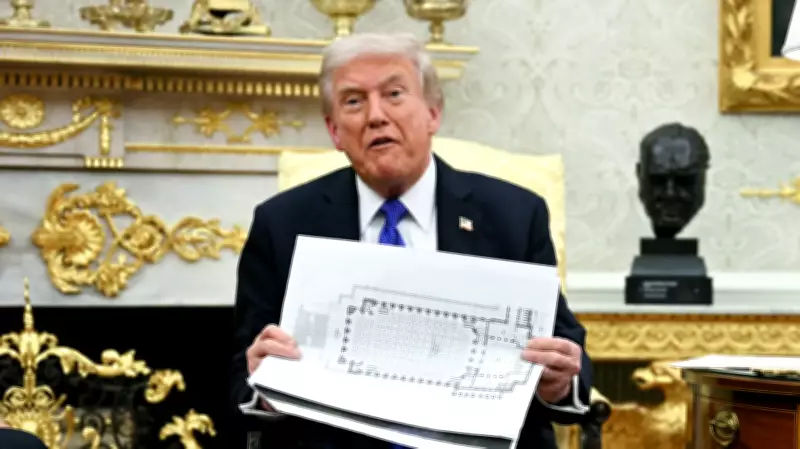
The White House has always reflected the personality of its residents, but President Donald Trump's focus on its decoration seems to consume much of his daily attention. As commander-in-chief overseeing two wars, an affordability crisis, and challenging midterm elections for his Republican Party, Trump frequently discusses his vision for a proposed White House ballroom.
Gold Fixtures and Personal Branding
Decoration projects, including the gradual addition of gold fixtures, are never far from Trump's mind. In September, he boasted on Truth Social that the Oval Office and Cabinet Rooms feature “some of the highest quality 24 Karat Gold” and that foreign leaders “freak out” when they see the quality. He concluded, “Best Oval Office ever, in terms of success and look!!!” Experts note these projects typically fall under the first lady's purview, but Trump has stepped into that role.
Historical Context
Katherine Jellison, professor emerita at Ohio University, explained that “in the current Trump term, the president is in charge of White House renovations. He also seems to make most decisions about entertainers who perform at the White House.” This subverts traditional gender dynamics, as White House design has historically been associated with first ladies like Jackie Kennedy.

Trump's emphasis on design work challenges gendered expectations. Jellison noted that “rehabbing the White House is a task more associated with first ladies than with presidents.” However, Trump's early second-term project involved demolishing the East Wing, a decision Melania Trump distanced herself from. Psychologist Patti Wood called this a “disrespect” for the FLOTUS role, adding that Trump “feels like it’s his—everything seems to be a reflection of him and his control.”
Power Moves and Public Perception
Wood described Trump's branding of “the people’s house” as “shocking” and a power move that makes citizens feel powerless. “It’s all dramatically overwhelming us with these are things that a president traditionally doesn’t decide unilaterally,” she said. Former first lady Michelle Obama made a similar observation when the East Wing was demolished, noting that “to denigrate it, to tear it down, to pretend like it doesn’t matter—it’s a reflection of how you think of that role.” Obama emphasized the soft power of the FLOTUS role, which provided “five extra approval points” for her husband.
Subverting Gender Roles
Despite the controversy, Trump's involvement in design subverts entrenched gender roles. In 2026, men can enjoy aesthetic activities without compromising their manhood, and women can tackle complex issues. However, the president has many responsibilities beyond decoration. Historically, the FLOTUS role has covered social events and reforms, with Eleanor Roosevelt breaking the mold and Jackie Kennedy focusing on White House stewardship.
Melania Trump remains an outlier, maintaining a lower profile than recent first ladies. Jellison noted that in her second term, she projects “an image of a businesslike woman in charge of her own life.” Trump's emphasis on design projects demonstrates subversion of gender roles, as previous presidents would not have taken credit for such choices. Wood said, “If you talk about stereotypical male-female roles in design, the first lady would do the design.”
Historical Parallels
Jellison noted that Theodore Roosevelt was similarly involved in White House renovations. “Like Trump, he was a larger-than-life figure who seemed to be everywhere all the time,” she said. Roosevelt's daughter Alice said her father “wanted to be the baby at every christening, the bride at every wedding, and the corpse at every funeral.” Jellison added, “I think Trump may be outpacing even Roosevelt.”