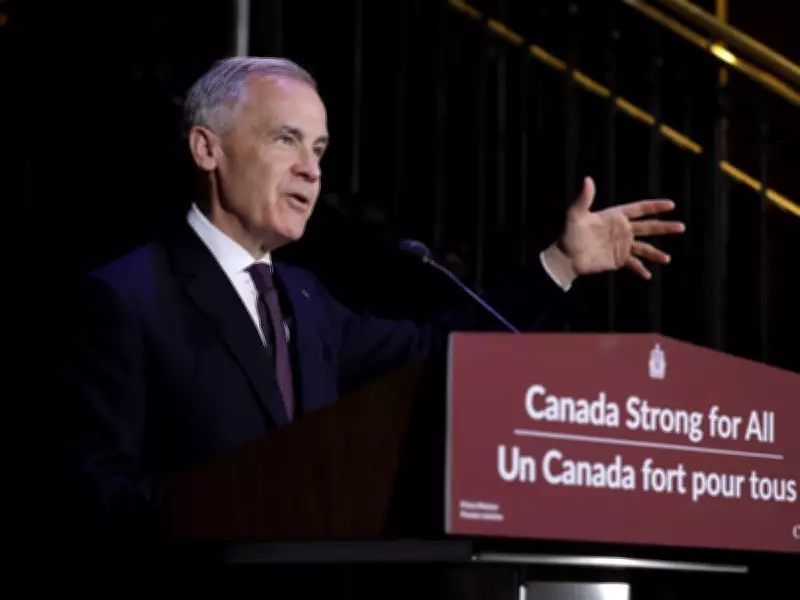
On Monday, Prime Minister Mark Carney announced his government would be setting up a sovereign wealth fund — the Canada Strong Fund. However, according to Lorne Gunter, this initiative is a false front, masking ulterior motives that could harm Canada's energy sector and taxpayers.
A Sovereign Debt Fund in Disguise
As Gunter previously wrote, a country cannot have a sovereign wealth fund unless it possesses sovereign wealth, which Canada lacks. After a decade during which the Liberals more than doubled the national debt to $1.4 trillion, truth in marketing would require Carney to call it a sovereign debt fund. The government's $25-billion contribution will be underwritten by borrowed money, increasing the likelihood that the Canada Strong Fund will add to the national debt rather than reduce it.
National Energy Program 2.0?
But is the fund also a National Energy Program 2.0 masquerading as a nation-building project? The day after Carney created the Canada Strong Fund, his government sent a delegation to Colombia, where representatives from 60 countries (including Brazil and Germany but excluding the U.S.) met to devise financial instruments to phase out fossil fuels. It is not out of line to worry that the Canada Strong Fund will be structured deliberately as Canada's instrument for shutting down fossil fuel production.

Carney's Green Credentials
Before becoming prime minister, Carney was a green devotee. He served as a financial adviser on UN environmental projects, headed an initiative to have banks and investment houses worldwide commit to ending investment in conventional oil and gas, and argued that at least 50 per cent of Canada's oil and gas reserves and 75 per cent of its coal must remain unextracted.
Official Aims vs. Hidden Agenda
According to official Liberal materials, the fund aims to invest in clean and conventional energy, critical minerals, agriculture, and infrastructure. However, Gunter warns that clean energy projects often require billions in government subsidies and fail when support ends. Conventional energy sounds promising until one remembers that Carney has already said energy megaprojects will have to pay an industrial carbon price six times the current rate, making most oil projects financially unfeasible. This effectively imposes an indirect ban on oil development.
The Pathway Alliance and Critical Minerals
Gunter also suggests that the Pathway Alliance, a massive carbon capture network co-funded by major oilsands companies, may not truly be about growing the oil industry but rather a masked Liberal effort to reduce the glare from the deliberate federal sunset of the sector. As for critical minerals, while expanding mining is beneficial and improves national security, the fund's overall structure raises concerns about its true intentions.
In conclusion, Lorne Gunter argues that the Canada Strong Fund is not a genuine sovereign wealth fund but a potentially harmful initiative that could increase national debt and phase out fossil fuels under the guise of nation-building.