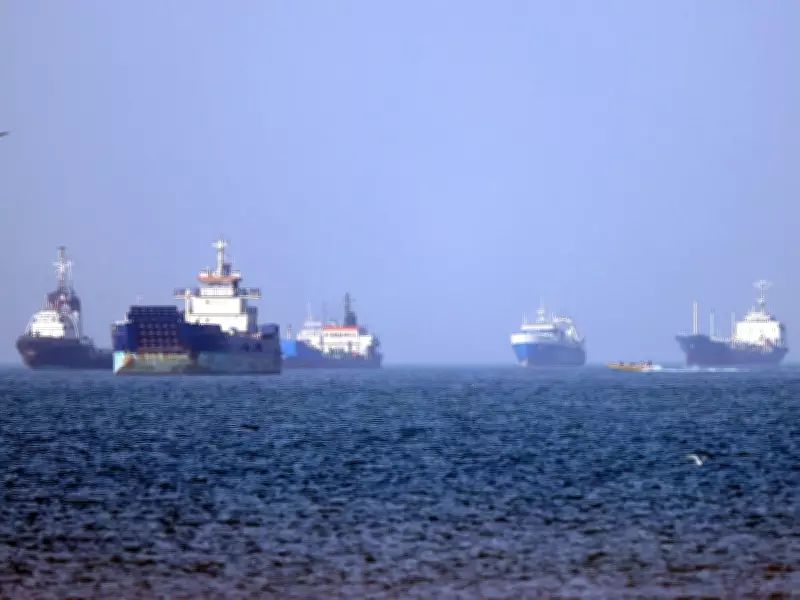
The United States and Iran exchanged fire in the Persian Gulf on Monday, escalating violence that also involved the United Arab Emirates. The clashes prompted calls for renewed strikes on Iranian targets and cast doubt on the fate of a four-week ceasefire.
Military Engagement in the Strait of Hormuz
The American military repelled attacks from Iranian drones, missiles, and armed small boats while facilitating the passage of two U.S.-flagged vessels through the Strait of Hormuz, according to U.S. Central Command chief Admiral Brad Cooper. President Donald Trump claimed in a Truth Social post that U.S. forces shot down seven small boats, and announced that Defense Secretary Pete Hegseth would hold a press conference at the Pentagon alongside General Dan Caine, chairman of the Joint Chiefs of Staff.
UAE Under Attack
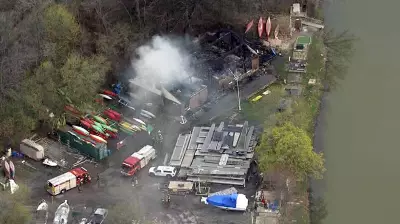
Adding to the tension, the UAE reported intercepting Iranian cruise missiles and blamed an Iranian drone strike for a large fire at its Fujairah port, which hospitalized three people. The Gulf state issued missile alerts to residents for the first time since the ceasefire began nearly a month ago. The alerts followed an Iranian drone strike on an oil tanker owned by Abu Dhabi National Oil Co. outside the Strait of Hormuz.

Oil Prices Surge
Oil prices spiked on news of the attack on Fujairah and renewed threats to tankers in the strait, through which about a fifth of the world's oil and liquefied natural gas transited before the war began in late February. International benchmark Brent crude rose approximately six percent to exceed $114 per barrel, while U.S. crude futures climbed more than four percent to settle near $106 per barrel.
Ceasefire at Risk
The violence shook a ceasefire that had largely held since April 8. It prompted calls from U.S. and Israeli officials to renew attacks on Iran, following a campaign that struck thousands of targets, killed Iran's supreme leader, and closed the Strait of Hormuz, causing global energy prices to soar. Senator Lindsey Graham stated on social media that Iran's attack on the UAE and cargo ships justifies a strong, short response to inflict further damage on Iran's war machine. Former Israeli Prime Minister Naftali Bennett called Iran's strike on the UAE a declaration of renewed war against allies of the U.S. and Israel.
U.S. Response and Diplomacy
Centcom's Cooper declined to address whether the ceasefire had been broken. U.S. Ambassador to the United Nations Mike Waltz said he would defer to the White House on declaring violations, describing the situation as fluid. In Iran, Foreign Minister Abbas Araghchi stated that talks with the Americans were making progress but warned the U.S. and UAE against being dragged back into conflict by ill-wishers.
Project Freedom
Trump announced plans to guide stranded ships out of the Persian Gulf under a initiative called Project Freedom, noting that several countries requested U.S. assistance. He reiterated that the U.S. would not permit Iran to possess a nuclear weapon.