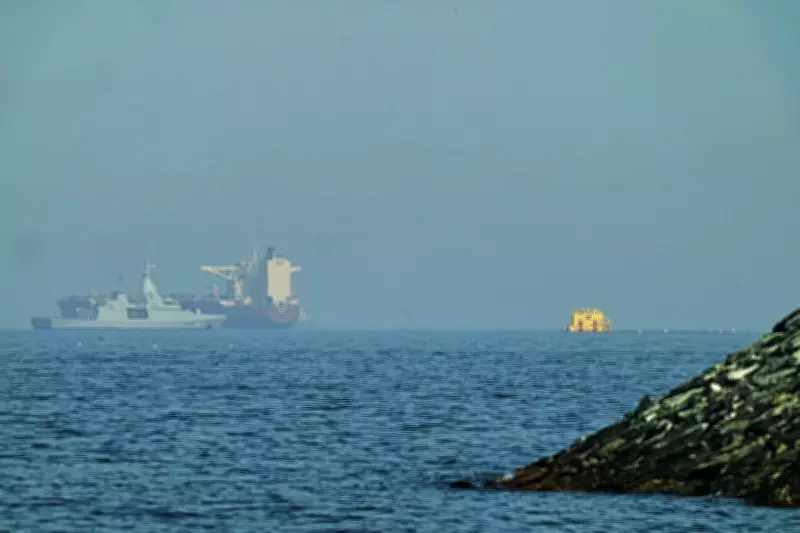
U.S. President Donald Trump announced on Sunday that the United States will begin guiding stranded ships from the Strait of Hormuz starting Monday, a move aimed at ensuring safe passage in one of the world's most critical waterways. The announcement comes as Trump reviews a peace plan submitted by Iran to end the ongoing conflict.
The Strait of Hormuz, a narrow passage between the Persian Gulf and the Gulf of Oman, is a vital shipping route for global oil supplies. Recent hostilities have left numerous vessels stranded, disrupting international trade and energy markets.
Background of the Conflict
Relations between the U.S. and Iran have been tense for years, with recent escalations leading to military confrontations. The peace plan from Iran is seen as a potential breakthrough, though details remain undisclosed. Trump's decision to guide ships could be a strategic move to de-escalate tensions while maintaining U.S. influence in the region.

Implications for Global Trade
The Strait of Hormuz handles about 20% of the world's oil shipments. The U.S. Navy's involvement in guiding vessels is expected to restore confidence among shipping companies and stabilize oil prices. However, critics warn that direct U.S. involvement could provoke further retaliation from Iran.
International reactions have been mixed. Some allies welcome the initiative, while others urge caution. The United Nations has called for a diplomatic resolution to avoid further escalation.
As the situation develops, the world watches closely to see if this move will lead to lasting peace or further conflict.