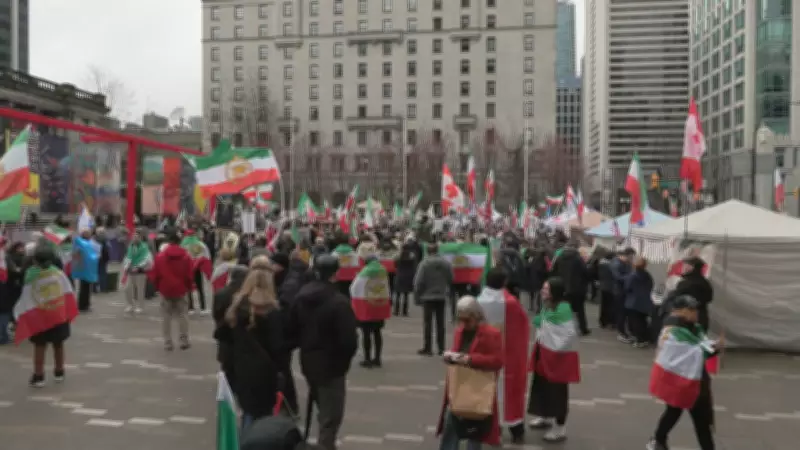
Hundreds Rally in Vancouver as Iran War Enters Second Week
Hundreds of Iranian-Canadians and opponents of the Islamic Republic regime in Iran assembled at the Vancouver Art Gallery on Saturday, marking a significant demonstration as the U.S. and Israeli military actions against Iran entered their second week. The rally drew a diverse crowd, including local residents and activists, who voiced their concerns over the escalating conflict and its potential impacts on global stability.
Growing Concerns Over War Impacts
The protest in Vancouver reflects broader anxieties among Canadians regarding the war in Iran, which has sparked fears about economic repercussions, such as rising grocery costs and increased terrorism risks. Participants held signs and chanted slogans calling for peace and diplomatic solutions, emphasizing the human toll of the ongoing hostilities. Many expressed solidarity with those affected by the conflict, highlighting the personal connections many Iranian-Canadians have to the region.
Local and Global Context
This demonstration occurs amid a series of related events, including Canadians arriving home from the Middle East expressing frustration with war and evacuations. The rally also aligns with national discussions on how the Iran war could affect Canadians, from economic strains to security threats. Organizers stressed the importance of community action in raising awareness and advocating for peaceful resolutions to international conflicts.

Key Points from the Rally:
- The gathering at the Vancouver Art Gallery attracted hundreds of participants, including families and youth.
- Speakers addressed the humanitarian crisis in Iran and called for international intervention to de-escalate tensions.
- Protesters highlighted the need for Canadian government involvement in promoting dialogue and aid efforts.
As the war shows no signs of abating, such rallies underscore the growing public engagement with foreign policy issues and the desire for a swift end to the violence. The event in Vancouver serves as a reminder of the interconnectedness of global conflicts and local communities, urging policymakers to consider the voices of diaspora groups in shaping responses to international crises.