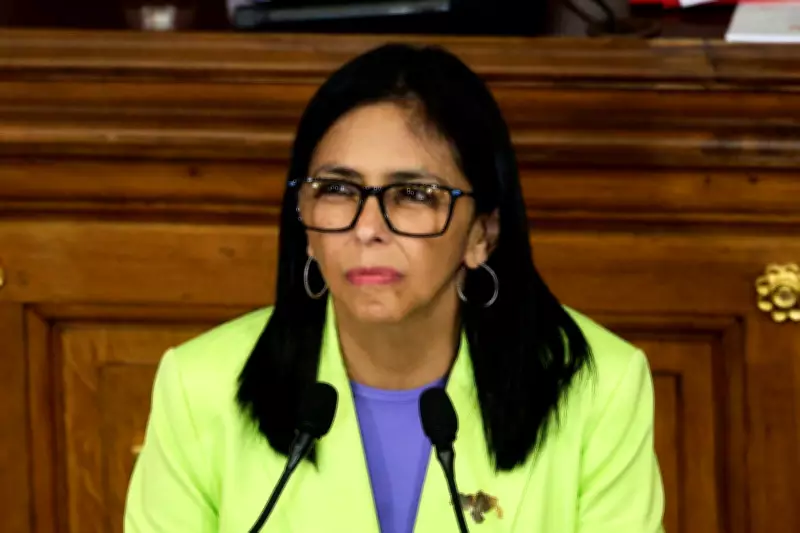
In a significant political development, Venezuela's interim president, Delcy Rodríguez, has extended an invitation to Venezuelans living abroad to return to their homeland, citing the enactment of a new amnesty law. This announcement was made during a government address in Caracas, marking a pivotal moment in the nation's ongoing efforts to address its complex socio-economic and political challenges.
A Call for National Reconciliation
The amnesty law, as outlined by Rodríguez, is designed to provide legal protections and incentives for citizens who have left Venezuela due to various crises, including economic hardship and political unrest. This initiative aims to foster national reconciliation by encouraging the repatriation of individuals who may have faced persecution or legal issues in the past. Rodríguez emphasized that the law is part of a broader strategy to stabilize the country and rebuild its economy, which has been severely impacted by years of turmoil and international sanctions.
Economic and Social Implications
Experts suggest that the return of skilled professionals and entrepreneurs could inject much-needed vitality into Venezuela's struggling economy. The government hopes that this move will not only boost domestic production and innovation but also strengthen social cohesion by reuniting families separated by migration. However, critics caution that the success of this amnesty depends on the implementation of transparent legal processes and the assurance of safety and opportunities for returnees.

Background and Context
Venezuela has experienced a mass exodus of its population in recent years, with millions fleeing to neighboring countries and beyond in search of better living conditions. The interim government, led by Rodríguez, has been working to address these issues through various policy measures, including this amnesty law. The announcement comes amid ongoing international scrutiny and domestic debates about the country's political future and human rights record.
Rodríguez's call for return is seen as a symbolic gesture towards healing national divisions, but it also raises questions about the practical challenges involved, such as reintegration support and the resolution of pending legal matters. As Venezuela navigates this delicate phase, the global community will be closely watching the outcomes of this initiative and its impact on the nation's path to recovery.