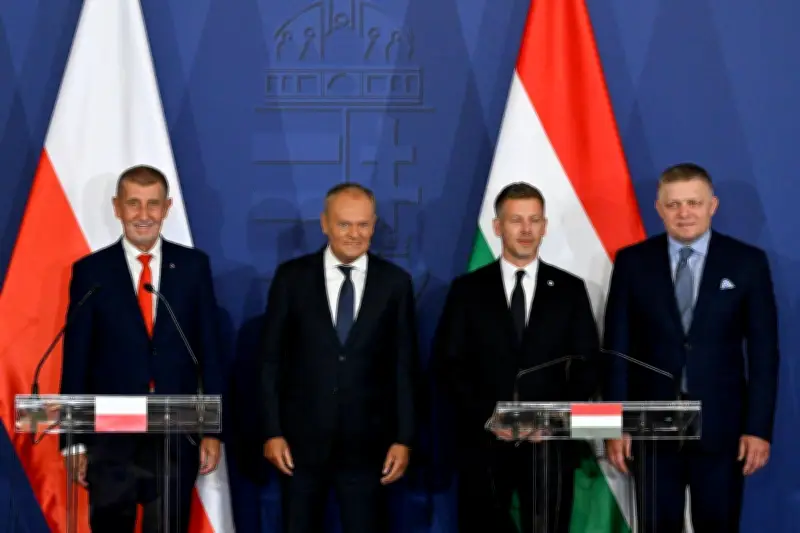
Leaders from four Central European countries convened in Godollo, Hungary, on Tuesday, June 23, 2026, to revive the Visegrad Group (V4), a regional alliance comprising Poland, the Czech Republic, Slovakia, and Hungary. The one-day summit, hosted by Hungarian Premier Peter Magyar at the Royal Castle in Godollo, aimed to reinvigorate cooperation on shared challenges such as security, energy, and economic integration.
Summit Focuses on Rebuilding Trust and Unity
The Visegrad Group, established in 1991, has faced internal divisions in recent years over issues like migration policy and rule-of-law disputes. The meeting sought to reset relations and present a unified front on key regional matters. Polish Premier Donald Tusk emphasized the need for solidarity, stating, "We must work together to ensure our region's voice is heard in Europe." Czech Republic's Premier Andrej Babis echoed this sentiment, calling for practical collaboration on energy security and infrastructure.
Key Outcomes and Statements
During a joint press conference after the summit, the leaders outlined several areas of agreement, including joint efforts to enhance energy independence from Russian supplies and coordinated responses to migration pressures. Slovak Premier Robert Fico highlighted the importance of protecting external borders, while Hungarian Premier Peter Magyar stressed the value of cultural and historical ties binding the nations. The leaders also discussed support for Ukraine and regional defense cooperation within NATO frameworks.

According to a joint communique released after the meeting, the V4 countries committed to holding regular summits and establishing working groups on energy and digital transformation. The meeting concluded with a symbolic handshake among the four premiers, signaling a renewed commitment to the Visegrad spirit.
Historical Context and Challenges
The Visegrad Group has been a key forum for Central European coordination since the fall of communism. However, tensions have arisen over differing stances on EU migration quotas and judicial reforms in Poland and Hungary. The reboot effort comes amid shifting geopolitical dynamics, including the ongoing war in Ukraine and the need for a cohesive regional stance on EU policy reforms.
Analysts note that while the summit produced broad statements, concrete implementation remains to be seen. The group's ability to overcome past disagreements will test its long-term viability. Nonetheless, the meeting in Godollo marks a significant attempt to revitalize one of Europe's oldest regional alliances.