Iran is facing a significant wave of civil unrest, with authorities confirming a heavy toll from recent demonstrations driven by economic grievances. At least 35 people have been killed and more than 1,200 individuals have been detained during the protests, according to reports.
Escalation of Demonstrations and Government Response
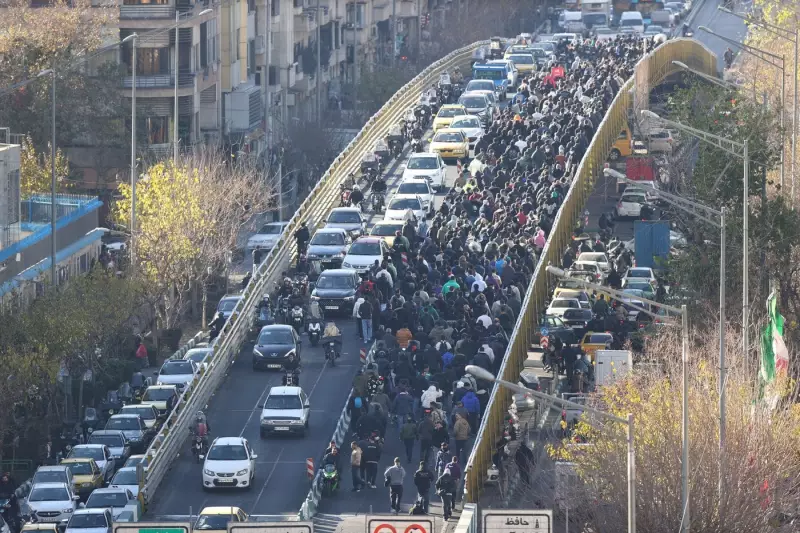
The protests, which gained momentum in late December 2025, have seen citizens taking to the streets in Tehran and other cities. A notable demonstration occurred on December 29, 2025, where protesters marched across a bridge in the capital. The unrest stems from deep-seated economic frustrations, including inflation and living standards, which have spurred public anger against the government.
In response to the widespread demonstrations, Iranian security forces have implemented a severe crackdown. The large number of detentions points to a coordinated effort to quell dissent and intimidate potential protesters. The use of force by authorities has been widely reported, leading to the rising death toll.

International Context and Domestic Tensions
This latest round of protests adds to a history of periodic upheavals in Iran, often triggered by economic or social issues. The government's handling of the situation is being closely watched by international human rights organizations and foreign governments, who have previously criticized Iran for its treatment of dissent.
The scale of the casualties and arrests indicates the protests' intensity and the regime's determination to maintain control. Analysts suggest that the economic pressures facing ordinary Iranians, compounded by international sanctions, have created a tinderbox environment where public demonstrations can rapidly escalate.
Looking Ahead: Implications for Stability
The confirmation of 35 fatalities and over 1,200 detentions marks one of the more severe crackdowns in recent years. The Iranian government has not indicated any shift in policy, suggesting that further confrontations between protesters and state security forces are possible. The situation remains fluid, with the potential for the protest movement to evolve or for the government to offer concessions to ease tensions.
For now, the streets of Tehran and other Iranian cities remain a focal point of conflict between citizens demanding economic relief and a government asserting its authority. The human cost of this conflict continues to rise, drawing global attention to Iran's internal struggles.