International Powers Announce Readiness to Support Strait of Hormuz Security
In a significant diplomatic move, seven international powers declared on Thursday their willingness to contribute to efforts ensuring safe passage through the strategically vital Strait of Hormuz. The coalition, comprising Canada, Britain, France, Germany, Italy, Japan, and the Netherlands, issued a joint statement expressing their readiness to support appropriate measures to reopen this crucial maritime corridor to commercial shipping.
Ceasefire as Prerequisite for Action
However, three key European nations—Italy, Germany, and France—quickly clarified that any potential initiative would only materialize after a ceasefire has been established in the ongoing regional conflict. This important qualification underscores the complex diplomatic landscape surrounding the crisis.
The joint statement explicitly condemned "in the strongest terms recent attacks by Iran on unarmed commercial vessels in the Gulf" and called upon Tehran to immediately cease its threats, mine-laying operations, drone and missile attacks, and other attempts to block the strait to commercial shipping.

Escalating Crisis in Critical Shipping Lane
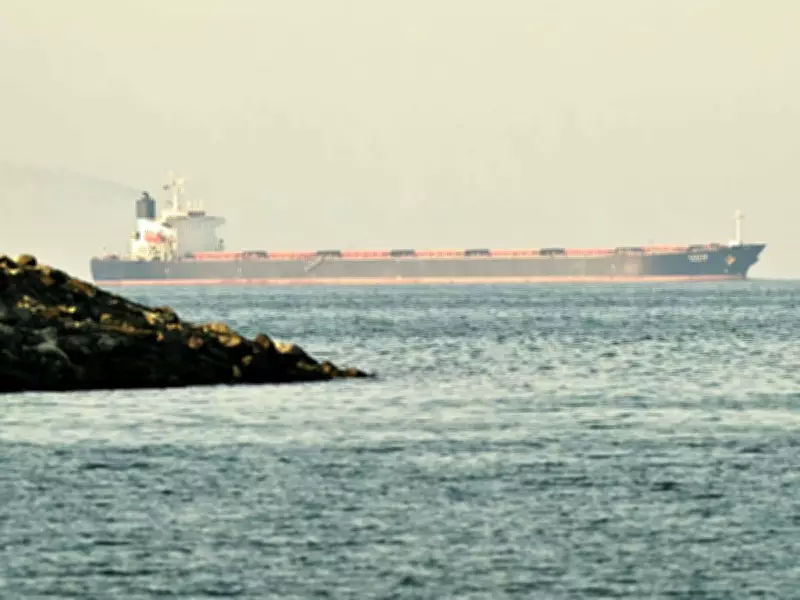
The declaration comes as an effective Iranian blockade has paralyzed commercial traffic through the Strait of Hormuz, a narrow maritime chokepoint that normally handles approximately one-fifth of global crude oil and liquefied natural gas shipments. The conflict, which erupted on February 28 when the United States and Israel began bombing Iran, has prompted Tehran to retaliate with strikes across the Gulf region.
The humanitarian and economic consequences are already severe:
- Twenty-three commercial vessels, including ten tankers, have reported incidents or attacks
- Approximately 20,000 seafarers remain stranded on about 3,200 vessels west of the strait
- The International Maritime Organization has documented widespread disruption to global shipping
Diplomatic Nuances and Legal Frameworks
Italian Defence Minister Guido Crosetto emphasized that the statement should not be interpreted as a "war mission," stating clearly that "no entry into Hormuz without a truce and a comprehensive multilateral initiative" would be possible. He stressed that any such initiative would require appropriate legal frameworks, preferably through the United Nations.
In Berlin, Defence Minister Boris Pistorius echoed this position, noting that any potential German military involvement "would depend on the situation after a ceasefire... and whether we could participate within the framework of an international mandate." He further clarified that such involvement would require approval by the German parliament.
International Principles and Global Impact
The allies' statement invoked fundamental principles of international law, declaring that "freedom of navigation is a fundamental principle of international law, including under the United Nations Convention on the Law of the Sea." The document warned that "the effects of Iran's actions will be felt by people in all parts of the world, especially the most vulnerable."
French President Emmanuel Macron revealed that his country plans to consult with permanent members of the UN Security Council about establishing a UN framework for future plans to secure navigation in the Strait of Hormuz—but only once the current exchange of fire has concluded. "We have initiated an exploratory process, and we will see in the coming days whether it stands a chance of succeeding," he told reporters in Brussels following a European summit.
Contrasting International Positions
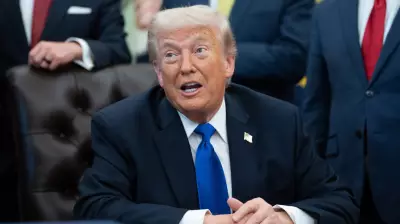
The allies' cautious approach contrasts with more urgent calls from U.S. President Donald Trump, who has urged other world powers and NATO to help reopen the Hormuz Strait to commercial shipping. However, the European and Asian partners have rebuffed immediate military involvement while remaining open to discussions and planning for post-ceasefire scenarios.

The situation represents a delicate balancing act for the international community, which must address both the immediate humanitarian crisis affecting thousands of stranded seafarers and the longer-term need to restore stability to one of the world's most economically significant shipping routes.