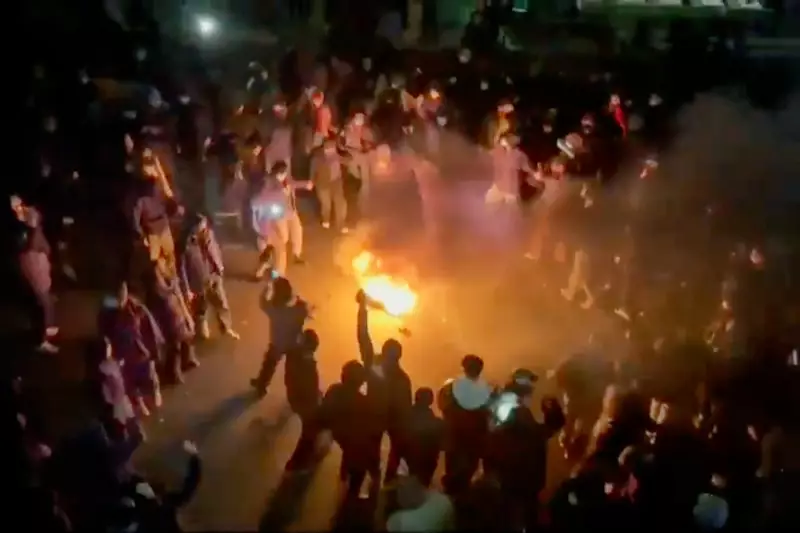
Recent protests in Iran represent a significant shift in the country's political landscape, with an analyst pointing to a "considerably weaker" regime as a key differentiator. Kaveh Shahrooz of the Macdonald Laurier Institute suggests that the geopolitical situation today reveals deepening fractures within the Islamic Republic.
A Weakened Regime Faces New Challenges
According to analyst Kaveh Shahrooz, the Iranian government is navigating a profoundly altered environment. The regime is 'considerably weaker' now compared to during previous waves of public dissent. This weakness stems from a combination of sustained international pressure, economic hardships, and an increasingly disillusioned and young population willing to confront authorities directly.
Shahrooz's analysis, highlighted in a report from January 12, 2026, indicates that the protests are not merely a repeat of past unrest. Instead, they signal a more profound challenge to the state's authority, with "fractures forming" in its traditional bases of support. The persistent nature of the demonstrations, often sparked by issues like mandatory hijab laws but broadening to encompass wider grievances, underscores a sustained resistance.

Canadian Response and Diaspora Solidarity
The Canadian government has officially joined other nations in condemning the Iranian regime for its violent suppression of protesters. This foreign policy stance aligns with domestic expressions of solidarity from the Iranian-Canadian community.
In Manitoba, Iranian Manitobans gathered at the provincial legislature to voice their support for those protesting in Iran. Similar sentiments were echoed by Canadians with family members directly involved, describing them as "fighting for their lives." The human cost of the crackdown has been severe, with reports noting that victims include a student, a bodybuilder, and a father of three.
Broader Implications and Observers' Warnings
The evolving situation carries significant implications for regional and global stability. A weakened Iran may alter its foreign policy calculus but could also lead to increased internal repression as the regime struggles to maintain control. Observers warn that the international community must pay close attention to how these internal fractures develop, as they could lead to unpredictable outcomes.
The protests and the analysis surrounding them highlight a pivotal moment. They move beyond specific incidents to reflect a deeper, ongoing struggle over the nation's future, with a populace demonstrating remarkable resilience against a regime perceived as vulnerable.