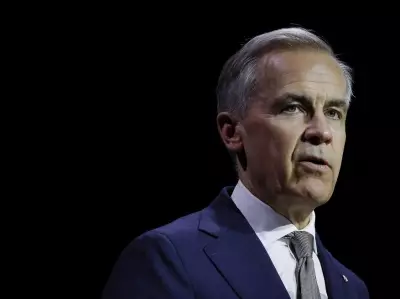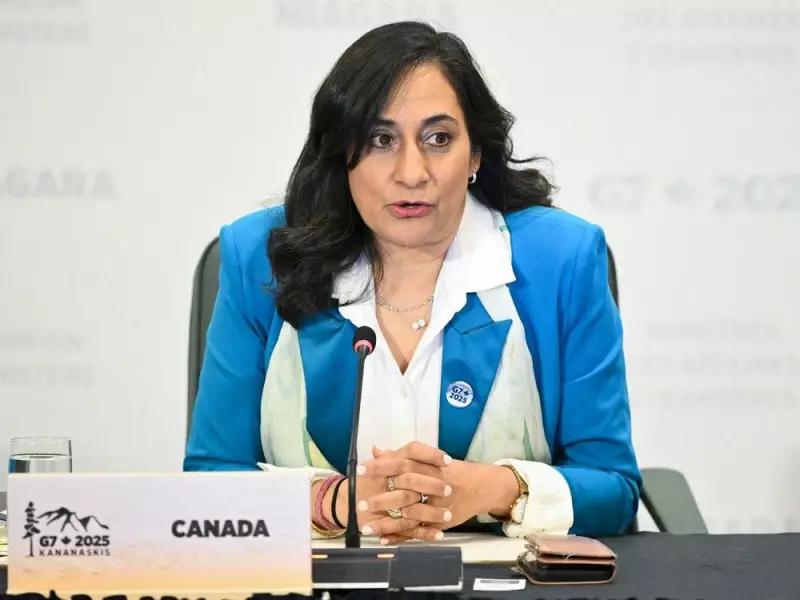
Canada's Foreign Minister Anita Anand has notably avoided reaffirming her government's previous characterization of China as an "increasingly disruptive" global power during an official visit to Beijing. The diplomatic tiptoeing highlights a significant shift in tone under Prime Minister Mark Carney's administration, which is actively seeking to diversify trade away from the United States.
A Deliberate Diplomatic Pivot in Beijing
Upon arriving in Beijing on Wednesday, January 14, 2026, with Prime Minister Mark Carney, Foreign Minister Anita Anand was immediately pressed by reporters. They repeatedly asked if the Liberal government still stood behind the stern assessment of China outlined in its 2024 Indo-Pacific strategy. Anand consistently refused to confirm whether she agreed China remains a disruptive force on the world stage.
Instead, she emphasized that Carney's election brought a "new government" with a "new foreign policy." Anand pointed to Canada's current economic stress, stating a necessity to diversify trading partners and grow non-U.S. trade by 50% within a decade. She described the overall issue of relations with China as "complex," a marked contrast to the more definitive language of the past.

Contrasting the 2024 Indo-Pacific Strategy
The 2024 Indo-Pacific strategy, published under former Prime Minister Justin Trudeau, explicitly labeled China as "an increasingly disruptive global power" that "increasingly disregards" international rules. The document argued China seeks to reshape the international order to suit its own interests and values, which diverge from Canada's.
However, the same strategy also acknowledged China as a significant economic opportunity for Canadian exporters and a necessary partner on global issues like climate change, public health, and nuclear proliferation. Anand's recent comments suggest the Carney government is now prioritizing the latter aspects, potentially backing away from the confrontational public framing.
Economic Imperatives Drive Diplomatic Recalibration
The minister's careful language underscores how starkly Ottawa's approach to Beijing has changed since Carney's election and amid a trade war with the United States. The government has been working for months to resolve trade irritants, specifically crippling Chinese tariffs on Canadian canola exports.
In return, China is expected to press Canada for concessions on its 100% tariffs on electric vehicle imports, designed to protect domestic manufacturing. This visit, the first official Canadian leader trip to meet President Xi Jinping since 2017, was marked by warm gestures. Carney was greeted by ambassadors and Chinese Minister Sun Meijun, presented with flowers by a child, and driven along a highway adorned with Canadian and Chinese flags.
Analysts suggest it would not be surprising to see the Carney government formally redefine its public stance on China in the coming months, as it eyes the Asian superpower as a cornerstone of its strategy to reduce economic dependence on the United States.