Arab and Muslim Nations Issue Strong Condemnation of U.S. Ambassador's Remarks
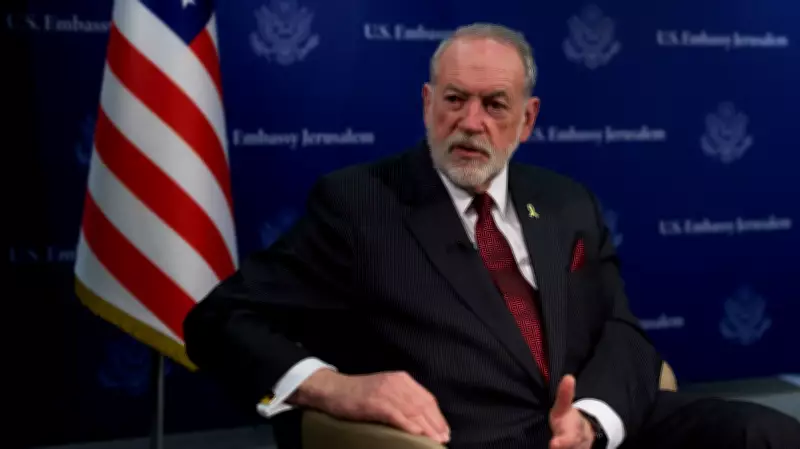
Arab and Muslim nations delivered sharp criticism on Saturday following controversial comments made by U.S. Ambassador to Israel Mike Huckabee, who suggested during an interview that Israel has legitimate claims to substantial portions of Middle Eastern territory based on biblical interpretation. The remarks have ignited diplomatic tensions across the region and prompted calls for official clarification from the United States government.
Controversial Interview Sparks Immediate Backlash
Huckabee made his contentious statements during a Friday interview with conservative commentator Tucker Carlson that aired nationally. During their conversation, Carlson referenced biblical passages from Genesis that describe God's promise to Abraham's descendants, suggesting this territory would encompass much of the contemporary Middle East. When asked if Israel had rights to this expansive land, Huckabee responded, "It would be fine if they took it all."
The ambassador quickly qualified his statement by noting that Israel was not actively seeking territorial expansion and emphasized Israel's right to security within its current legitimate holdings. However, the initial comment generated immediate condemnation from multiple regional powers and international organizations.

Regional Powers and Organizations Voice Strong Objections
Saudi Arabia's foreign ministry characterized Huckabee's remarks as "extremist rhetoric" and "completely unacceptable," formally requesting that the U.S. State Department clarify its official position regarding the ambassador's statements. Egypt's foreign ministry issued a statement declaring the comments represented a "blatant violation" of established international law, explicitly stating that "Israel has no sovereignty over the occupied Palestinian territory or other Arab lands."
The League of Arab States released a formal statement asserting that "statements of this nature—extremist and lacking any sound basis—serve only to inflame sentiments and stir religious and national emotions." Additional criticism emerged from Jordan, Kuwait, Oman, and the Organization of Islamic Cooperation, creating a unified front of diplomatic disapproval.
Historical Context of Israel's Borders and Territorial Disputes
Since Israel's establishment in 1948, the nation has operated without fully recognized international borders, with frontiers shifting through multiple conflicts, annexations, ceasefires, and peace agreements. During the 1967 Six-Day War, Israel captured several territories including:
- The West Bank and East Jerusalem from Jordan
- Gaza and the Sinai Peninsula from Egypt
- The Golan Heights from Syria
Israel subsequently withdrew from the Sinai Peninsula following the 1973 Mideast war as part of a peace agreement with Egypt and unilaterally withdrew from Gaza in 2005. However, recent months have seen Israel intensify its control over the occupied West Bank through expanded settlement construction, legalization of outposts, and significant bureaucratic policy changes within the territory.
Huckabee's Longstanding Positions and Recent Territorial Developments
Ambassador Huckabee, an evangelical Christian and vocal supporter of Israel and West Bank settlements, has consistently opposed the two-state solution for Israel and Palestinians. In a previous interview, he expressed skepticism about referring to Arab descendants from British-controlled Palestine as "Palestinians."
During the recent interview, Carlson pressed Huckabee on specific biblical interpretations, noting that God's promise to Abraham's descendants would include territory from the Nile to the Euphrates rivers—encompassing modern Israel, Jordan, Syria, Lebanon, and substantial portions of Saudi Arabia and Iraq. Huckabee responded, "Not sure we'd go that far. I mean, it would be a big piece of land."

Recent territorial developments have further complicated the regional landscape. Since the October 2023 Hamas-led attack on southern Israel and the subsequent war in Gaza, Israel has expanded its control, currently maintaining authority over more than half of Gaza's territory despite ceasefire agreements. Additionally, following Syrian President Bashar Assad's ousting in late 2024, Israel's military assumed control of a demilitarized buffer zone in Syria originally established through a 1974 ceasefire agreement. Israel maintains this move is temporary and necessary for border security. Israel also continues to occupy five hilltop positions on Lebanese territory following its 2024 conflict with Hezbollah.
Neither Israeli nor United States officials provided immediate comment regarding the diplomatic fallout from Huckabee's remarks. The controversy highlights the ongoing sensitivity surrounding territorial claims, biblical interpretations, and international law in one of the world's most geopolitically complex regions.