Canada's Dual Stance on Iran Conflict: Military Support with Diplomatic Hopes
In the wake of Canada's endorsement of United States-led military strikes against Iran, Foreign Affairs Minister Anita Anand has reaffirmed the nation's commitment to pursuing a "diplomatic solution" to the escalating conflict. The minister's statements came during a high-profile visit to New Delhi, where she participated in a series of meetings while Prime Minister Mark Carney departed for Australia without addressing media inquiries.
Political Maneuvering Amid International Crisis
The unfolding situation presents a complex diplomatic challenge for the Canadian government. While publicly backing the U.S.-Israel operations that resulted in the death of Iran's Supreme Leader Ayatollah Ali Khamenei, Canadian officials simultaneously advocate for peaceful resolution mechanisms. Anand revealed she has engaged in extensive discussions with counterparts across the Middle East, Gulf states, and G7 nations over the preceding two days.
"Canada believes in a diplomatic and peaceful solution, and as soon as possible, we would like parties to get to the table," Anand told assembled journalists. She acknowledged that these conversations have produced "differing responses" from international partners, with some nations skeptical about diplomatic possibilities while others push for rapid de-escalation through negotiation.

Prime Minister's Absence and Official Rationale
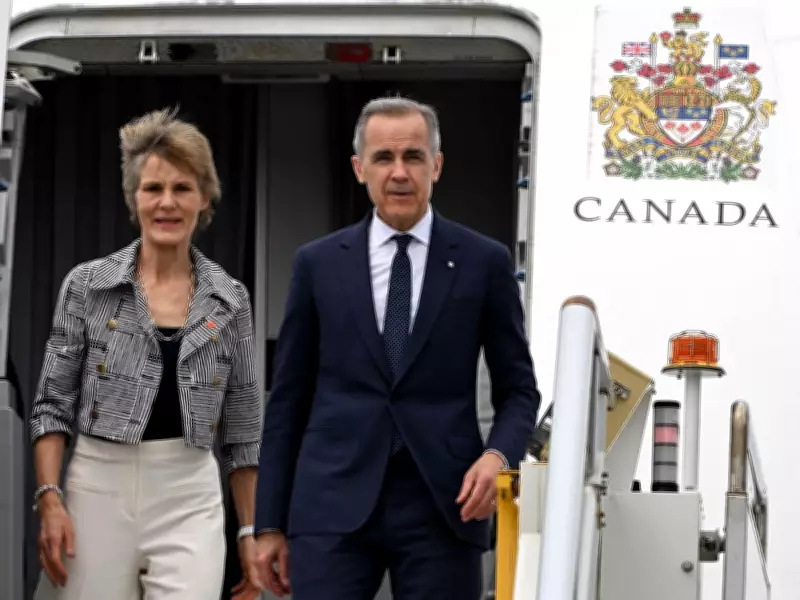
Prime Minister Carney's decision to cancel scheduled press conferences has raised questions about Canada's strategic positioning. Officials traveling with the prime minister's delegation confirmed he would not be immediately available upon arrival in Sydney, citing previously arranged personal commitments and preparation requirements for subsequent diplomatic engagements.
Carney's itinerary includes additional business meetings and an address to Australia's parliament before continuing to Japan. The prime minister arrived in Sydney on Tuesday afternoon local time, which corresponded to Monday evening in Ottawa, creating a temporal disconnect that further complicated communication channels.
Official Justification and Parliamentary Dissent
The initial statement from the Prime Minister's Office justified Canada's support for the military actions by referencing Iran's nuclear weapons program. "Canada supports the United States acting to prevent Iran from obtaining a nuclear weapon and to prevent its regime from further threatening international peace and security," the official communication declared.
Anand highlighted Canada's historical stance toward Iran, noting the implementation of approximately 500 sanctions against the Iranian regime while maintaining support for the Iranian people. When questioned about the legality of the attacks under international law, the minister offered no direct assessment.
Meanwhile, internal political tensions surfaced as Liberal MP Will Greaves publicly criticized Canada's position through social media channels. The Victoria representative posted an Instagram video questioning the consistency of endorsing military force while advocating for sovereignty principles.
"Canada cannot endorse the unilateral and illegal use of military force, the killing of civilians, or the kidnap and assassination of foreign heads of government, while also insisting that our sovereignty, our rights, and our independence must be respected," Greaves asserted, directly referencing Carney's recent World Economic Forum speech about opposing hegemonic powers.
Strategic Balancing Act in Global Politics
The Canadian government now navigates a delicate international landscape, attempting to balance alliance commitments with diplomatic principles. Anand's emphasis on peaceful resolution mechanisms suggests an effort to maintain multilateral relationships while supporting military actions against a regime long at odds with Western powers.

As the conflict continues to evolve, Canada's dual-track approach—simultaneously backing military strikes while championing diplomacy—will face increasing scrutiny from both domestic critics and international observers. The coming days will reveal whether this strategy can effectively address the complex geopolitical realities of the Iran conflict while maintaining Canada's stated commitment to international law and peaceful conflict resolution.