Prime Minister Mark Carney's recent meeting with Chinese President Xi Jinping has sparked significant debate about Canada's foreign policy direction and its relationship with the United States.
The APEC Summit Meeting
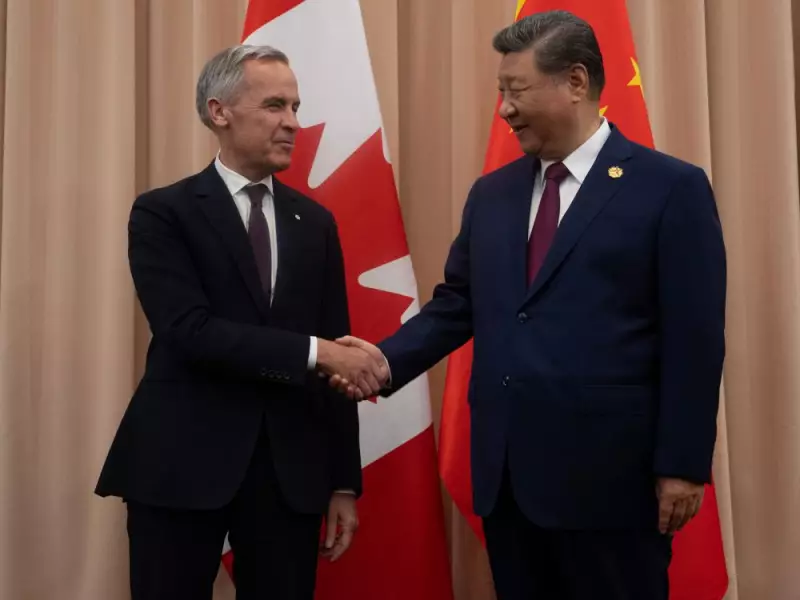
At the end of October, Prime Minister Mark Carney met with Chinese President Xi Jinping during the APEC summit in Gyeongju, South Korea. According to the Prime Minister's Office, both leaders described their October 31 meeting as marking a turning point in Canada-China relations.
The two countries pledged to resolve outstanding trade issues and cooperate across multiple sectors including clean energy, conventional energy, agriculture, manufacturing, climate change, and international finance. Following the meeting, Carney told reporters that both nations would be open and frank with each other on challenging issues while seeking common ground where possible.

Questions About U.S. Relations
Critics question why Carney appears more effective in engaging with China than with Canada's closest trading partner and democratic ally, the United States. Despite campaigning as the best candidate to handle relations with U.S. President Donald Trump, Carney has been largely ineffectual in dealing with the American administration.
Like his predecessor Justin Trudeau, Carney failed to establish the necessary conditions for successful negotiations with Trump. The Liberal government's approach appears to lack understanding of realpolitik—the practice of prioritizing national interests over ideological, moral, or ethical principles.
Carney's China Connections
Carney's relationship with China extends beyond his current role. During his tenure as Governor of the Bank of England, he oversaw the creation of a $1-billion investment fund to support Beijing's Belt and Road Initiative. This massive infrastructure project aims to build transportation networks worldwide, creating a global network of client states to support China's objectives.
This background raises questions about potential conflicts of interest, particularly given that five months before becoming prime minister, Carney secured a US$276 million (C$387 million) loan from the Bank of China for Brookfield Asset Management.
Several concerning factors complicate Canada's engagement with China:
- China's human rights record remains problematic
- Operation of clandestine police stations in Canada to monitor Chinese diaspora
- Intimidation of Canadian politicians like Michael Chong and their families
- The 2025 Hogue report confirming China as the most active perpetrator of foreign interference targeting Canada's democratic institutions
- The arbitrary detention of Canadian citizens Michael Spavor and Michael Kovrig in retaliation for the arrest of Huawei CFO Meng Wanzhou
As Canada navigates complex international relationships, many argue that repairing relations with the United States should take precedence over deepening ties with China, given the fundamental differences in political systems and values between democratic Canada and authoritarian China.