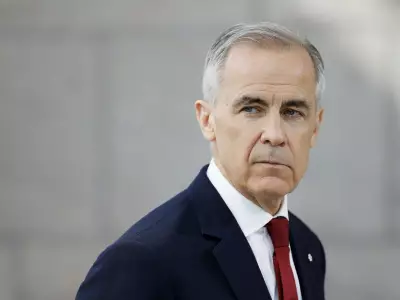
In the complex landscape of global diplomacy, Prime Minister Mark Carney finds himself at a crossroads, balancing pragmatic economic interests against steadfast national principles. As Canada navigates turbulent international waters, the fundamental question emerges: should the nation prioritize realpolitik or remain anchored to its core values?
The Erosion of the Indo-Pacific Strategy
Canada's once-ambitious Indo-Pacific Strategy, designed to seize opportunities while defending Canadian values, appears to have been quietly shelved. Instead, the government has embraced a more pragmatic approach, pursuing trade relationships with countries whose values may not fully align with those of Canada. This shift represents a significant departure from earlier rhetoric, highlighting the challenging realities of contemporary geopolitics.
The China Conundrum
Exhibit A in this new approach is China. Despite being labeled in 2022 as "an increasingly disruptive global power" that disregards international norms, Canada has recently entered into a strategic partnership with Beijing. This agreement saw China remove damaging agricultural tariffs on Canadian canola meal, peas, lobster, and crab, while Canada reciprocated by dropping its 100 percent tariff on Chinese electric vehicles, allowing up to 49,000 imports at a reduced rate.

At the Davos forum, Carney articulated this balancing act, stating Canada aims to be "both principled and pragmatic—principled in our commitment to fundamental values ... and pragmatic ... that not every partner will share all of our values." This declaration came shortly after his high-profile Beijing visit, underscoring the government's willingness to engage with nations whose political systems differ markedly from Canada's.
The India Equation
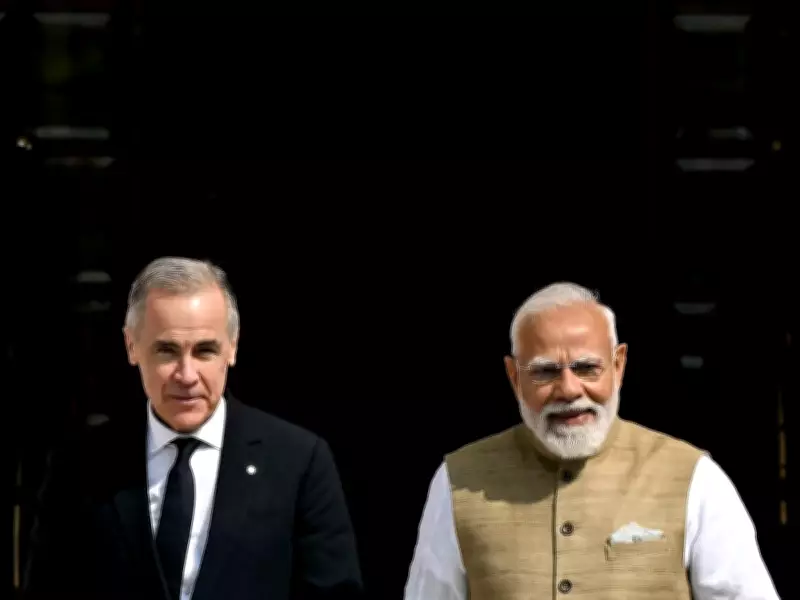
Exhibit B is India, where Carney recently announced a substantial $2.6-billion uranium supply deal and progress toward a potential free trade agreement by year's end. Following successful meetings with Prime Minister Narendra Modi in New Delhi, Canada also opened new pathways for Indian students, whose numbers had declined due to recent visa restrictions.
While Canada undeniably shares more common democratic values with India than with China, the relationship remains complicated. The 2023 diplomatic crisis over allegations of Indian government involvement in the murder of a Sikh separatist on Canadian soil continues to cast a shadow. More recently, fresh allegations of foreign interference surfaced just before Carney's departure for New Delhi, prompting evasive responses from Canadian officials when pressed for clarity.
The Foreign Interference Challenge
Foreign interference has become an unavoidable reality in today's geopolitical landscape, practiced by both adversaries and allies alike. A recent report by the Montreal Institute for Global Security identified China as a primary perpetrator of transnational repression in Canada. Simultaneously, American officials have been accused of engaging with Alberta separatists, while Canada's promised foreign interference registry remains unimplemented eighteen months after parliamentary approval.
When questioned about these sensitive matters, Foreign Affairs Minister Anita Anand offered cryptic responses, while Public Safety Minister Gary Anandasangaree acknowledged ongoing security concerns. Carney himself canceled a press conference where such questions were anticipated, citing scheduling conflicts with his subsequent trip to Australia.
Navigating the New World Order
In this transformed global environment, Canada faces limited options. The era of idealistic foreign policy has given way to what columnist Tasha Kheiriddin describes as the "pick your poison" approach to international relations. Carney's diplomatic overtures to India, despite lingering concerns about democratic interference, reflect this new reality where economic pragmatism often trumps principled stands.
As Canada continues to negotiate this delicate balance between values and interests, the fundamental tension between pragmatism and principles remains unresolved. The nation's foreign policy trajectory suggests that in today's complex world, perfect alignment with democratic partners may be an unattainable luxury, forcing difficult compromises in pursuit of national prosperity and security.