Mark Carney's Global Vision: A Familiar Canadian Quest
This week, former Bank of Canada governor Mark Carney positioned himself as a potential leader for what he calls a new "rules-based international order" centered around "middle powers." This ambition represents the latest chapter in a recurring Canadian narrative: prime ministers attempting to push back against American dominance in global affairs.
A Historical Pattern of Resistance
Carney's aspirations echo those of his predecessors who have similarly chafed at American power throughout Canada's history. John Diefenbaker resisted U.S. pressure to host nuclear weapons on Canadian soil and questioned American strategy in Latin America, instead looking to strengthen the British Commonwealth as an alternative international forum.
Pierre Trudeau famously upstaged Richard Nixon by normalizing relations with China before the United States did. Paul Martin played a key role in establishing the G20 as a more inclusive global economic forum. More recently, Justin Trudeau has positioned Canada as a leader in climate change mitigation, attempting to guide international efforts to reduce greenhouse gas emissions.

Media Adulation and Historical Perspective
Despite this historical context, Western media has responded to Carney's recent statements with remarkable enthusiasm. Commentators have described him as "meeting the moment," leading a "resistance," and even displaying "Churchillian" qualities. Some American conservative voices have suggested Carney represents a "pretty big upgrade" over Trudeau.
However, as one observer noted, even an inanimate carbon rod might represent an improvement over certain political figures, but that doesn't change its fundamental nature. This perspective suggests the need for historical context when evaluating Carney's proposals.
Carney's Davos Declaration
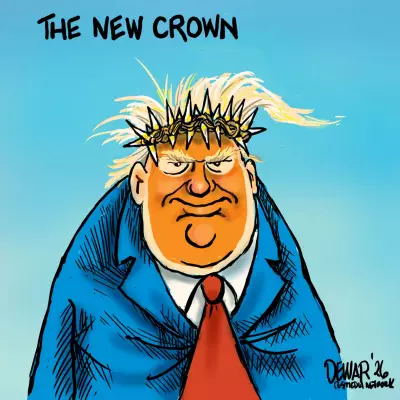
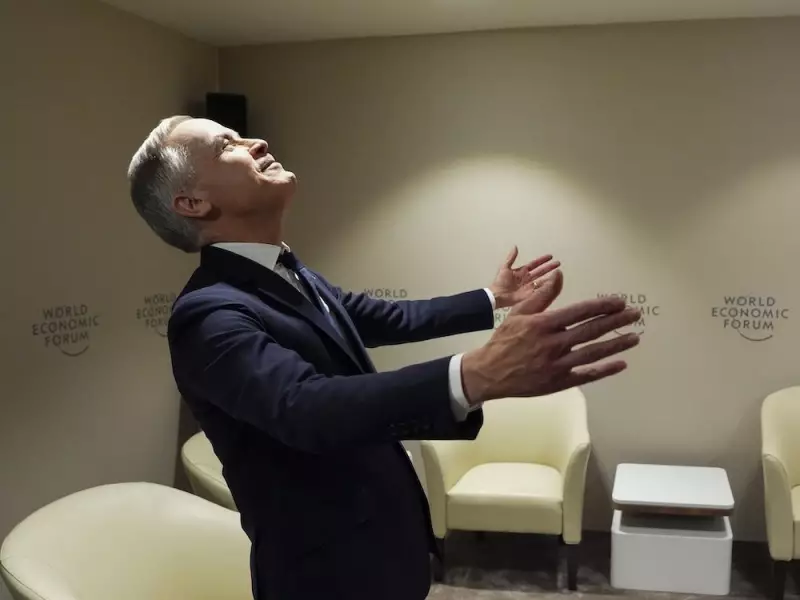
During his Tuesday speech at the World Economic Forum in Davos, Carney spoke of a fading "rules-based order" and declared that "we are in the midst of a rupture, not a transition." His comments contained thinly-veiled criticism of U.S. President Donald Trump's disruptive approach to foreign policy.
"Rather than waiting for the hegemon to restore an order it is dismantling," Carney argued, middle powers must "create institutions and agreements that function as described." This represents a call for nations outside the traditional superpower framework to establish new international structures.
Questioning the Foundations of Global Order
Carney's arguments might carry more weight if they acknowledged the true foundation of post-war international stability. He spoke as if the "international rules-based order" existed independently of American power, recognizing only the "fiction" that "the strongest would exempt themselves when convenient."
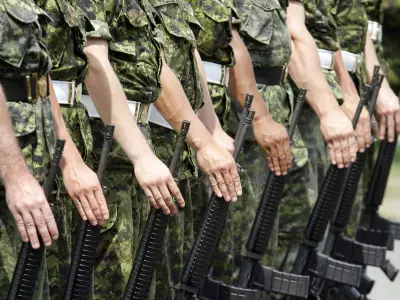
In reality, the relative peace and stability among Western nations and their allies since World War II has been fundamentally underpinned by American leadership. The United States didn't merely assist with "open sea lanes, a stable financial system, collective security, and support for frameworks for resolving disputes"—as Carney acknowledged—but actively subsidized and guaranteed the entire system through military power projection and the creation of global alliances.
The American Role in Post-War Stability
Carney's framing of amoral "hegemons" overlooks crucial historical context. Following the devastation of two world wars, the United States made a deliberate choice not to retreat into its traditional isolationism. Instead, America committed to protecting Western Europe and East Asia, recognizing that without this commitment, the world risked returning to destructive multipolar competition.
The primary threats then—as now—came from Russia and China. The international order Carney references didn't emerge spontaneously but was deliberately constructed and maintained through American leadership and sacrifice.
As Canada continues its perennial quest to carve out an independent global role, Carney's proposals represent both continuity with past efforts and a new articulation of middle power ambitions in an increasingly multipolar world.