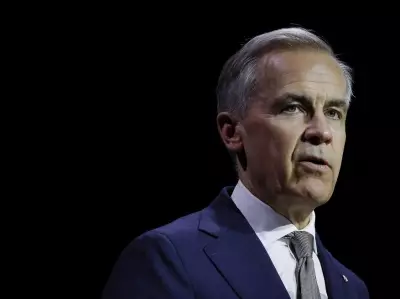
In recent days, a concerning parallel has emerged in Canadian foreign policy, drawing comparisons to the "Finlandization" of the Cold War era. This term, once describing Finland's delicate balance of appeasing the Soviet Union without alienating the West, now frames Prime Minister Mark Carney's approach to President Donald Trump's increasingly rogue international stance.
A Conspicuous Absence in European Solidarity
The stark reality of this strategy became evident on Tuesday, January 6, 2026. While the leaders of France, Germany, Italy, Poland, Spain, Britain, and Denmark issued a forceful joint statement defending Greenland's sovereignty, Carney's name was notably absent. The European leaders unequivocally stated that matters concerning the massive island's sovereignty are for "the Danes and Greenlanders, and them only" to decide.
This statement was a direct rebuke of comments made by President Trump days earlier, where he asserted the United States needs Greenland for national security—a claim made despite a 1951 defence agreement already granting the U.S. extensive military and investment rights there.

Canada's Muted, Vulnerable Response
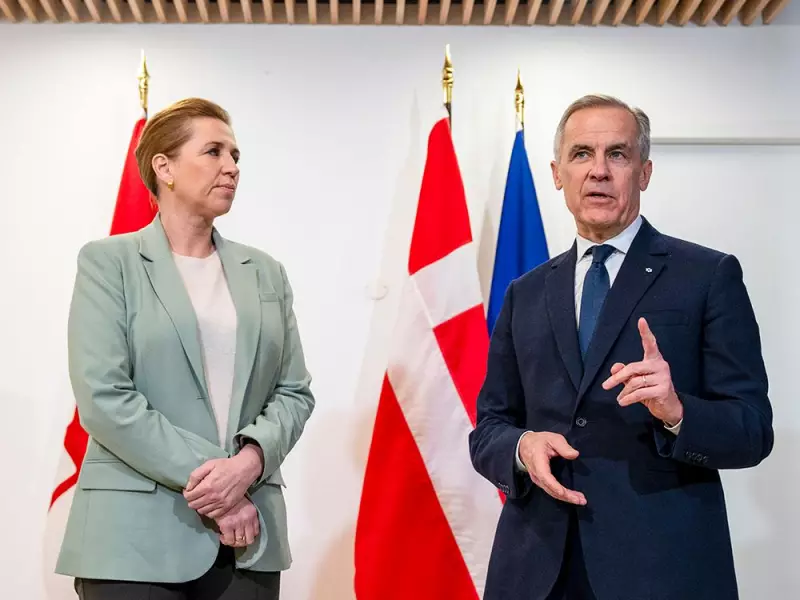
Instead of joining the robust European chorus, Carney pursued a quieter path. He met with Danish Prime Minister Mette Frederiksen at the Canadian embassy in Paris. Their subsequent statement reaffirmed Canada's support for Danish sovereignty, including over Greenland, but lacked the pointed language of the European declaration.
Later that day, Foreign Affairs Minister Anita Anand announced plans to open a Canadian consulate in Greenland, framing it as a step to strengthen engagement. Analysts suggest this more supine wording reflects Canada's acute vulnerability to American economic and political retaliation, a leverage point European nations feel less acutely.
The Dangerous Precedent for Canadian Borders
The core concern, as voiced by commentators like John Ivison, is the precedent this sets. If the United States believes it can ride roughshod over the borders and sovereignty of a NATO ally like Denmark regarding Greenland, what regard will it show for the rules governing the Canada-U.S. border, particularly in the strategic Great Lakes region?
The threat was underscored by comments from White House deputy chief of staff Stephen Miller. When asked on CNN if military force to acquire Greenland was off the table, Miller laughed, suggesting no one would fight the U.S. over it. His cavalier dismissal of the sovereignty of Greenland's 56,000 inhabitants sent a chilling signal about the administration's view of international norms.
While Carney's realpolitik of avoiding public confrontation with Trump is understandable in the short term, critics warn it risks emboldening a president who views rule-breaking as a tactic. By not drawing a firm line at Greenland, Canada may be inadvertently signaling that other lines—including those it holds most dear—could also be negotiable under pressure. The principles of self-determination and territorial integrity, cornerstones of the post-1945 order, are being tested, and Canada's response is being closely watched.