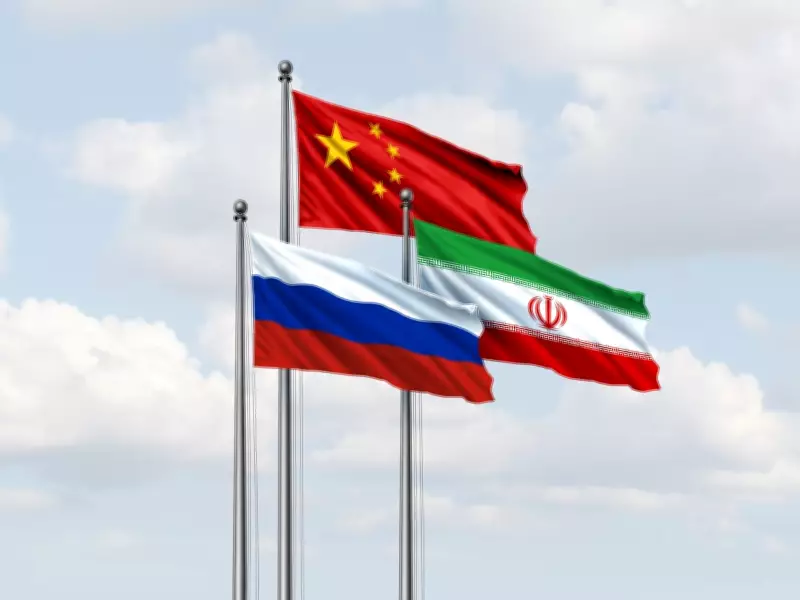
As the world watches the United States-Israeli alliance intensify its offensive against Iran's despotic regime, two powers in particular are paying especially close attention: China and Russia. Alan Kessel, a former Canadian diplomat and senior fellow with the Macdonald Laurier Institute, told the Toronto Sun that both nations are closely monitoring how the U.S. handles the Iranian threat, warning it is crucial for Washington to maintain pressure.
Strategic Implications of the Conflict
Kessel emphasized that the U.S. must demonstrate it can sustain pressure to force real concessions from Iran. He noted that China and Russia are observing whether the West can enforce pressure across multiple theatres, not just talk about it. The ongoing U.S. naval blockade in the Strait of Hormuz, coupled with President Donald Trump's "shoot to kill" orders against Iranian ships attempting to mine the waterway, has redirected dozens of ships and raised global tensions.
"There are a number of straits in other places — the Strait of Malacca, the Taiwan Strait, and the Sea of Japan," Kessel said. "There's a whole series of choke points, which analysts in various countries are watching to see how the US and its allies are working."

Russia Benefits from High Oil Prices
With the Strait of Hormuz bottleneck sending world energy prices soaring, Kessel pointed out that Moscow is taking advantage. "Sort of a mini-winner at the moment is Russia — with the huge increase in the cost of a barrel of oil, they've been using their oil and gas exports to Europe and other places to fund their war in Ukraine," he said. He added that Ukraine's existential battle and the Middle East conflict are linked, as the bad actors in both cases are similar.
The threat Iran poses extends far beyond regional targets, as demonstrated by the March 20 ballistic missile attack against Diego Garcia, a strategically important U.S.-UK military base on an Indian Ocean atoll about 1,700 km south of Sri Lanka. The attack was concerning because it involved missiles with a range exceeding 5,000 km, far beyond the known capabilities of Iran's Khorramshahr-4 missiles.
"If they can attack Diego Garcia, that means they can get to Paris, and it's only a jump to get to London," Kessel said. "It's stunning to think that the Europeans are not concerned about this."
China's Focus on Taiwan
If the United States fails to meet its objectives in Iran, Kessel warned, all bets are off in Taiwan and other strategically vital straits. China has ramped up its overt and covert destabilization efforts against Taiwan in recent years, including millions of daily cyberattacks, sabotaging undersea telecommunication cables, and paying to publish anti-Taiwan op-eds in Ottawa newspapers.
Recently, Taiwanese President Lai Ching-te was forced to cancel a five-day visit to Africa after three Indian Ocean nations, under pressure from Beijing, abruptly revoked overflight clearance for the presidential aircraft. Kessel suggested that U.S. control over the Strait of Hormuz could be a direct message to China regarding its increasing hegemony in the South China Sea and Taiwan Strait.
"China gets a considerable amount of its energy from Iran and has been from Venezuela, so two of their key suppliers have been curtailed," Kessel said. "The question now is, is this an attempt by the U.S. to show China, 'you may think you have control, but really we're serving our control over international trade routes, including the capacity for you to get what you need.'"