Cuban Leader Delivers Firm Message to Washington Amid Strained Relations
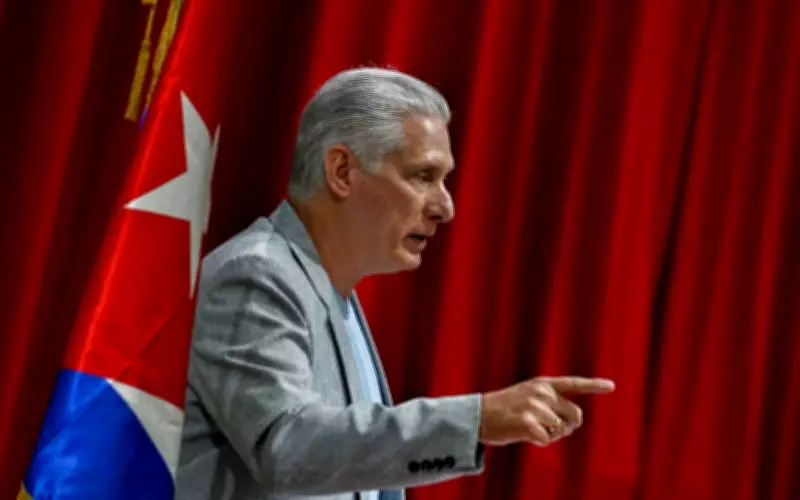
Cuban President Miguel Diaz-Canel has publicly cautioned the United States against launching any military assaults on the Caribbean island or attempting to overthrow his administration. The warning was delivered during a speech at the Convention Palace in Havana, where he addressed participants of the "Nuestra America" (Our America) Convoy on March 20, 2026. This statement comes as bilateral relations remain tense, with historical conflicts and recent geopolitical shifts influencing the dynamic between the two nations.
Escalating Rhetoric in a Long-Standing Conflict
President Diaz-Canel's remarks underscore the persistent friction between Cuba and the U.S., which has spanned decades. He emphasized Cuba's sovereignty and resilience, asserting that any external aggression would be met with firm resistance. The speech highlighted concerns over potential U.S. interventions, referencing past incidents and current political climates that fuel apprehension in Havana. Analysts note that such warnings are not uncommon but gain significance amid global uncertainties and regional power struggles.
The context of this address is critical, as it follows a period of diplomatic stalemates and economic challenges for Cuba. The island nation has faced sanctions and political pressure, contributing to a narrative of defiance against perceived imperialist threats. Diaz-Canel's message serves as a reminder of Cuba's commitment to its revolutionary principles and its readiness to defend its political system.

Implications for International Diplomacy and Regional Stability
This development has broader implications for international relations, particularly in the Western Hemisphere. The U.S. and Cuba have experienced fluctuating ties, with moments of thaw under previous administrations giving way to renewed hostilities. Diaz-Canel's warning could signal a hardening of positions, potentially affecting cooperation on issues like migration, trade, and security. Regional allies and observers are closely monitoring the situation, aware that escalated tensions might destabilize the area.
Furthermore, the timing coincides with other global events, such as the U.S. military's announcement of a blockade on Iranian ports after failed ceasefire talks, illustrating a pattern of assertive foreign policies. In this climate, Cuba's stance reflects a strategic effort to assert autonomy and deter external interference. The speech also resonates with domestic audiences, reinforcing national unity and leadership credibility amid internal economic hardships.
As the situation evolves, the international community watches for responses from Washington and other stakeholders. The warning from Havana adds another layer to the complex tapestry of U.S.-Cuba relations, reminding all parties of the delicate balance between diplomacy and confrontation in today's interconnected world.