European Union Hosts Palestinian Leader for Critical Security and Peace Conference
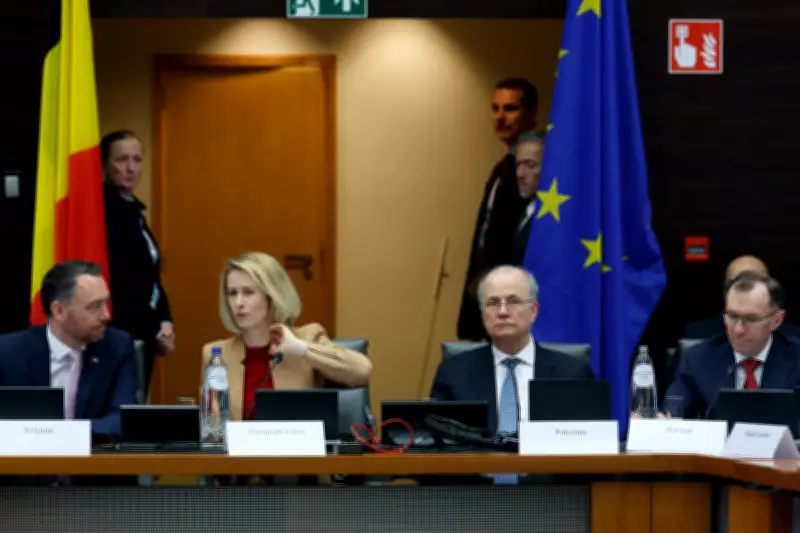
The European Union has taken a significant diplomatic step by hosting Palestinian Prime Minister Mohammad Mustafa for a high-level conference focused on security and peace in Gaza and the West Bank. This meeting, held in Brussels on Monday, April 20, 2026, underscores the EU's intensified efforts to address the ongoing Israel-Hamas conflict and advance sustainable solutions for the region.
Key Participants and Diplomatic Engagement
Prime Minister Mohammad Mustafa engaged directly with top European officials, including European Union foreign policy chief Kaja Kallas, Belgium's Foreign Minister Maxime Prevot, and Norway's Foreign Minister Espen Barth Eide. The gathering was part of the Global Alliance for the Implementation of the Two-State Solution, a coalition dedicated to fostering dialogue and actionable plans for Palestinian statehood alongside Israel.
The discussions centered on immediate security concerns in Gaza and the West Bank, with a particular emphasis on humanitarian aid, infrastructure rebuilding, and political stability. Participants explored mechanisms to de-escalate tensions and create a framework for long-term peace, recognizing the urgent need to address the root causes of the conflict.

Focus on the Two-State Solution and Regional Stability
EU foreign policy chief Kaja Kallas highlighted the alliance's commitment to the two-state solution as a cornerstone for regional peace. "This conference is not just about dialogue; it's about concrete steps toward security and sovereignty for Palestinians, while ensuring Israel's safety," Kallas stated. The meeting aimed to bridge gaps between international stakeholders and Palestinian leadership, fostering collaboration on governance, economic development, and security coordination.
Norwegian Foreign Minister Espen Barth Eide emphasized the importance of multilateral support, noting that "sustainable peace requires a united international front and tangible commitments from all parties involved." The conference also addressed challenges such as settlement expansions, access to resources, and the role of international law in conflict resolution.
Broader Implications and Future Initiatives
This EU-hosted event signals a renewed push for diplomatic engagement in the Middle East, following months of heightened violence and humanitarian crises. By bringing together Palestinian leaders and European diplomats, the conference seeks to lay groundwork for future negotiations and confidence-building measures. Outcomes from the discussions are expected to influence upcoming international forums and policy decisions, potentially shaping aid distributions and peacekeeping efforts in the region.
As the Israel-Hamas war continues to impact civilian populations, this initiative reflects a growing consensus on the need for structured peace processes. The EU plans to follow up with additional meetings and collaborative projects aimed at stabilizing Gaza and the West Bank, with a focus on empowering local institutions and promoting reconciliation.