Ceasefire Momentum in Gaza Stalls as Global Focus Shifts
Recent efforts to establish a lasting ceasefire in the Gaza Strip, which had shown promising signs of progress, are now facing significant setbacks. Diplomatic initiatives that once carried momentum have slowed considerably, raising concerns among observers and stakeholders in the region.
Distractions from New Conflicts
Analysts and regional experts are increasingly worried that emerging conflicts in other parts of the world, particularly the recent U.S.-Israel attacks on Iran, could completely divert international attention away from the Israel-Hamas war. This shift in global focus threatens to undermine the fragile diplomatic processes that were gradually building toward peace in Gaza.
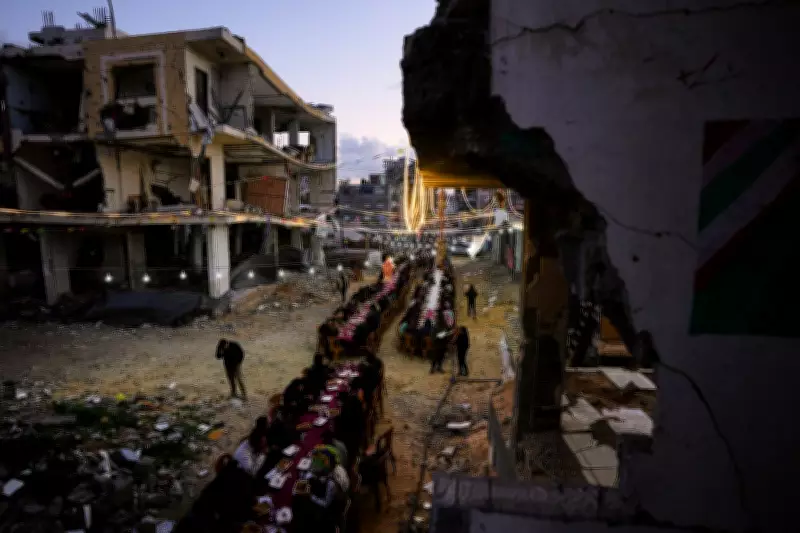
The timing could not be worse, as the Muslim holy month of Ramadan continues with Palestinians gathering for iftar meals amid the rubble of destroyed buildings in Gaza City. These scenes of daily life persisting through devastation highlight the urgent need for sustained international engagement.

International Response and Regional Implications
While Canadian authorities have stated there is no imminent threat to Canada from the fallout of U.S. attacks on Iran, the broader geopolitical landscape is becoming increasingly complex. The diversion of diplomatic resources and media attention to newer conflicts creates a vacuum that could allow tensions in Gaza to escalate once again.
Several factors contribute to this concerning development:
- Reduced international pressure on both Israel and Hamas to maintain ceasefire negotiations
- Shifted diplomatic priorities among key mediating nations
- Decreased humanitarian focus on Gaza's reconstruction needs
- Potential for renewed hostilities as oversight diminishes
The Human Cost of Diverted Attention
The potential consequences of waning international focus on Gaza are severe. Humanitarian organizations warn that without sustained diplomatic pressure and monitoring, the fragile progress made toward stabilizing the region could quickly unravel. The civilian population in Gaza, already suffering from extensive infrastructure damage and economic hardship, faces the prospect of renewed violence if ceasefire efforts completely stall.
Community initiatives like the joint Shabbat-Iftar dinner organized by Calgary's Jewish and Muslim communities demonstrate the grassroots desire for peace and understanding. However, such local efforts require supportive international frameworks to achieve lasting impact.
As global powers navigate multiple simultaneous crises, the challenge becomes maintaining adequate attention on all conflict zones rather than allowing newer conflicts to completely overshadow ongoing humanitarian disasters. The coming weeks will prove crucial in determining whether the international community can effectively multitask its diplomatic efforts or whether Gaza will indeed become a casualty of shifting global priorities.