Political Tug-of-War Over Iranian Women's Soccer Team Prompts Criticism in Australia
Political interference in Iran's national women's soccer team has sparked significant criticism from Australian officials and human rights advocates, raising concerns about the manipulation of sports for political ends. The controversy centers on recent events where the team's activities have been heavily influenced by governmental pressures, undermining the autonomy of female athletes in the country.
Background of the Controversy
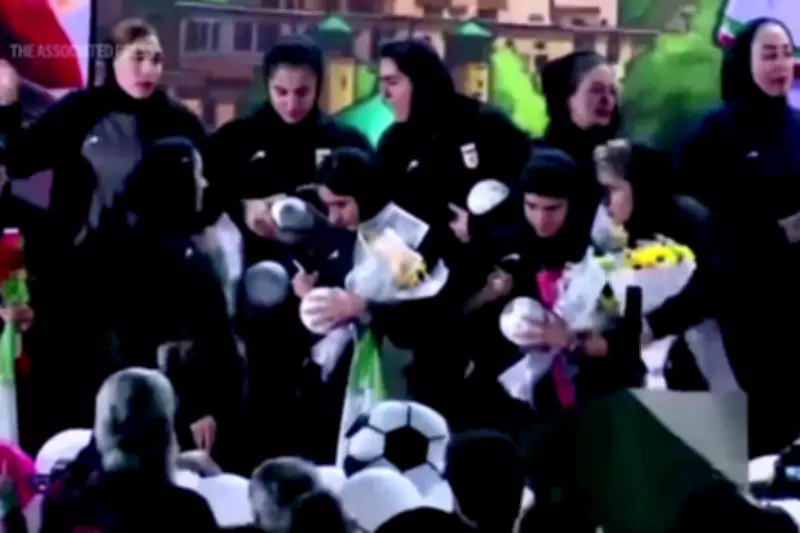
The issue came to light following a welcome ceremony in Tehran on March 19, 2026, where members of Iran's national women's soccer team were seen autographing soccer balls upon their return to the Islamic Republic. This event, while seemingly celebratory, has been interpreted by critics as a staged display aimed at projecting a facade of progressiveness, while behind the scenes, political forces continue to exert control over the team's operations and public image.
Australian observers have pointed out that such actions are part of a broader pattern where women's sports in Iran are used as tools for political propaganda, rather than being supported for genuine athletic development and gender equality. This has led to accusations that the Iranian government is prioritizing political agendas over the welfare and rights of its female athletes, a stance that contradicts international norms on sports and human rights.

Australian Response and International Implications
In response, Australian officials and sports organizations have voiced strong criticism, labeling the political tug-of-war as inappropriate and detrimental to the spirit of sportsmanship. They argue that such interference not only hampers the team's performance and morale but also sets a dangerous precedent for other nations, where sports could be exploited for political gain. This criticism aligns with broader international concerns about women's rights in Iran, where female athletes often face restrictions and surveillance.
The situation has also sparked discussions on the global stage about the role of sports diplomacy and how it can be leveraged to advocate for human rights. Australia's outspoken stance reflects a growing trend among Western nations to use sports as a platform to address social and political issues, particularly in regions with contentious human rights records. This has led to calls for increased scrutiny and potential sanctions if the interference persists.
Broader Context and Future Outlook
Beyond the immediate controversy, the political tug-of-war over Iran's women's soccer team highlights ongoing struggles for gender equality in the country. Female athletes in Iran have long navigated a complex landscape of cultural and political constraints, with their participation in sports often subject to strict regulations and oversight. This latest incident underscores the challenges they face in pursuing their careers free from external manipulation.
Looking ahead, the criticism from Australia may prompt further international action, including potential boycotts or advocacy campaigns aimed at pressuring Iran to reform its approach to women's sports. As the world watches, the outcome of this political struggle could have lasting implications for the future of women's soccer in Iran and beyond, shaping how sports intersect with human rights on a global scale. The hope among critics is that increased awareness will lead to meaningful change, allowing female athletes to compete with dignity and autonomy.