The Israeli government has taken a decisive and controversial step, clearing the last administrative obstacle required to initiate a large-scale settlement construction project in the occupied West Bank. The planned development, if completed, would geographically sever the northern and southern parts of the Palestinian territory, a move critics argue would severely undermine the viability of a future Palestinian state.
The Final Approval and Its Immediate Context
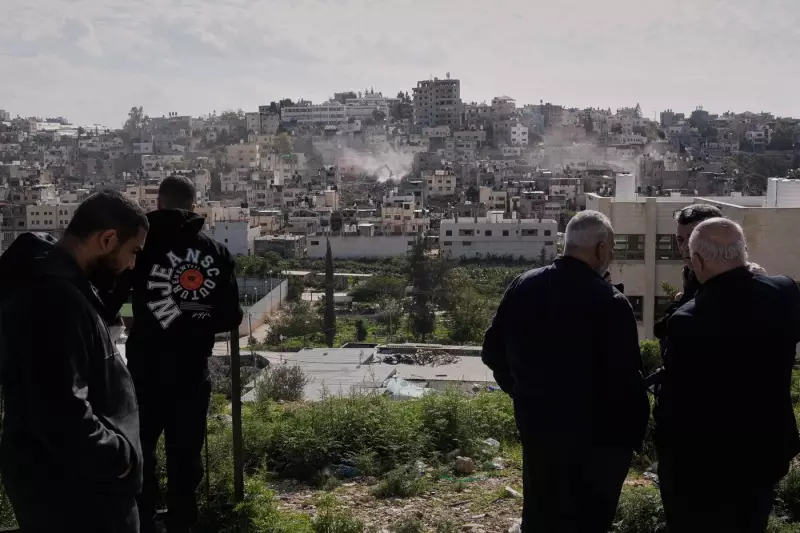
The final authorization was granted in the first week of January 2026, according to reports from The Associated Press. This decision follows a period of heightened tension and ongoing construction activities in the region. The news agency's report included a poignant image from Wednesday, December 31, 2025, showing an Israeli army bulldozer demolishing homes in the Nur Shams refugee camp near Tulkarem, highlighting the ongoing displacement that often accompanies settlement expansion.
This specific settlement plan is not a new proposal but represents the culmination of a long-standing strategic objective for some Israeli political factions. The project's scale and location are what make it particularly consequential, as it aims to create a contiguous band of Israeli settlements deep into the West Bank.

Geopolitical Implications and International Reaction
The strategic impact of the construction is profound. By effectively cutting the West Bank in two, the settlement belt would create a significant physical barrier between Palestinian population centers. Analysts warn this would:
- Fragment Palestinian-controlled areas, making contiguous governance nearly impossible.
- Complicate daily life for Palestinians by severing transportation and economic links.
- Further entrench Israel's control over territory captured in the 1967 war, which most of the international community considers occupied.
The timing of the final approval, coming at the start of a new year, is seen as a strong political signal from the Israeli government. It is expected to draw swift condemnation from Palestinian authorities, many Arab states, and likely a number of Western governments, including Canada, which traditionally advocates for a two-state solution. Such large-scale settlement construction is widely viewed as a major obstacle to any renewed peace negotiations.
A Broader Pattern of Settlement Activity
This major project is part of a consistent pattern of settlement expansion, which has accelerated in recent years. The demolition in Nur Shams just days before the final approval serves as a microcosm of the broader dynamic: the clearing of existing Palestinian structures to make way for new Israeli ones. Pro-settlement groups argue the construction is within Israel's rights and necessary for security and national growth.
However, human rights organizations and much of the diplomatic world view the settlements as illegal under international law, citing the Fourth Geneva Convention which prohibits an occupying power from transferring its civilian population into the territory it occupies. The January 2026 decision is set to reignite this long-standing legal and political debate on the global stage.
The move solidifies a reality on the ground that will be extremely difficult to reverse, potentially foreclosing diplomatic options that have been discussed for decades. As machinery prepares to break ground, the action is less about building homes and more about drawing what many fear will be a permanent, divisive line through the heart of the West Bank.