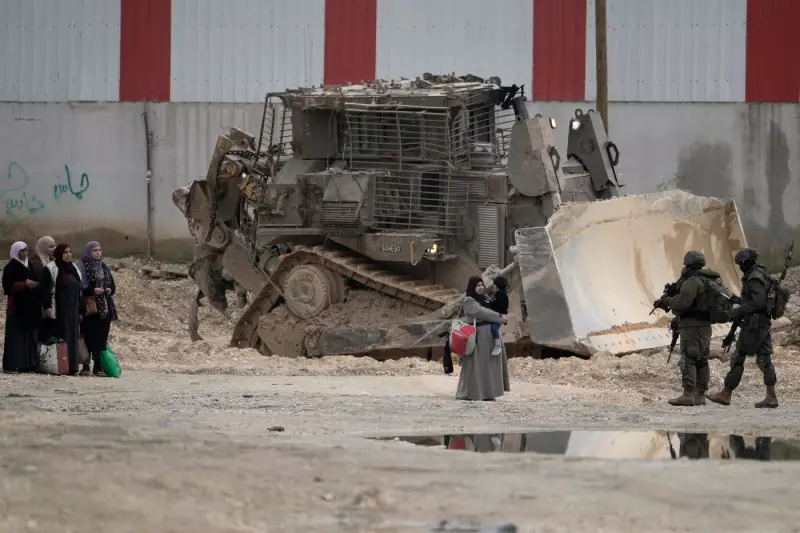
In a move that is set to escalate already high tensions in the region, the Israeli government has declared its intention to seize a prominent historical site located in the occupied West Bank. The plan involves the Roman archaeological area in the town of Sebastia, designating it for the development of a new Israeli settlement.
Details of the Controversial Seizure Plan
The announcement was made public on November 20, 2025. The targeted location is a well-known Roman historical site in Sebastia, a Palestinian town in the northern West Bank. Photographic evidence from the day of the announcement shows Palestinian visitors at the site, underscoring its continued cultural significance to the local population.
This decision comes amidst the ongoing and complex backdrop of the Israel-Hamas conflict, adding a new layer of dispute over land and heritage in the Palestinian territories. The appropriation of culturally significant land for settlement expansion has long been a central point of contention in the Middle East peace process.

Historical Significance and Immediate Reactions
The site in Sebastia is rich with ancient ruins from the Roman era, making it an area of considerable archaeological and historical value. Plans to repurpose such locations for settlement construction are typically met with strong international criticism and condemnation from Palestinian authorities.
While the immediate Palestinian and international response to this specific announcement is not detailed in the initial report, historical precedent suggests it will likely be denounced as an obstacle to a two-state solution. Such actions are widely viewed by many countries as violating international law, which prohibits the transfer of an occupying power's population into occupied territory.
Broader Implications for the Region
This move to seize the Sebastia historical site signals a potential hardening of Israel's settlement policy in the West Bank. The expansion of settlements is one of the most sensitive issues in the Israeli-Palestinian conflict, and this development is poised to further complicate diplomatic efforts and stability in the region.
The international community, including Canada, often monitors these developments closely, as they have direct implications for the viability of a future independent Palestinian state and the prospects for a negotiated peace. The decision is expected to draw significant scrutiny and debate in the coming days and weeks.