Former Diplomat Cautions Against Expecting Swift Political Shift in Iran
A former ambassador to the Middle East has issued a stark warning that the death of Iran's Supreme Leader Ayatollah Ali Khamenei does not automatically guarantee a regime change in the Islamic Republic. This assessment comes amidst heightened regional tensions following joint military strikes by the United States and Israel against Iranian targets, which have sparked international concern and domestic reactions across Canada.
Complex Political Landscape Persists
The ex-ambassador emphasized that Iran's political system is deeply entrenched, with multiple power centers and institutions that can maintain continuity despite leadership changes. "The notion that Khamenei's passing would immediately lead to political transformation is overly simplistic," the former diplomat stated. "Iran's revolutionary guards, clerical establishment, and security apparatus have vested interests in preserving the current system."
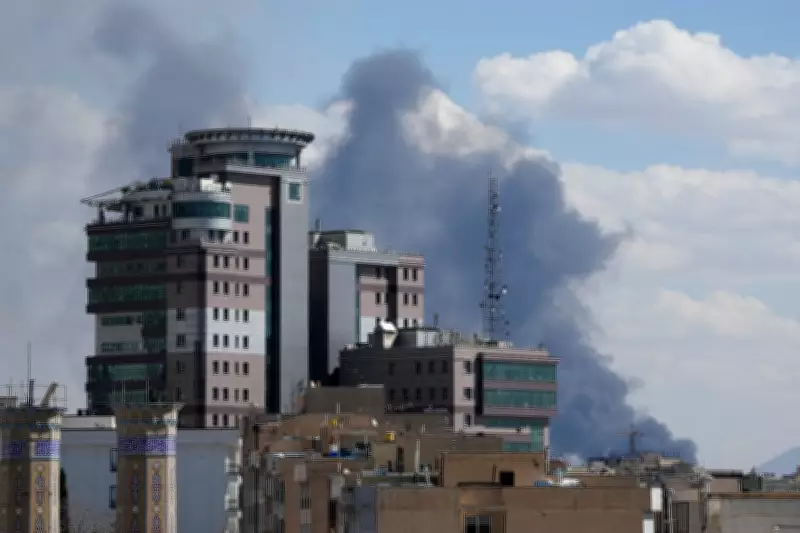
This perspective emerges as world leaders grapple with the aftermath of Khamenei's death after his 36-year rule. The Supreme Leader's demise has created uncertainty in a region already destabilized by recent military actions. U.S. President Donald Trump has characterized operations against Iran as "major combat" while simultaneously signaling willingness to engage with Iran's new leadership.

Regional and Domestic Reactions
In Canada, police agencies have increased patrols around places of worship and key locations as a precautionary measure, though authorities maintain there is no "imminent threat" to the country. Iranian communities in Canadian cities like Winnipeg and Regina have expressed mixed reactions to developments in their homeland, with some expressing hope for change while others remain cautious.
Defense Minister Anita Anand has voiced support for Qatar and the United Arab Emirates against potential Iranian aggression, even as Prime Minister Carney engages in diplomatic efforts during his visit to India. The geopolitical situation has already impacted global markets, with oil prices experiencing volatility due to supply uncertainty following the U.S.-Israel strikes.
Broader Implications for International Relations
The former ambassador's analysis suggests that Western powers should prepare for a protracted period of uncertainty rather than expecting immediate political transformation in Tehran. "This is not over by any means," the diplomat cautioned, highlighting how Iran's internal power dynamics, regional proxy networks, and nuclear ambitions will continue to shape Middle Eastern stability for the foreseeable future.
As international observers monitor the succession process in Iran, the ex-ambassador's warning serves as a reminder that leadership changes in authoritarian systems often reinforce existing structures rather than dismantling them. The coming months will test whether Iran's new leadership pursues reform or continuity in both domestic governance and foreign policy.