Pakistan Emerges as Key Mediator in U.S.-Iran Conflict
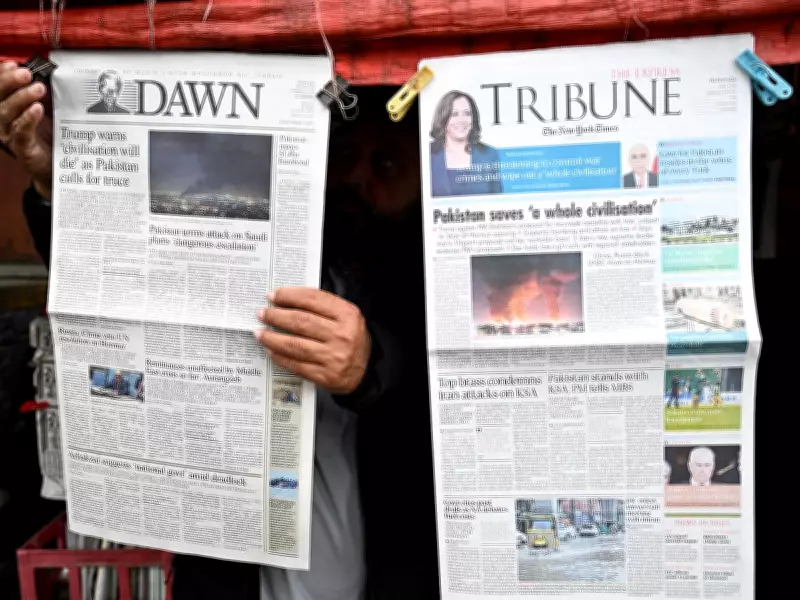
In a surprising diplomatic development, Pakistan has successfully brokered a temporary ceasefire between the United States and Iran, positioning itself as a crucial intermediary in the ongoing Middle East conflict. Prime Minister Shehbaz Sharif announced on Wednesday that both nations, along with their allies, have agreed to halt hostilities "everywhere" following intensive mediation efforts by his government.
A Complex Diplomatic Achievement
This two-week truce, which was initially announced by Washington and Tehran, represents what experts are calling one of Pakistan's most significant diplomatic victories in recent years. South Asia expert Michael Kugelman noted in a social media post that "Pakistan achieved one of its biggest diplomatic wins in years" and "defied many skeptics and naysayers that didn't think it had the capacity to pull off such a complex, high stakes feat."
The ceasefire is expected to pave the way for formal negotiations to be hosted in Islamabad, Pakistan's capital city. This development comes at a critical juncture in Middle East tensions and demonstrates Pakistan's growing influence as a regional peacemaker.

Pakistan's Strategic Relationships
Pakistan's unique position as a nation maintaining positive relations with both Washington and Tehran has proven instrumental in this diplomatic breakthrough. Asif Durrani, Pakistan's former ambassador to Iran, emphasized that "Pakistan has strong credentials as the only country in the region enjoying good relations with the U.S. and Iran."
The historical and cultural ties between Pakistan and Iran are particularly significant:
- Pakistan shares a 900-kilometer border with Iran in its southwestern region
- Pakistan is home to the world's second-largest Shia Muslim population after Iran
- Iran was the first country to recognize Pakistan after its independence in 1947
- Pakistan reciprocated by recognizing the Islamic Republic after the 1979 revolution
- Pakistan represents some Iranian diplomatic interests in Washington, where Tehran lacks an embassy
U.S.-Pakistan Relations and Personal Diplomacy
The personal rapport between Pakistan's military leadership and U.S. President Donald Trump has played a crucial role in facilitating this diplomatic breakthrough. Field Marshal Asim Munir, Pakistan's powerful army chief, has developed a strong working relationship with the American president.
During a visit to Washington last year following tensions between Pakistan and India in Kashmir, Prime Minister Sharif praised Trump's "bold and visionary" intervention, while Munir suggested the U.S. leader deserved the Nobel Peace Prize for preventing escalation between the nuclear-armed neighbors. Trump himself acknowledged Pakistan's unique understanding of Iran, stating that Pakistan knows the country "better than most."
These personal relationships have helped strengthen bilateral ties that have experienced significant strain in recent decades, particularly during the post-9/11 "war on terror" period when Pakistan faced U.S. accusations of harboring militants, and after the 2011 U.S. operation that killed al-Qaeda leader Osama bin Laden on Pakistani soil.
Regional Considerations and Future Implications
Pakistan's diplomatic maneuvering occurs within a complex regional context. The country's 2025 strategic mutual defense agreement with Saudi Arabia creates certain limitations on how far Islamabad can extend support to Tehran, balancing relationships with multiple regional powers.
This ceasefire agreement represents not only a temporary pause in hostilities but also establishes Pakistan as a credible mediator capable of navigating the intricate web of Middle Eastern geopolitics. The upcoming talks in Islamabad will test whether this temporary truce can evolve into a more lasting peace agreement, potentially reshaping regional dynamics and Pakistan's international standing.