Poilievre Calls for Stoic Pragmatism in Dealing with Trump Administration
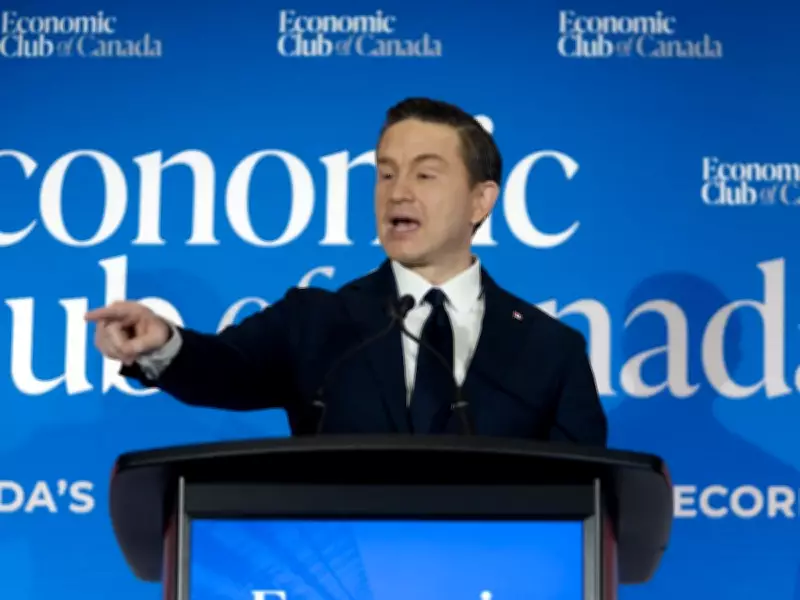
In a significant address delivered on Thursday, Conservative Opposition Leader Pierre Poilievre outlined a vision for Canada's relationship with the United States that emphasizes calm, practical engagement over the aggressive posturing he attributes to Prime Minister Mark Carney. Speaking at the Economic Club of Canada in Toronto, Poilievre argued that while both he and Carney desire a strong, independent Canada, their methods for achieving this goal diverge sharply.
A Philosophical Divide on Foreign Policy
Poilievre explicitly rejected what he characterized as Carney's pugilistic attitude, which he suggested risks turning an ally into an adversary. Instead, the Conservative leader invoked the wisdom of Roman emperor and Stoic philosopher Marcus Aurelius, quoting, "You have power over your mind — not outside events. Realize this and you will find strength." This philosophical grounding forms the core of his proposed approach: focusing on controllable domestic strengths rather than external political volatility.
The central question Poilievre posed is whether his brand of pragmatism can resonate with Canadians amidst what he describes as Carney's fearmongering and passionate rhetoric. He pointed to Carney's recent speech in Davos, where the Prime Minister excoriated the United States—though without naming it directly—for rupturing the global order, behaving like a bully, and abandoning rules in pursuit of power. Carney quoted Thucydides, "The strong do what they can, and the weak must suffer what they must," urging middle powers to band together.

Contrasting Visions of Sovereignty and Engagement
Poilievre critiqued this stance as part of a broader pivot away from the U.S., noting Carney's "elbows up" election campaign and recent business outreach to Beijing. However, Poilievre countered that world events, national sovereignty, and economic stability are not dictated by any single foreign leader, regardless of their prominence. He emphasized, "Canada cannot control the decisions of foreign presidents. We cannot control global shocks or the volatility of the world. But we can control the strength of our own country."
For Poilievre, this control manifests in building a solid, self-reliant economy and avoiding dependency. He asserted, "The path to sovereignty begins with focusing relentlessly on what is within our power." This stoic perspective, he clarified, does not equate to powerlessness. With upcoming negotiations over the Canada-U.S.-Mexico free trade agreement, Poilievre highlighted several leverage points Canada possesses:
- Being America's second-largest customer.
- Controlling the hemisphere's largest landmass, airspace, and northern approaches.
- Holding vast stores of critical minerals vital to allies.
- Directing significant defense spending likely to flow to U.S. industries.
He argued that the deep, successful partnership between Canada and the U.S. is too valuable to abandon. Poilievre's speech thus frames a clear foreign policy alternative: a resilient, pragmatic engagement rooted in national strength, standing in stark contrast to what he portrays as Carney's adversarial and fear-driven strategy.