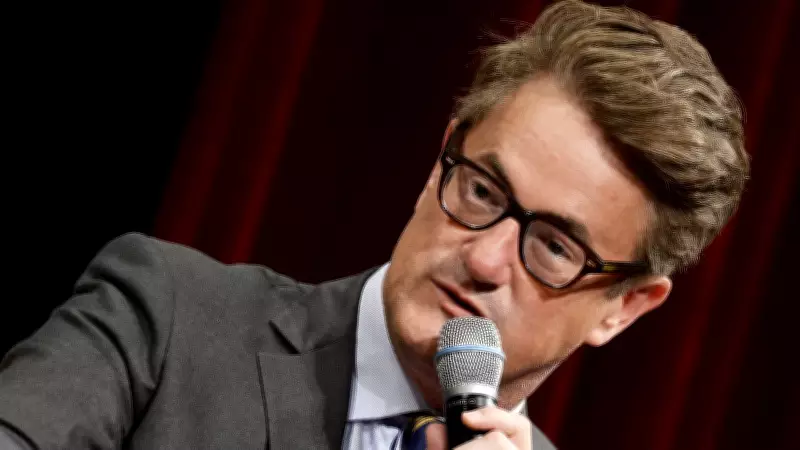
Joe Scarborough Issues Stern Warning Against 'Drunk on Power' Military Adventurism
MSNBC host Joe Scarborough delivered a powerful critique of escalating Republican rhetoric favoring military force against foreign nations during Monday's episode of "Morning Joe." The former Republican congressman expressed deep concern about what he described as America getting "drunk on power" and warned that recent discussions about military interventions in Cuba, Venezuela, and Iran represent a dangerous path forward.
A 'Recipe for Disaster' in Foreign Policy
Scarborough specifically targeted the Trump administration's apparent strategy, which he characterized as following attacks on Venezuela and Iran with a mission to take Cuba. "This is a recipe for disaster," Scarborough declared emphatically to his viewers. He reminded his audience that historical precedent has consistently demonstrated that such military interventions "never end well" for the United States, regardless of the administration in power.
The warning gained particular urgency after Scarborough played a clip featuring Senator Lindsey Graham (R-S.C.) openly boasting that Cuba was "next" on America's list of targets. Scarborough described the senator's trigger-happy attitude as something that genuine conservatives, including himself, have long feared and actively loathed. He expressed dismay at what he perceives as a departure from traditional conservative foreign policy principles.

Questioning America's Global Role
Scarborough openly scoffed at the notion that America bears responsibility "to export democracy to all four corners of the globe." He directly challenged the interventionist mindset, stating: "'We're on the march, we're going across the world.' No! No, that didn't work for George W. Bush, it's not going to work for this president."
The television host elaborated on his concerns about what he termed "American adventurism" and "jingoism," where political figures advocate for invading multiple nations perceived as adversaries. "This sort of thinking where you're saying, 'let's invade Venezuela, let's invade Cuba, let's invade Iran, let's march through the world and invade all the bad guys' has proven time and time again to be a trap," Scarborough emphasized.
The Strength of Restraint
Scarborough presented a contrasting vision of American power, arguing that "America is strong when America is restrained." While acknowledging that there are legitimate circumstances requiring military deployment, he drew a clear distinction between necessary conflicts and what he described as militaristic overreach.
"There are times we have to send our troops to war, I completely understand that," Scarborough conceded. "But this sort of drunk on power, this sort of drunk on militarism always leads to disaster." His comments reflect growing concern among some foreign policy experts about the potential consequences of expanding military engagements without clear strategic objectives.
Trump's Recent Comments Add Context
Scarborough's warning comes just days after President Donald Trump made pointed remarks about Cuba during a meeting with Latin American leaders at his golf club in Doral, Florida. Trump vowed to "take care of Cuba" while criticizing the socialist-led Caribbean nation's economic and political situation.
The president claimed Cuba had "no money," "no oil," "a bad philosophy," and a "bad regime." He went further, asserting: "Cuba's in its last moments of life, as it was. It'll have a great new life, but it's in its last moments of life the way it is." These comments have raised questions about potential policy shifts toward the island nation that has been subject to American sanctions for decades.
Scarborough's commentary represents a significant voice in the ongoing debate about America's role in global affairs, particularly as discussions about military intervention gain renewed attention within certain political circles. His warning serves as a reminder of the complex historical lessons surrounding foreign military engagements and their long-term consequences for both the United States and the nations affected by such policies.