Son of Iran's Last Shah Calls for International Intervention Amid Deadly Crackdown
The son of Iran's last monarch, Shah Mohammad Reza Pahlavi, has issued a public appeal for international intervention in response to the Iranian government's ongoing crackdown on dissent. This appeal comes as the current regime's actions are being described by observers as the deadliest in modern Iranian history, raising urgent questions about the future of the country and the potential for external involvement.
Appeal from the Pahlavi Dynasty
Reza Pahlavi, the exiled son of the last Shah of Iran, has intensified his calls for the global community to take decisive action against the Iranian government. In recent statements, he has emphasized the severe human rights violations and the escalating violence perpetrated by the regime. Pahlavi argues that the international community has a moral and strategic obligation to intervene, citing the widespread suffering of the Iranian people and the destabilizing impact of the regime's policies on regional security.
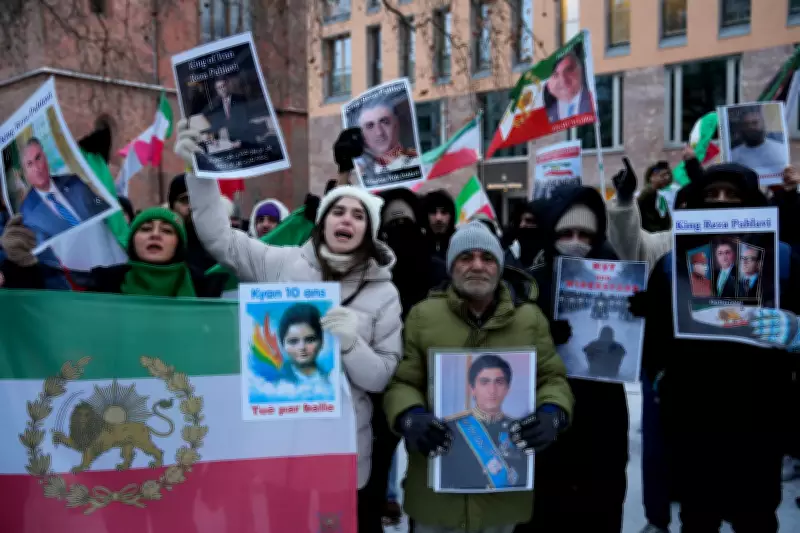
His appeal highlights the historical context of his family's rule and the subsequent Islamic Revolution, framing the current crisis as a continuation of the struggle for freedom and democracy in Iran. Pahlavi's message resonates with many in the diaspora and some within Iran who view the monarchy era with nostalgia, though it also faces criticism from those who oppose the former regime's authoritarian practices.

Deadliest Crackdown in Modern History
Independent analysts and human rights organizations have labeled the Iranian government's recent crackdown as the most lethal in the country's contemporary history. Reports indicate a significant increase in arrests, executions, and violent suppression of protests, with casualties mounting rapidly. The crackdown targets a wide range of dissidents, including political activists, journalists, and ordinary citizens expressing discontent.
This severity has drawn comparisons to past repressive periods, but experts note that the scale and brutality of the current actions are unprecedented in the post-revolution era. The government's tactics involve extensive use of force, digital surveillance, and legal maneuvers to silence opposition, creating an atmosphere of fear and intimidation across the nation.
Expert Analysis on Future Scenarios
Kyle Matthews, a security analyst from the Institute for Global Security, provides insight into what might come next in Iran. According to Matthews, the situation is at a critical juncture, with several potential outcomes on the horizon.
- Increased International Pressure: Matthews suggests that heightened diplomatic and economic sanctions could be imposed by Western nations, aiming to curb the regime's aggressive behavior. This might include targeted measures against key officials and institutions involved in the crackdown.
- Internal Fragmentation: The analyst points to the possibility of growing divisions within the Iranian government and security forces, which could lead to internal conflicts or a weakening of the regime's control.
- Escalation of Protests: Despite the crackdown, public discontent may continue to simmer, potentially erupting into larger, more organized demonstrations that challenge the regime's authority more directly.
- Regional Implications: Matthews warns that the instability in Iran could have ripple effects across the Middle East, affecting neighboring countries and global security dynamics, particularly in terms of energy supplies and geopolitical alliances.
Matthews emphasizes that the international community's response will be crucial in shaping these outcomes. He advocates for a coordinated approach that balances pressure with support for civil society and human rights initiatives within Iran.
Broader Context and Global Reactions
The appeal from Reza Pahlavi occurs against a backdrop of increasing global attention on Iran's internal affairs. Various governments and international organizations have expressed concern over the human rights situation, but responses have been mixed, ranging from condemnatory statements to limited actions.

Some countries have called for United Nations investigations or imposed sanctions, while others prioritize diplomatic engagement or economic interests, leading to a fragmented international stance. This lack of unity complicates efforts to mount an effective intervention, as Pahlavi and his supporters seek more robust measures.
Meanwhile, within Iran, the regime has dismissed external calls for intervention as interference in its sovereign affairs, framing the crackdown as necessary for maintaining national security and stability. State media often portrays dissidents as foreign-backed agitators, using this narrative to justify harsh responses.
Looking Ahead
As the crisis deepens, the role of the international community remains a pivotal factor. Reza Pahlavi's appeal adds a prominent voice to the chorus calling for action, but the path forward is fraught with challenges. Experts like Kyle Matthews stress the need for careful consideration of the potential consequences of intervention, whether through sanctions, diplomatic isolation, or other means.
The coming months will likely see continued volatility in Iran, with the world watching closely to see if global powers can forge a coherent strategy to address the humanitarian and security issues at stake. The outcome could significantly influence not only Iran's future but also the broader landscape of international relations and human rights advocacy.