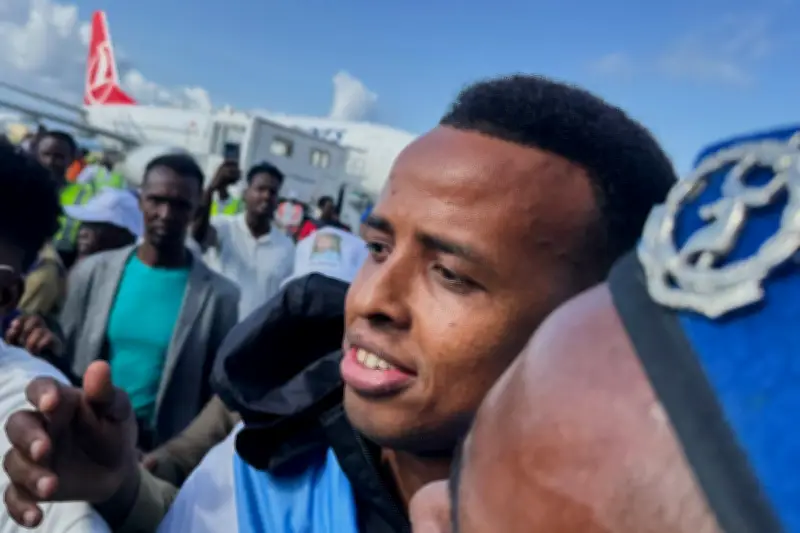
A Somali World Cup referee, who was denied entry to the United States, returned home to a hero's welcome, drawing attention to ongoing tensions surrounding travel restrictions and their impact on international sports.
Background of the Incident
The referee, whose identity has not been disclosed, was scheduled to officiate matches in the 2026 FIFA World Cup, hosted jointly by the United States, Canada, and Mexico. However, upon attempting to enter the U.S., he was denied entry by customs officials, reportedly due to issues with his visa or documentation. The incident sparked outrage among Somali officials and international soccer communities, who viewed it as an affront to the spirit of the tournament.
Homecoming Celebrations
Upon his return to Somalia, the referee was greeted by crowds of supporters at Mogadishu's Aden Adde International Airport. Fans waved flags and chanted his name, celebrating him as a symbol of national pride. Somali Football Federation officials praised his resilience, stating that the denial would not diminish his contributions to the sport. The referee expressed gratitude for the warm welcome, vowing to continue his work in soccer despite the setback.

Broader Implications
The incident has reignited debates over U.S. travel policies, particularly those affecting citizens from predominantly Muslim countries. Critics argue that such restrictions undermine global sporting events and perpetuate discrimination. Supporters of stricter immigration controls, however, maintain that national security must take precedence. The case has also highlighted the challenges faced by officials from developing nations in accessing international tournaments.
Reactions from the Soccer Community
FIFA and the Confederation of African Football have issued statements expressing concern over the referee's treatment, urging the U.S. to review its procedures. Several prominent soccer figures, including former players and referees, have called for a fair and transparent process for all officials involved in the World Cup. The incident has also prompted discussions about alternative venues for future tournaments to ensure inclusivity.
As the 2026 World Cup approaches, this case serves as a reminder of the complex interplay between sports and geopolitics. The referee's hero's welcome in Somalia underscores his status as a national icon, even as questions linger about the barriers he faced.