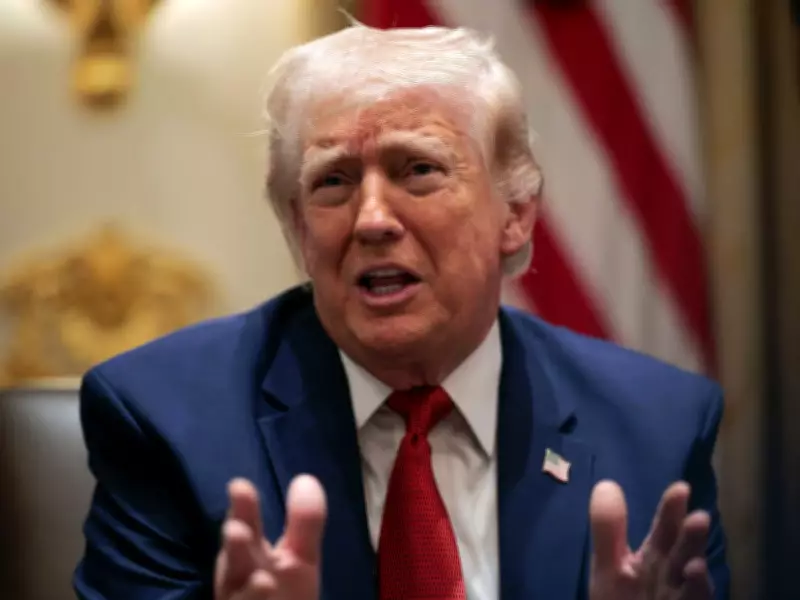
U.S. President Donald Trump delivered a sharp ultimatum to Iranian negotiators on Thursday, March 26, 2026, telling them they must "get serious soon, before it is too late" in ongoing talks. The president's warning came via posts on his Truth Social network, where he claimed Iranian officials were privately "begging" for a ceasefire while publicly stating they were merely reviewing Washington's proposals.
Trump's Direct Message to Tehran
In his social media posts, Trump described Iranian negotiators as "very different and 'strange'" and asserted they should be eager to make a deal since Iran has been "militarily obliterated, with zero chance of a comeback." The president emphasized the urgency of the situation, warning that once a certain point is reached, "there is no turning back, and it won't be pretty!"
Military Context and NATO Criticism
The president's comments come amid continued U.S. military operations against Iran. In a separate post on Thursday, Trump criticized NATO member states for having done "absolutely nothing to help with the lunatic nation, now militarily decimated, of Iran." He added that Washington "needs nothing from NATO" but urged observers to "never forget" this point in time.

Last week, Trump revealed that most NATO members had declined his request to assist with securing safe passage for ships through the Strait of Hormuz, where Iran has imposed a blockade. The president maintained that the United States doesn't require their assistance despite the refusal.
White House Updates on Military Progress
White House Press Secretary Karoline Leavitt provided reporters with an update on Wednesday regarding "Operation Epic Fury," the U.S. military campaign against Iran. She stated that the United States was approaching its "core objectives" as it systematically dismantles Iran's defense industrial base.
Leavitt detailed that U.S. efforts are concentrated on securing the vital Strait of Hormuz, including recent strikes on underground facilities used to store anti-ship missiles and mobile launchers. According to her assessment, the military has made significant progress, with more than 9,000 targets struck in just over three weeks, resulting in an estimated 90 percent reduction in Iran's ballistic missile and drone attacks.
Diplomatic Efforts Continue
Despite the military operations, Leavitt confirmed that Washington and Tehran have been engaged in "productive talks" for the past three days. "The president's preference is always peace," she stated. "There does not need to be any more death and destruction."
However, the spokeswoman issued her own warning, indicating that if Iran fails to seize the opportunity presented in the current negotiations, it would face an attack "that would dwarf current operations." This statement underscores the dual approach of military pressure and diplomatic engagement that characterizes the current U.S. strategy toward Iran.
Broader Implications
The escalating situation highlights the complex dynamics between military action and diplomatic negotiation in international conflicts. Trump's direct communication style through social media continues to shape the public narrative around foreign policy, while military officials provide more detailed assessments of operational progress.
The Strait of Hormuz remains a critical flashpoint, with its strategic importance for global oil shipments adding urgency to both military and diplomatic efforts. As talks continue behind the scenes, public statements from both the president and his administration maintain pressure on Iranian negotiators to reach an agreement before what Trump describes as an irreversible turning point.