Trump's Gaza Board of Peace Secures $7 Billion in Pledges at Inaugural Meeting
The inaugural gathering of U.S. President Donald Trump's Gaza "Board of Peace" has concluded with significant financial commitments, as nine member states pledged over $7 billion to support the initiative. The meeting, held on Thursday, February 19, 2026, in Washington, D.C., marked a pivotal step in Trump's efforts to bolster peace and reconstruction in the conflict-ridden region.
US Pledges Additional $10 Billion
In a substantial show of support, the United States announced an additional pledge of $10 billion to further the board's objectives. This brings the total financial backing for the initiative to a remarkable $17 billion, underscoring the administration's commitment to stabilizing Gaza and fostering long-term peace between Israel and Hamas.
Trump Issues Warning to Iran
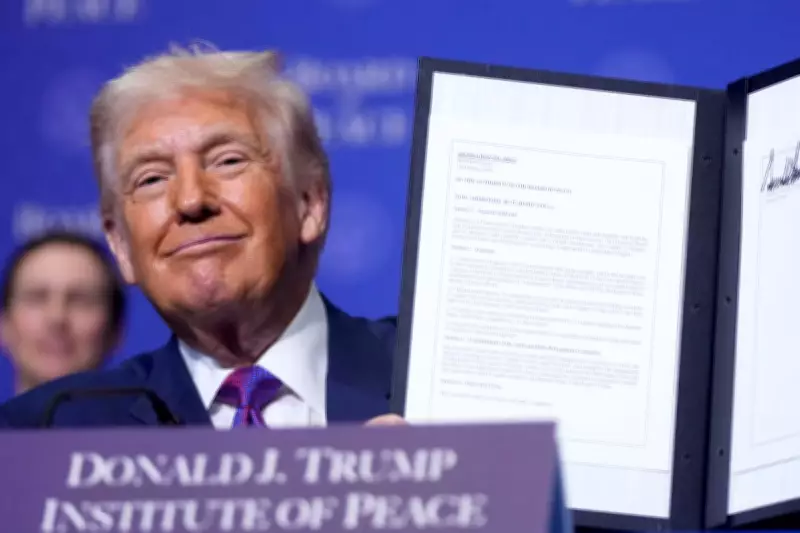
During his address at the U.S. Institute of Peace, President Trump delivered a pointed message to Iran, urging the regime to abandon its nuclear weapons program. He emphasized that a nuclear-armed Iran is incompatible with Middle Eastern stability and peace.

"Now is the time for Iran to join us on a path that will complete what we're doing," Trump stated. "If they join us, that'll be great—if they don't join us, that'll be great too, but it'll be a very different path. They cannot continue to threaten the stability of the entire region, and they must make a deal... if it doesn't happen it doesn't happen, but bad things will happen if it doesn't."
Board of Peace Origins and Structure
The Board of Peace was officially launched one month prior at the World Economic Forum in Davos, Switzerland. Designed to support the fragile ceasefire between Israel and Hamas and oversee Gaza's reconstruction, the board currently includes 27 nations. Members can join for three-year terms or purchase a permanent seat for $1 billion.
Key member states include:
- Israel
- Indonesia
- Hungary
- Pakistan
- Saudi Arabia
- Egypt
- Turkey
- United Arab Emirates
Canada's Exclusion from the Initiative
In a notable diplomatic move, Canada's invitation to join the board was rescinded by the Trump administration in late January. This decision followed Prime Minister Mark Carney's critical speech at Davos regarding U.S. foreign policy under Trump's leadership. While Canada had expressed willingness to participate, Ottawa declined to pay the $1 billion fee for permanent membership, citing budgetary constraints.
Approximately 60 nations were invited to participate in the board, with slightly more than half agreeing to sign on. The White House has indicated that the board's efforts will focus on humanitarian aid, infrastructure development, and diplomatic engagement to prevent further escalation in the region.
The Board of Peace represents a significant shift in U.S. foreign policy, prioritizing direct financial investment and multilateral cooperation to address one of the world's most protracted conflicts. As the initiative moves forward, its success will hinge on sustained commitment from member states and the willingness of all parties to engage in constructive dialogue.