Trump's Dramatic Reversal on Greenland: Strategic Retreat or Calculated Pivot?
In a remarkable foreign policy shift that unfolded throughout January 2026, U.S. President Donald Trump executed a complete about-face on his aggressive campaign to acquire Greenland, moving from invasion threats and tariff ultimatums to proposing a collaborative Arctic security framework. This sudden reversal brought palpable relief across European capitals and triggered positive movements in global financial markets.
From Confrontation to Conciliation
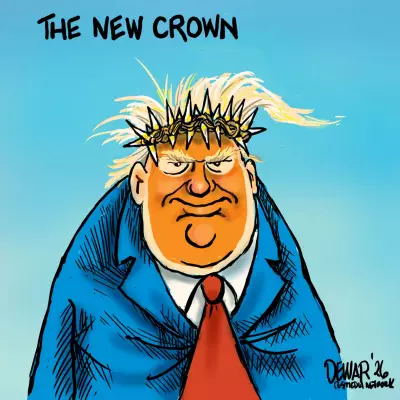
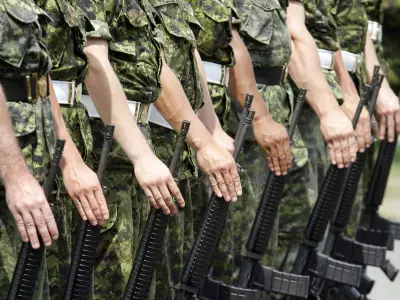
Fresh from operations in Venezuela earlier in the month, President Trump had escalated demands for American ownership of Greenland, threatening military invasion of the Danish territory and imposing 10 percent tariffs on NATO allies unless they supported his acquisition ambitions. These provocative statements prompted Nordic and European nations to deploy troops to Greenland, creating tense international standoff scenarios.
The situation reached its peak when Trump threatened escalating tariffs against eight European nations—Denmark, the United Kingdom, Norway, Sweden, France, Germany, Finland, and the Netherlands—with initial 10 percent duties scheduled for February 1, 2026, potentially rising to 25 percent by June if his Greenland demands remained unmet.

The Davos Declaration
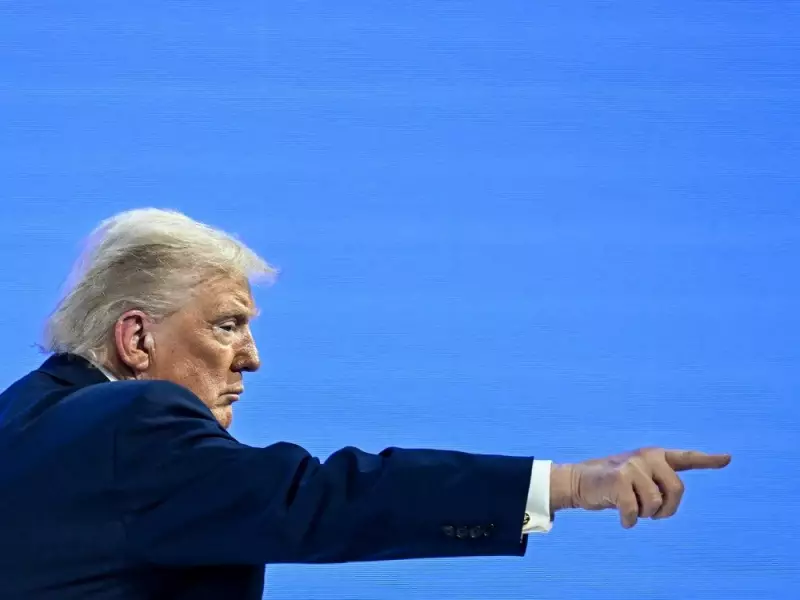
The turning point came during the World Economic Forum in Davos, Switzerland, where President Trump publicly declared his unwillingness to use military force. "We probably won't get anything unless I decide to use excessive strength and force, where we would be, frankly, unstoppable, but I won't do that," Trump told the international gathering. "I don't want to use force. I won't use force."
Following this statement, Trump met with NATO Secretary General Mark Rutte and announced a "framework for a future deal" on Greenland that would involve enhanced U.S. and NATO cooperation on Arctic security while explicitly preserving Denmark's sovereignty over the territory.
Legal Realities Behind the Rhetoric
Trade experts quickly noted that Trump's tariff threats lacked legal foundation. Inu Manak, senior fellow for international trade at the Council on Foreign Relations, explained that no existing trade statute would permit such unilateral actions against NATO allies. "I can't think of any trade statute that would allow that to happen," Manak stated, characterizing the threats as largely empty.
Analysts suggest Trump was attempting to leverage the International Emergency Economic Powers Act (IEEPA), which he had previously used to impose tariffs related to fentanyl and reciprocal trade measures. However, this authority faces imminent challenge before the U.S. Supreme Court, which has fast-tracked a case examining IEEPA's use for tariff imposition and is expected to rule soon on its legality.
Strategic Implications and European Response
The proposed Arctic security framework represents what analysts describe as an "elegant retreat" from untenable positions. While Trump presented the agreement as a new initiative, similar cooperative frameworks for allied Arctic security have existed for decades. The practical effect was to provide diplomatic cover for backing down from threats that would have weakened NATO cohesion and Arctic defense capabilities.
European leaders expressed clear relief at the de-escalation, with Denmark particularly welcoming the sovereignty-preserving outcome. Financial markets responded positively to the reduced geopolitical tensions, while trade observers await the Supreme Court's ruling on presidential tariff authority with implications extending far beyond the Greenland episode.
This episode illustrates the complex interplay between presidential rhetoric, legal constraints, and international diplomacy, revealing how dramatic foreign policy pronouncements can give way to more conventional multilateral approaches when confronted with practical and legal realities.