The bold military raid that captured Venezuelan President Nicolás Maduro has thrust a classic tactic back into the spotlight: gunboat diplomacy. Now, U.S. President Donald Trump must navigate the complex political waters between his aggressive "America First" objectives and the deeply non-interventionist convictions of his core MAGA supporters.
The Shadow of the Black Ships and a Modern Doctrine
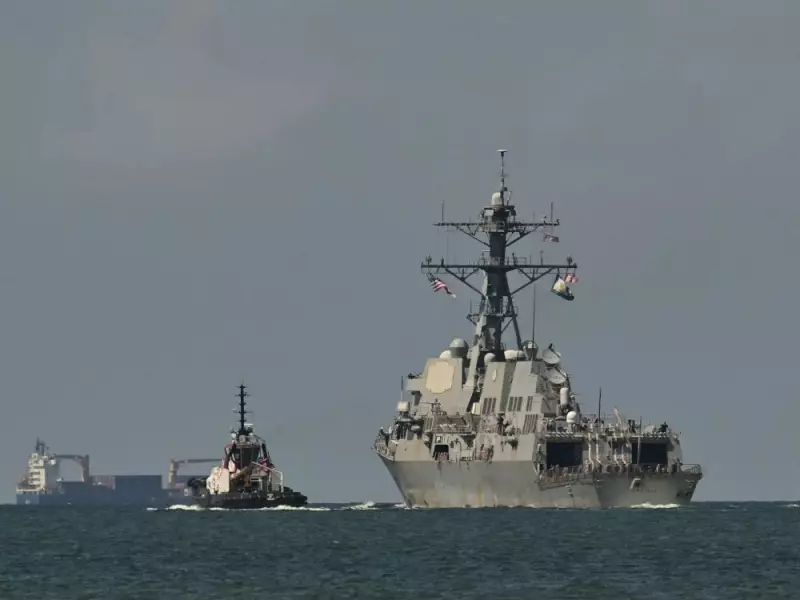
The strategy is centuries old. In July 1853, Commodore Matthew Perry's "black ships" arrived in Japan's Edo Bay, ending over 200 years of isolation not with a protracted war, but with a stark ultimatum backed by naval might. This coercive power, perfected by the Royal Navy, often achieves its goals without firing a shot, relying on the intimidating presence of warships off a foreign coast.
The recent operation in Venezuela, which U.S. Secretary of State Marco Rubio labeled a "law enforcement action," has analysts debating if Trump is enacting a modern, muscular version of the Monroe Doctrine—or as he has rebranded it, the "Donroe Doctrine." The swift capture of Maduro, who was flown to the USS Iwo Jima and then to New York, immediately raised questions about which target might be next.

Operation Absolute Resolve: A New Blueprint for Force
"Operation Absolute Resolve" was executed with remarkable speed, involving coordinated airstrikes and helicopter assaults. Notably, Venezuela's Russian-made air defence systems, including the S-300VM and Buk-M2E, were largely ineffective, echoing their poor performance against Israeli operations in Iran last summer.
U.S. special forces entered, completed their mission, and withdrew with their prisoner. Critically, no "boots on the ground" remained. While President Trump has stated the U.S. will "run" Venezuela, the approach explicitly avoids the long-term, personnel-heavy nation-building that failed in Iraq and Afghanistan. Instead, the plan relies on gunboat diplomacy—using naval and air power to coerce the Venezuelan regime into aligning with American political goals.
The Domestic Political Tightrope
This strategy highlights the inherent limits of American military power, many of which are domestic. The Trump administration's own National Security Strategy reveals the central tension within its political coalition: advancing "America First" interests abroad without alienating the staunchly non-interventionist wing of the MAGA movement.
Trump is not a pure isolationist. He has demonstrated a willingness to use force to further mercantilist and strategic interests, but only under a strict condition: avoiding costly, open-ended ground commitments. This confines U.S. actions to missions achievable through overwhelming air and sea power or lightning raids with a clear exit.
However, as Russian President Vladimir Putin discovered in Ukraine, the assessment of what constitutes a "quick" victory is fraught with risk. The president has hinted at other potential targets, and by understanding this calibrated approach to force, observers can deduce the types of operations that may lie ahead.
The ultimate challenge for Trump is balancing the dramatic, show-of-force actions that define his strongman persona with the "America First" promise to avoid foreign quagmires—a promise that resonates deeply with his political base. The success of his gunboat diplomacy may ultimately be determined not on foreign shores, but in the court of domestic MAGA opinion.