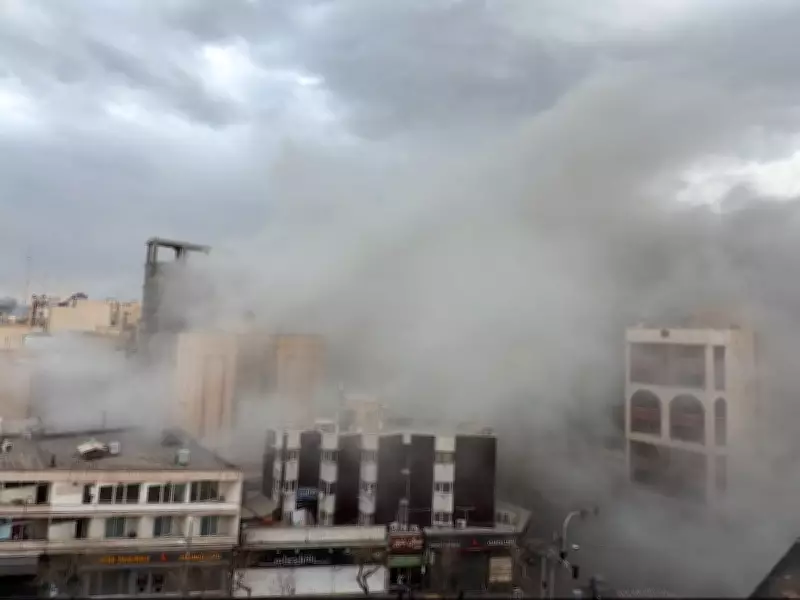
Adam Zivo: Trump's Military Action Against Iran Is Morally Justified
TEL AVIV — The coordinated military strikes by the United States and Israel against Iran's Islamic regime represent both a righteous moral stance and a strategically sound decision, according to analysis that challenges critics focused solely on international law violations.
The Regime's Brutal History of Suppression
For decades, Iranian citizens have struggled to free themselves from Islamist authoritarian rule. The regime has consistently employed extreme violence to crush any form of dissent since its establishment following the 1979 revolution. Thousands of political opponents were imprisoned, tortured, and executed in the immediate aftermath of the revolution's success.
Subsequent mass protests, particularly those occurring in 2019 and 2022, were met with brutal force that resulted in what witnesses describe as rivers of blood flowing through Iranian streets. The regime's security forces showed no restraint when dealing with demonstrators demanding democratic reforms.

The Recent Pro-Democracy Massacre
Earlier this year, millions of pro-democracy Iranians courageously took to the streets without weapons to demand revolutionary change. Their peaceful protests were met with horrific violence that resulted in approximately 30,000 deaths according to varying estimates—a death toll equivalent to ten Tiananmen Square massacres.
Women and children were not spared in the carnage, and survivors seeking medical treatment were reportedly hunted down at hospitals by regime forces. This systematic brutality against unarmed civilians demonstrated the regime's complete disregard for human life and basic dignity.
Iranian Diaspora Demands Intervention
The Iranian diaspora responded to these atrocities with global demonstrations featuring a unified demand: immediate military intervention to overthrow the regime. Hundreds of thousands of voices across multiple countries consistently called for action without wavering.
During reporting on these demonstrations in Toronto, observers witnessed crowds chanting "Trump act now! Trump act now!" with what was described as a mixture of rage and desperation. The diaspora community expressed overwhelming support for military action against the regime that has oppressed their homeland.
Celebration Following Military Strikes
When American and Israeli bombs finally fell on Iranian targets, Iranian communities throughout the West erupted in celebration. Massive crowds gathered in Canada and other Western nations to jubilantly thank the United States and Israel for taking action.
While assessing the mood inside Iran remains challenging due to ongoing internet blackouts imposed by the regime, every Iranian source consulted reported that their relatives within the country were ecstatic about the military intervention. This testimony aligns with reports from Iranian online personalities and celebratory videos that have managed to leak out of the country despite communication restrictions.
The Moral Imperative for Action
From an ethical perspective, military action against the Islamic Republic of Iran represents the correct choice according to this analysis. The overwhelming desire among Iranians for liberation creates a moral imperative that outweighs concerns about the risks of warfare.
Most Iranians reportedly view this intervention as a precious opportunity for freedom that justifies the gambles associated with armed conflict. Their perspective suggests that continued oppression under the current regime represents a greater evil than the uncertainties of military action.
Critiques of International Law Frameworks
Some critics have focused exclusively on violations of international law, but this analysis questions the relevance of such frameworks when dealing with brutal authoritarian regimes. Modern international law, which emerged following the Second World War, contains significant flaws according to this perspective.

The United Nations Charter restricts warfare to self-defense scenarios involving imminent threats, unless specifically authorized by the UN Security Council. This framework effectively allows autocratic regimes to oppress their own citizens without consequence, provided they avoid attacking other states and secure veto protection from Security Council members like Russia or China.
Furthermore, the current international legal system proves inadequate for addressing proxy warfare situations. While self-defense rights permit retaliation against proxy forces, they generally do not extend to targeting the state actors who control and fund those proxies.
Iran's Exploitation of Legal Loopholes
Under existing UN frameworks, none of Iran's documented brutalities and aggressive actions—including the funding and coordination of Hamas, Hezbollah, and Houthi forces—can legally trigger military intervention. With consistent support from China and Russia in the Security Council, Iran remains effectively immunized from accountability through international systems.
This analysis concludes that the regime has systematically exploited these legal loopholes while routinely violating international law itself, creating a situation where moral imperatives must sometimes supersede flawed legal frameworks.