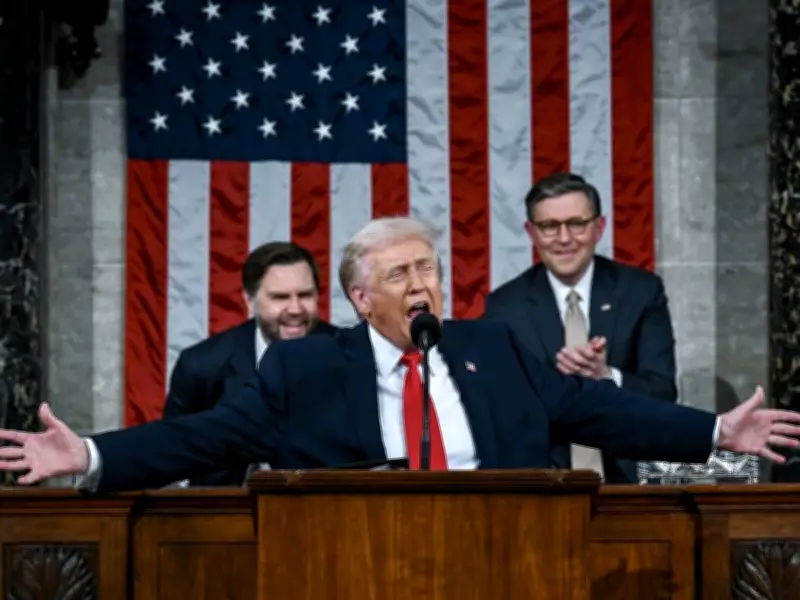
WASHINGTON, D.C. — Diplomatic negotiations between Iran and the United States collapsed on Thursday, following President Donald Trump's issuance of a stark 10-15 day "deal or bad things" ultimatum. In his recent State of the Union address, Trump pledged to prevent "the world's number one sponsor of terror" from acquiring nuclear weapons, while simultaneously assuring protesters in Iran that "Help is on the way." This escalating rhetoric coincides with a significant U.S. military buildup in the Persian Gulf, heightening global tensions and placing Canada on high alert for potential fallout.
Canada's Vulnerabilities in the Face of Conflict
Canada confronts multiple risks from any U.S.-led strikes against Iran, including heightened terrorism threats, oil price shocks, backlash from the Iranian diaspora, and increased strain on NORAD defenses. The extent of these impacts will largely depend on the scope and duration of military operations. While Ottawa has publicly opposed kinetic action, it has implemented new sanctions on Iranian officials and stated that diplomatic relations with the Islamic Republic will not resume without regime change.
Expert Analysis on U.S. Military Strategy
With talks at a standstill, defense and regional analysts anticipate that U.S. strikes could commence as early as this weekend, given the concentration of American air and naval assets in the region. Greg Brew, a senior analyst at Eurasia Group, predicts a major offensive. "Given the amount of pressure the U.S. is trying to put on Iran, the president has put himself in a position where he has to go big or go home," Brew explained. He added that the primary objectives would likely involve weakening Iran's ballistic missile arsenal and nuclear program elements to reduce strategic threats to the United States and Israel, rather than aiming for regime change.

Stephen Nagy, a senior fellow at the Macdonald-Laurier Institute and politics professor at International Christian University, echoed this sentiment, expecting "overwhelming force" to coerce Tehran into meeting U.S. demands. Nagy drew parallels to Trump's previous approaches in Venezuela, Nigeria, and Syria. However, Scott Clancy, a retired RCAF Major-General and fellow at the Canadian Global Affairs Institute, cautioned that insufficient U.S. assets in the region might limit operations to a narrow incursion. "Iran is not Venezuela," Clancy noted, highlighting Iran's more capable, layered air defenses.
Strategic Dangers of Limited Strikes
Jonathan Panikoff, director of the Atlantic Council's Scowcroft Middle East Security Initiative, warned that while a limited strike might be politically tempting, it poses significant strategic risks. "A limited strike will try but fail to shake the regime's confidence — the worst of all worlds," Panikoff stated. "You're going to really anger the regime; they're going to recoil, and it's still unlikely to accomplish any of your goals." This perspective underscores the complex dynamics at play, where any military action could provoke retaliatory measures without achieving desired outcomes.
Potential Aftershocks for Canadian Interests
Experts generally do not foresee an intervention lengthy enough to instigate substantial political change in Iran, but the operation's intensity and duration could have direct implications for Canada. Safety concerns are paramount for Canadian personnel deployed in multilateral efforts across the region. Additionally, Canada maintains an embassy in Beirut, where Hezbollah — a key Iranian proxy — could launch retaliatory attacks against Western forces, further complicating security protocols.
The situation remains fluid, with Trump demanding that Tehran pledge never to develop nuclear weapons and abandon uranium enrichment capacity. Iran, however, insists on its right to enrich uranium for civilian purposes and seeks sanctions relief. As Nagy pointed out, "The lesson from North Korea is you don't get attacked if you have nuclear weapons," highlighting the entrenched positions that make resolution challenging. Canada must navigate these geopolitical uncertainties while safeguarding its national interests and international commitments.