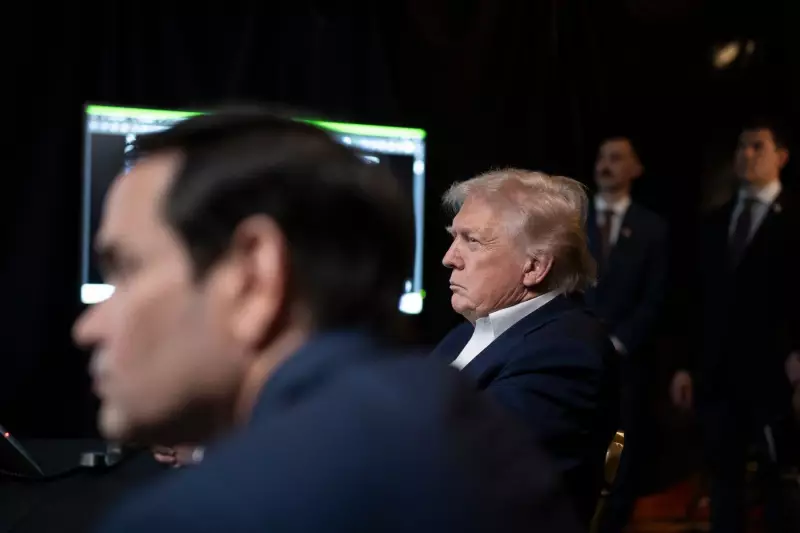
International tensions are rising in the wake of recent U.S. military action in Venezuela, as comments from President Donald Trump fuel widespread speculation and concern about his administration's future geopolitical ambitions. Analysts and foreign governments are now anxiously looking towards Greenland and Cuba, questioning if they could be next on the agenda.
Military Action and a 'Medium-Term' Plan for Venezuela
The situation escalated on Saturday, January 3, 2026, when President Trump, alongside Secretary of State Marco Rubio at his Mar-a-Lago estate in Florida, monitored the commencement of U.S. military operations in Venezuela. The move targeted the removal of President Nicolás Maduro's regime.
In the aftermath, Trump's assertion that the United States intends to run the oil-rich nation for the "medium-term" has sent shockwaves through diplomatic circles. This declaration is not just a regional concern; security and economic experts are warning that such prolonged foreign control of a major oil producer presents a tangible "medium-term risk to Canada." The implications for global energy markets and hemispheric stability are significant.

Anxiety Over Arctic and Caribbean Ambitions
The Venezuela intervention has acted as a catalyst, reviving fears about other territories previously mentioned by Trump. Greenland has swiftly re-entered the spotlight. The Arctic island's government recently condemned a "disrespectful" social media post made by the wife of a Trump aide, which many interpreted as a symbolic claim. This incident has heightened sensitivities about U.S. interest in the strategically vital Danish territory, an interest Trump has openly expressed in the past regarding its purchase.
Similarly, eyes are turning towards Cuba. The island nation, just 90 miles from Florida, has long been a subject of hardline U.S. policy. With the U.S. demonstrating a renewed willingness for direct intervention in Latin America, analysts question whether the Biden-era thaw with Cuba could be completely reversed, with more aggressive posturing or action from the Trump administration becoming a possibility.
Reactions and the Road Ahead
The global reaction is one of profound unease. Allies are parsing every statement from Washington, while the situation places countries like Canada in a delicate position, balancing its relationship with the U.S. against principles of sovereignty and international law. The events of early January 2026 have set a precedent that is altering geopolitical calculations worldwide.
As the United States consolidates its position in Venezuela, the question looming over international capitals is clear: After Maduro, who's next? The anxieties over Greenland's autonomy and Cuba's future underscore a volatile period in hemispheric relations, with Canada closely monitoring the ripple effects on trade, security, and Arctic sovereignty.