




U.S.-Iran Peace Talks Begin Amid Uncertainty Over Direct Dialogue
U.S.-Iran Peace Talks Begin Amid Uncertainty

U.S.-Iran Peace Negotiations Commence Amid Lingering Uncertainties

High-stakes peace negotiations between the United States and Iran officially began on Saturday, marking a critical effort to end the ongoing conflict in the Middle East. However, significant ambiguity persisted regarding whether direct discussions between the two nations had actually started, even six hours after U.S. Vice President JD Vance touched down in Pakistan's capital city of Islamabad.

Delegations Arrive with Complex Agendas

Vance was accompanied by a substantial American delegation including special envoy Steve Witkoff and Jared Kushner, former President Donald Trump's son-in-law. Their mission centers on establishing a durable resolution to a six-week conflict that has gripped the region, following the implementation of a fragile ceasefire several days prior.

On the Iranian side, a 71-member delegation arrived led by Parliament Speaker Mohammad-Bagher Ghalibaf, a veteran of the Islamic Revolutionary Guard Corps. The high-level Iranian team also included Foreign Minister Abbas Araghchi and Central Bank Governor Abdolnaser Hemmati, indicating the comprehensive nature of Tehran's negotiating priorities.

Wide Pickt banner — collaborative shopping lists app for Telegram, phone mockup with grocery list

Conflicting Reports and Preliminary Statements

Around 5:45 PM local time in Islamabad, Iran's semi-official Fars news agency reported that talks between the U.S. and Iran had indeed commenced, though the outlet did not specify whether these discussions were occurring directly between the parties or through intermediaries. This ambiguity reflected the delicate nature of the diplomatic engagement.

"We have goodwill, but we do not have trust," Ghalibaf told reporters upon arriving in Islamabad, according to Fars. "In the upcoming negotiations, if the American side is prepared for a genuine agreement and to grant the rights of the Iranian nation, they will see readiness for an agreement from us as well."

Pre-Talk Tensions and Strategic Leverage

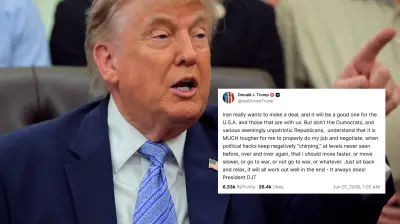
U.S. President Donald Trump sought to increase pressure on Iran ahead of the negotiations, posting on social media Friday that Iran's primary leverage amounted to "short term extortion of the world by using International Waterways"—a clear reference to Tehran's effective closure of the strategically vital Strait of Hormuz. The American leader told reporters late Friday that he expected the strait would be opened "pretty quickly" and warned that failure to do so could prompt resumed military action.

While the ceasefire has generally held across the Middle East, complications persist. The inability of oil tankers and other vessels to easily transit the Strait of Hormuz, combined with continued fighting between Israel and Hezbollah in Lebanon, threatens to undermine the Islamabad negotiations. Neither side has released a formal schedule, leaving the duration of discussions uncertain.

Iran's Preconditions and American Warnings

Before arriving in Pakistan, Ghalibaf emphasized on social media that a ceasefire in Lebanon represents one measure that "must be fulfilled before negotiations begin." He added that the "release of Iran's blocked assets" constituted another prerequisite, though he provided no specific details about these assets.

Vance told reporters ahead of his trip that Trump had provided "clear guidelines" for the talks. He urged Iran to approach the negotiations with seriousness, cautioning Tehran against attempts "to try to play us."

Comprehensive Agenda and Historical Context

The negotiating agenda encompasses numerous complex issues including the fate of Iran's uranium stockpile and missile production capabilities, alongside U.S. sanctions against the Islamic Republic and broader American military presence in the Middle East. Many of these same points proved unresolvable during February negotiations that preceded the outbreak of war, with Iran's control over the Strait of Hormuz—a critical chokepoint influencing approximately one-fifth of global oil flows—substantially strengthening Tehran's bargaining position.

Pickt after-article banner — collaborative shopping lists app with family illustration

Trump has vacillated between threatening to destroy "a whole civilization" and suggesting a U.S.-Iran agreement "could be the Golden Age of the Middle East." Iran, which claims more than 3,000 people have been killed in U.S.-Israeli airstrikes, has maintained a defiant posture, confident that its control over vital energy corridors will compel Washington to accommodate its demands.