Senior negotiators from the United States and Iran wrapped up a lengthy round of initial talks in Obbuergen, Switzerland, on Monday, aiming to solidify a permanent end to the war between the countries. The mediation effort, hosted at the Bürgenstock resort near Lake Lucerne, started Sunday and experienced rocky moments but also led to some agreements.
Encouraging Progress and Agreements
Mediators Qatar and Pakistan hailed what they called “encouraging progress” during the talks. The two sides agreed to create a “de-confliction cell” to address the fighting in Lebanon. A senior U.S. diplomat, speaking on condition of anonymity, reported progress on multiple fronts, including the establishment of mechanisms to ensure the Strait of Hormuz remains open and that a ceasefire in southern Lebanon holds.
Trump’s Comments Disrupt Talks
The negotiations were jolted by blistering statements from U.S. President Donald Trump, who, from thousands of miles away, fired off comments that offended the Iranians. Iranian state media reported that talks paused after the “publication of an insulting message by the U.S. President.” The Iranian delegation met with Qatari mediators and left the negotiating site, though the senior U.S. diplomat said late Sunday that the Iranians remained on site and negotiations were ongoing. However, Iranian state television reported Monday that the delegation had left for the airport in Zurich to fly back to Tehran.

Iranian President Masoud Pezeshkian vowed to “never back down from the right to enrich uranium,” according to state media. Trump later told Fox News that Pezeshkian should watch what he says and threatened to take over Iran. Trump also posted on social media: “Iran must immediately stop their highly paid PROXIES in Lebanon from causing trouble. If they don’t, we’ll hit Iran very hard again, just like we did last week, only harder!!!”
Key Negotiators and Technical Details
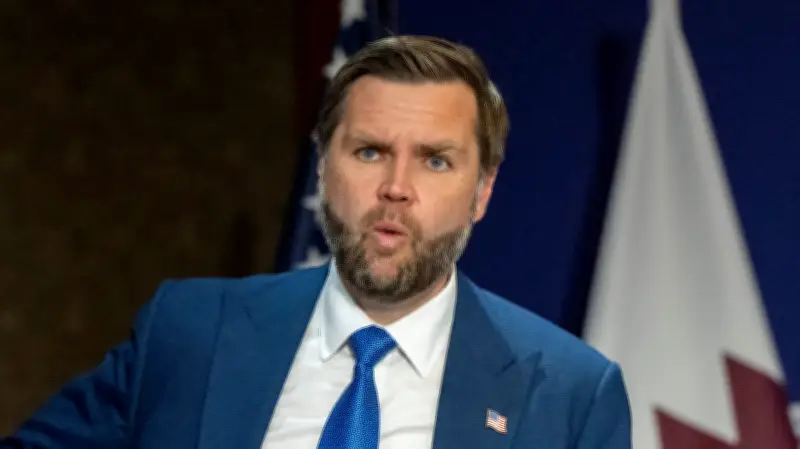
The chief negotiators for the U.S. include Vice President JD Vance, special envoy Steve Witkoff, and Jared Kushner, the president’s son-in-law. Iran is represented by Parliamentary Speaker Mohammad Bagher Qalibaf and Foreign Minister Abbas Araghchi. It’s unclear when Vance will depart Switzerland, though he told Fox News he anticipates staying only a “day or two.” Kushner and Witkoff are handling much of the technical details.
Continued Technical Talks and Key Agreements
In a joint statement, Pakistan and Qatar said high-level talks had ended and technical negotiations would continue in Switzerland for the rest of the week. The sides agreed to establish a “communication line” to ensure safe passage of ships in the Strait of Hormuz, as well as a mechanism to end the fighting between Israel and Hezbollah in Lebanon. The U.S. offered no immediate comment, while Iran praised the mediators’ work. Araghchi wrote on X that Pakistani and Qatari mediators delivered “major progress to end the Lebanon War,” adding that the first “real test” would be whether the mechanism halts the fighting.
Strait of Hormuz and Nuclear Program
The senior U.S. diplomat said among the issues discussed was Iran’s messaging regarding the Strait of Hormuz, which Iran’s military said it closed Saturday in response to continued fighting in Lebanon. U.S. Central Command disputed that claim. The interim deal to end the fighting, signed last week by leaders of the U.S. and Iran, outlines a 60-day period for negotiators to settle the future of Tehran’s nuclear program, amid concerns it wants to use it for military purposes—a claim Iran denies. The fate of frozen Iranian assets is also on the agenda.
Focus on Lebanon Ceasefire
Though talks will encompass vast complex matters, Iran first wants to focus on addressing the fighting in Lebanon. Saturday’s renewed ceasefire in Lebanon appeared to be holding, with Israel’s military lifting movement restrictions for residents near the border. Neither Israel nor Hezbollah is a signatory to the U.S.-Iran deal. There was cautious calm Monday in Lebanon, with no Israeli strikes reported overnight and Hezbollah not announcing any attacks since Saturday. The lull in fighting is the longest since the outbreak of the latest Israel-Hezbollah war on March 2.