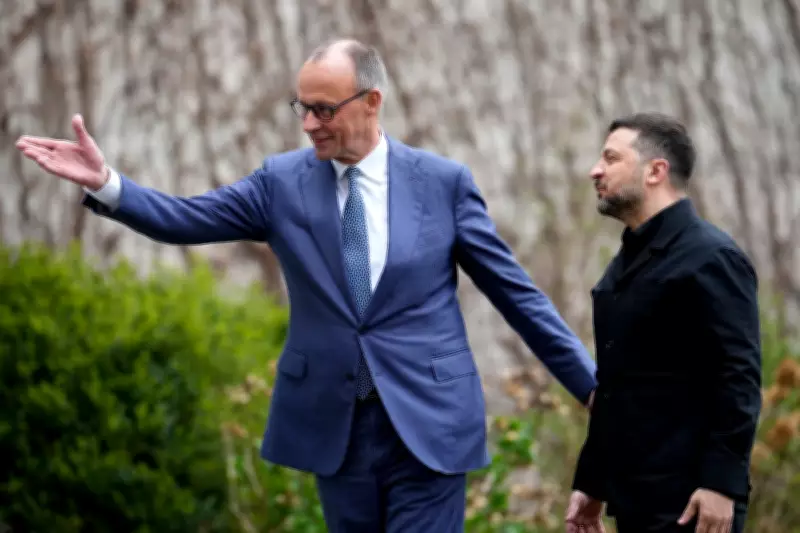
Zelenskyy Meets German Chancellor Merz in Berlin to Bolster Ukraine's Defense Against Russia
Ukrainian President Volodymyr Zelenskyy arrived in Berlin on Tuesday, April 14, 2026, for a pivotal meeting with German Chancellor Friedrich Merz. The visit, part of official German-Ukrainian government consultations, underscores Ukraine's ongoing diplomatic efforts to secure enhanced support from one of Europe's key powers amid the protracted conflict with Russia.
High-Stakes Diplomatic Engagement
The discussions in Berlin are expected to cover a broad spectrum of critical issues, including military aid, economic cooperation, and long-term security guarantees. Germany has been a significant contributor to Ukraine's defense capabilities, providing advanced weaponry, financial assistance, and humanitarian relief since the onset of the invasion. However, with the war entering its fifth year, Kyiv is pressing for more robust and sustained commitments to counter Russian aggression effectively.
Chancellor Merz welcomed President Zelenskyy at the chancellery, emphasizing the strong bilateral ties between the two nations. "Germany stands firmly with Ukraine in its fight for sovereignty and territorial integrity," Merz stated in a brief press appearance before the closed-door talks. "Our support is unwavering, and we are prepared to discuss further measures to ensure Ukraine's resilience."

Ukraine's Strategic Objectives
For Ukraine, the Berlin meeting represents a crucial opportunity to address several pressing needs:
- Enhanced Military Assistance: Seeking additional air defense systems, artillery, and ammunition to fortify frontline positions.
- Economic and Reconstruction Aid: Securing funds for rebuilding infrastructure and stabilizing the economy amidst ongoing hostilities.
- Diplomatic Solidarity: Reinforcing European unity against Russian expansionism and advocating for Ukraine's integration into Euro-Atlantic structures.
Zelenskyy's diplomatic tour, which includes stops in other European capitals, aims to galvanize international backing as Ukraine prepares for potential new offensives. The outcome of these talks could significantly influence the trajectory of the conflict, with Germany's leadership role in the European Union making its support particularly consequential.
Regional and Global Implications
The meeting occurs against a backdrop of escalating tensions, with recent Russian advances in eastern Ukraine highlighting the urgent need for sustained allied support. Analysts suggest that Germany's continued involvement is vital not only for Ukraine's immediate defense but also for deterring further aggression and upholding international norms.
"Germany's commitment is a linchpin in the Western response to the war," noted a senior European diplomat speaking on condition of anonymity. "Zelenskyy's visit signals a concerted effort to keep Ukraine at the forefront of the global agenda and ensure that assistance evolves with the changing dynamics on the ground."
As the consultations proceed, both leaders are expected to address the humanitarian crisis exacerbated by the conflict, including the plight of millions of displaced Ukrainians. The discussions may also explore avenues for peace negotiations, though Kyiv remains steadfast in its demand for a complete withdrawal of Russian forces as a precondition for any settlement.
The Berlin summit underscores the enduring partnership between Germany and Ukraine, with Merz's administration facing domestic and international scrutiny over its handling of the crisis. The results of this high-level engagement will be closely monitored by allies and adversaries alike, as they could shape the future of European security and the broader geopolitical landscape.