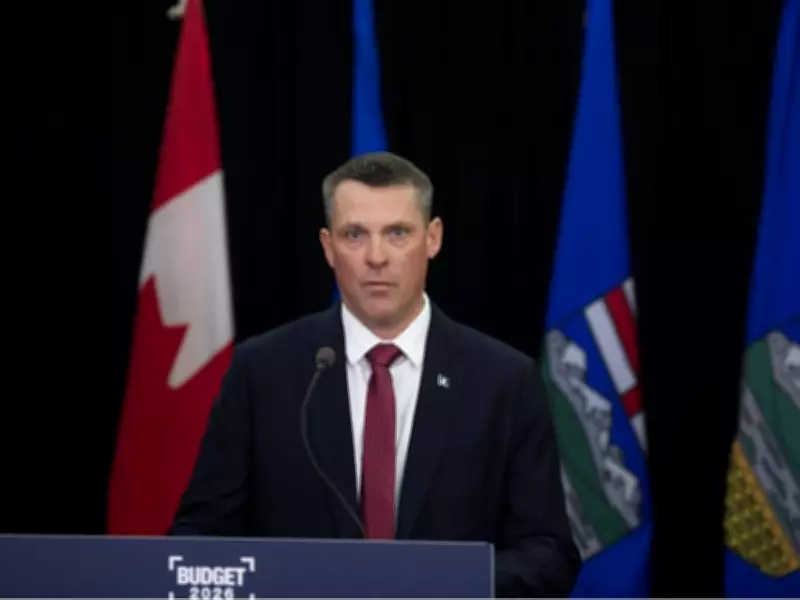
Alberta's 2026 Budget Unveils Historic Healthcare Spending Amid Political Debate
Alberta's 2026 provincial budget has been officially presented, featuring a monumental allocation of $34.4 billion to healthcare—the largest health budget in the province's history. This announcement comes alongside a record deficit, creating a complex fiscal landscape that has drawn immediate scrutiny from political opponents and healthcare advocates alike.
Record-Breaking Healthcare Investment
Treasury and Finance Minister Nate Horner revealed the budget details at the Queen Elizabeth II building in Edmonton, emphasizing that the healthcare sector would receive unprecedented financial support. The $34.4 billion healthcare budget represents a significant increase, with projections showing five percent growth both this year and next to accommodate the demands of an aging population.
Approximately $300 million in additional funding has been earmarked for continuing care and alternative care programs. According to Minister Horner, these initiatives have already demonstrated effectiveness, reducing the number of patients occupying hospital beds unnecessarily by 20 percent since 2025. This strategic approach aims to alleviate emergency room wait times and optimize hospital resource utilization.

Focus on Surgical Facility Expansion
A notable component of the healthcare budget involves a half-billion dollar commitment to chartered surgical facilities over the next three years. This funding is designed to facilitate 50,000 additional surgical procedures by expanding operating room capacity through partnerships with private surgical providers.
"We are leveraging chartered surgical facilities to expand operating room capacity and reduce surgical wait times," Horner explained during the budget presentation. "This initiative will prioritize those waiting longer than clinically recommended timelines." The specific facilities that will receive this surgical business are expected to be determined in the coming weeks.
Opposition Criticism and Political Response
The official opposition New Democratic Party (NDP) responded swiftly to the budget announcement, expressing significant concerns about funding priorities. NDP leader Naheed Nenshi highlighted what he described as critical omissions in the healthcare allocation.
"There is no funding for a new hospital in Edmonton or Calgary," Nenshi stated. "Furthermore, there is virtually no increase to primary care funding, despite years of extraordinary resource revenues and record production." He also pointed to fee increases for seniors in continuing care facilities as an additional burden on vulnerable populations.
Court Ellingson, Alberta's NDP Shadow Minister for Finance, echoed these concerns, questioning the budget's alignment with the province's fiscal capacity during a period of substantial resource revenues.
Restructuring and Shared Services Implementation
The budget also addresses the ongoing restructuring of Alberta's healthcare system, which has been divided into four separate agencies over the past year: Primary Care Alberta, Acute Care Alberta, Recovery Alberta, and Assisted Living Alberta. To support this new organizational framework, the budget allocates $2.3 billion to Health Shared Services (HSS), a centralized agency that will manage executive functions across all four health ministries.
This shared services organization will consolidate essential support functions including information technology, finance, human resources, and other administrative services. Funding for HSS will come from multiple sources, with Primary and Preventative Health Services contributing $436 million in operating funds, while the remaining support will be derived from revenues generated by the four provincial health agencies.

Budget Context and Fiscal Implications
The record healthcare spending occurs within a broader budget framework that includes a substantial deficit, raising questions about long-term fiscal sustainability. The emphasis on chartered surgical facilities represents a continuation of the government's approach to healthcare delivery, though critics have questioned whether this strategy effectively recreates elements of the previously dismantled Alberta Health Services structure.
As Alberta moves forward with this historic healthcare investment, the implementation of these budgetary measures will be closely monitored by stakeholders across the political and healthcare spectrum. The success of initiatives aimed at reducing surgical wait times and optimizing hospital capacity will likely become key indicators of the budget's effectiveness in addressing the province's healthcare challenges.