Republicans Consider Deep Cuts to Social Programs to Finance Iran Military Action
WASHINGTON — Congressional Republicans are exploring substantial reductions to health care and nutrition assistance programs as potential funding sources for President Donald Trump's military engagement in Iran. This approach emerges as party legislators seek methods to counterbalance an estimated $200 billion in war expenditures within an upcoming budget proposal.
Contradiction with "America First" Message
Reducing support for vulnerable American citizens to finance overseas military operations appears to conflict directly with Trump's "America First" campaign philosophy. Nevertheless, certain Republican figures appear unconcerned about this inconsistency, even as influential voices within the MAGA movement express apprehension about potentially alienating Trump's political base.
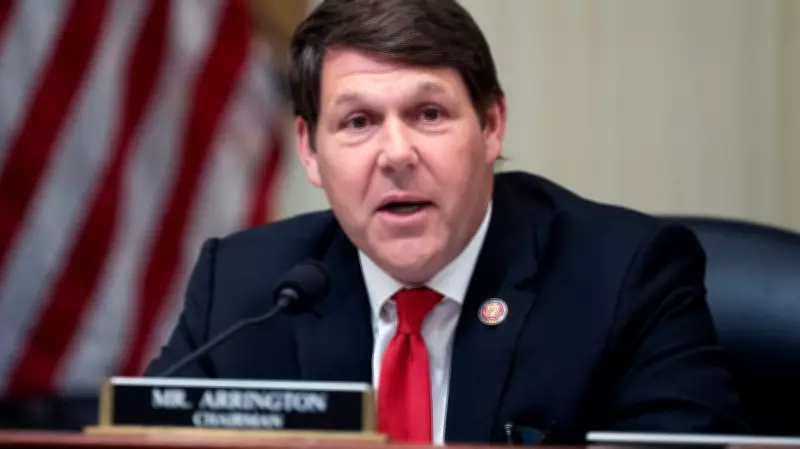
House Budget Committee Chairman Jodey Arrington, a Republican from Texas, has publicly discussed implementing further social program reductions, mirroring last year's Republican-led cuts that removed approximately $1 trillion from food assistance and Medicaid budgets. "We have a war on a nuclear Iran that could be paid for by the president's war on fraud," Arrington stated during a Monday appearance on Fox Business.

The "Fraud" Justification and Historical Precedent
Republican legislators in Washington have frequently employed the term "fraud" to characterize health and nutrition expenditures that were not actually fraudulent, but rather directed toward individuals they deemed undeserving of assistance—particularly those without employment or facing challenges in documenting their work status.
This strategy recalls the controversial "One Big Beautiful Bill," which utilized welfare reductions to partially finance tax cuts. The legislation proved so politically unpopular that Republicans eventually rebranded it as the "Working Families Tax Cut." Political analysts question how utilizing similar cuts to fund a widely unpopular foreign conflict could improve their public reception.
"It is ludicrous politics to go in and say, we're going to take away your health care to pay for an unpopular, unjust, immoral war," remarked Bobby Kogan, a budget policy expert at the progressive Center for American Progress, in comments to HuffPost.
Democratic Opposition and Human Impact
Democratic lawmakers have vigorously criticized these emerging Republican budget proposals. In a Monday statement, Representative Brendan Boyle of Pennsylvania, the ranking Democrat on Arrington's committee, highlighted that approximately 2 million Americans have already lost health insurance coverage following Republican refusal to extend premium subsidies. Millions more face coverage losses as previously enacted Medicaid reductions take full effect.
"Now, Republicans in Washington want to rip health care away from even more people to fund Trump's reckless war in the Middle East. It's shameful," Boyle declared via social media platforms.
Senate Democratic Leader Chuck Schumer of New York offered a succinct critique: "More money for war. More money for ICE. Less money for health care."
Budget Reconciliation Strategy and Republican Divisions
Republicans are advancing their next budget initiative amid a stalemate over Department of Homeland Security funding. Their strategy involves utilizing the special "reconciliation" legislative process—which bypasses Senate filibuster requirements—to secure department financing without Democratic support.
Republicans envision this reconciliation bill as comprehensive legislation addressing multiple priorities, potentially including military funding and election integrity measures. "The purpose of the second reconciliation bill is to make sure there is adequate funding to secure our homeland and to support our men and women in the military who are fighting so bravely," explained Senator Lindsey Graham, a South Carolina Republican, in a statement last week. "More funding will mean they can complete the task assigned and keep America safe—which is money well spent."

Internal Republican Challenges
Unifying Republican legislators behind a single comprehensive bill presents significant challenges. Several GOP senators have expressed reservations about the package's broad scope, advocating instead for narrower legislation focused on domestic concerns affecting American voters, particularly escalating living expenses.
"We should try to address costs across the board," Senator Josh Hawley, a Missouri Republican, told HuffPost. "Whether it's gas, premiums, out-of-pocket expenses, those are just surging ... if we're gonna do reconciliation, we ought to make affordability issues our No. 1 focus for middle-class people."
Senator Roger Marshall, a Kansas Republican, additionally expressed skepticism about incorporating major voting system changes—such as those in the proposed SAVE America Act—into reconciliation legislation, noting that Senate rules would likely prohibit such inclusions.
"It'll be a miracle for them to put this thing together," Marshall commented during a Tuesday conversation with conservative commentator Vince Coglianese. "How are we going to put the SAVE Act into a reconciliation bill?"