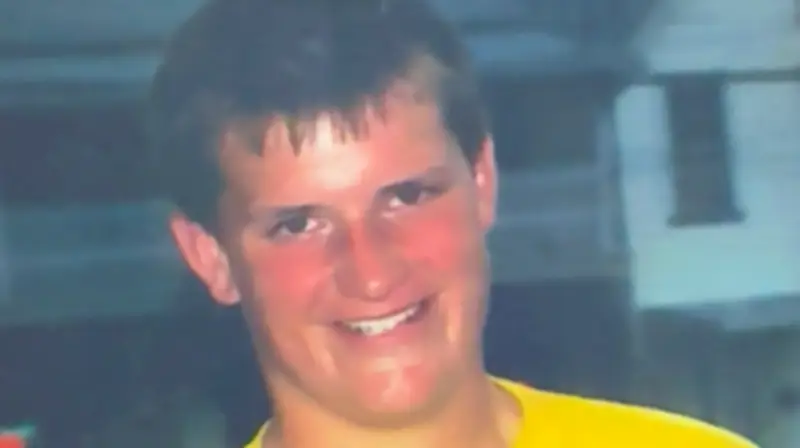
For nearly 25 years, I have replayed the night my son Greg collapsed from sudden cardiac arrest during a basketball game in rural Pennsylvania. The gymnasium was packed with coaches, parents, teachers and teammates desperate to help him, but the one device that may have saved his life — an automated external defibrillator (AED) — was nowhere in the building. Greg was 15 years old. He never came home.
That is the part of sudden cardiac arrest people often misunderstand. Most cardiac arrests happen outside hospitals, and victims are rarely alone when they collapse. They are surrounded by people desperate to help — but without the tools necessary to do so.
Even more alarming, a recent Harris Poll conducted for AnyoneCanHelp.com found many parents assume AEDs and trained responders are already present at youth sports facilities. Too often, they are not. The difference between life and death is frequently decided by how bystanders act before emergency medical services arrive. AEDs — where available — walk people through a crisis, giving calm verbal instructions the moment they are activated. In those terrifying moments, they help fear give way to action. According to the American Red Cross, survival chances decrease by 10% for every minute that immediate CPR and use of an AED is delayed.

No Federal Mandate Exists
There is currently no federal mandate to require AEDs in schools or in youth sports. That is why the recent passage of Pennsylvania's Greg Moyer AED Law means so much to my family — and why the rest of the country should be paying attention. Seeing as we are in the middle of National CPR and AED Awareness Week, the law arrives at a critical moment for schools, families and youth sports programs. It strengthens cardiac emergency preparedness requirements, including having AEDs present at sports practices and games. For families like ours, this is not politics or policy on paper. It is personal.
A Lifesaving Legacy
Since losing my son, I have worked to place AEDs in communities through the Greg W. Moyer Defibrillator Fund. I have cried with grieving parents and celebrated with families whose loved ones survived because someone nearby had the tools to help. Like millions of Americans, I watched Buffalo Bills star Damar Hamlin survive cardiac arrest on national television. What the country witnessed that night was preparation: coordinated responders, a swift emergency plan and lifesaving tools already in place. That is what survival can look like when communities are ready. What I did not see were the thousands of families whose children do not survive because the people nearby are left helplessly waiting for EMS while precious minutes slip away.
Sudden cardiac arrest does not care whether a school district is wealthy or underfunded. It does not care whether someone is an athlete, a student sitting in class, a musician performing on stage or a grandparent attending a school concert. It can happen anywhere, and when it does, planning matters.
Hope for the Future
My hope is not simply that AEDs will now be required in more places, but that families begin to see them differently — not as specialized medical equipment, but as equipment bystanders can use before first responders arrive. In sudden cardiac arrest, survival often depends on what happens in the first few minutes.
Fewer than half of states have comprehensive AED requirements for schools and athletic programs. As thrilled as I am to see Pennsylvania take this step forward, legislation alone is not enough. Communities must be ready. Families should always ask whether schools, camps and athletic facilities have AEDs onsite and emergency response plans in place.
June is always reflective for our family. Graduation season still makes me wonder who Greg would have become if he had lived. Would he have gone to college? Had children of his own? Still be playing golf? Those are milestones we never got to see. But I also think about the families who may get those moments because of Greg's law — parents who may one day watch their child walk across a graduation stage because someone nearby had an AED and the confidence to use it. This is Greg's legacy: the possibility that another child gets to come home. Now more states should follow Pennsylvania's lead.

Rachel Moyer is founder of the Greg W. Moyer Defibrillator Fund and a longtime advocate for AED access and cardiac emergency preparedness in schools. She lives in Shawnee on Delaware, Pennsylvania. Her family has donated thousands of AEDs throughout the United States, including to state and city police departments, schools and playing fields.