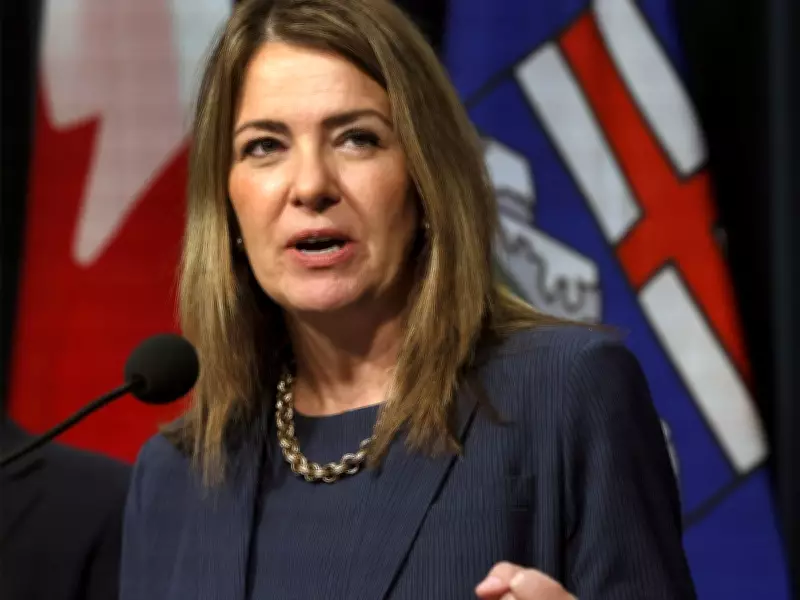
Alberta Premier Danielle Smith has unveiled plans for a sweeping provincial referendum this fall, proposing significant changes to immigration policy that would mirror Quebec's system and introduce fees for temporary workers accessing public services.
Referendum Details and Proposed Changes
In a pre-recorded address on Thursday evening, Smith announced that Albertans will head to the polls on October 19 to vote on nine referendum questions. Several of these proposals would grant the province authority to implement legislation restricting access to provincially-funded social programs for certain immigrants.
At a Friday press conference, Smith explained that low oil prices combined with high immigration levels have placed considerable strain on Alberta's revenue streams and social services infrastructure. "We have a certain number of residents who are very high users of our multitude of social programs," Smith stated. "I don't know what the breakdown is between those who are Canadians, permanent residents or temporary workers, but we've got to find that out."

Quebec-Style Immigration Model
One key referendum question asks if Albertans would support legislation mandating that only citizens, permanent residents, and those with an "Alberta-approved immigration status" should be eligible for provincially-funded programs. Smith clarified that this status would be modeled after Quebec's system, where the province maintains control over selecting economic migrants.
"We have to make sure that we're involved at the very beginning stages of determining what the market need is," Smith emphasized. This approach would give Alberta the ability to issue work permits and operate a provincial nominee program for those seeking permanent immigration status, while the federal government would continue to determine citizenship status.
Fees for Temporary Residents
Another significant proposal involves charging fees or premiums to individuals with non-permanent immigration status who access healthcare and education services. Smith pointed to international precedents, noting that "If you look at Japan, Australia, the U.K., Switzerland, Spain, UAE, all of these countries have different requirements for temporary residents to either pay a fee or provide private or get private insurance for health care."
Additional Referendum Questions
The referendum will include several other important questions:
- Whether Albertans support laws requiring those with non-permanent legal immigration status to live in Alberta for 12 months before qualifying for any provincially-funded programs
- Whether electors support implementing a law mandating Albertans to provide proof of citizenship to vote in provincial elections
- Whether Albertans support the government taking more control over immigration policies
Uncertain Financial Impact
When questioned about the potential financial savings from these policy changes and how many immigrants would be affected, Smith acknowledged she lacked specific numbers. "We don't track residents and how much they use. All I can give you is averages about what things cost," she admitted during the press conference.
The proposed changes represent a significant shift in Alberta's approach to immigration and social services, with the referendum scheduled for October 19 providing Albertans with direct input on these potentially transformative policies.