Before the sun rises over Minneapolis, a daily ritual of tension and confrontation begins. Hundreds of federal officers clad in tactical gear stream out of an unassuming office building near the city's main airport. Within minutes, convoys of unmarked SUVs, pickup trucks, and minivans fan out across the streets of Minneapolis, St. Paul, and their suburbs, a sight that has quickly become both common and feared.
A Daily Rhythm of Protest and Enforcement
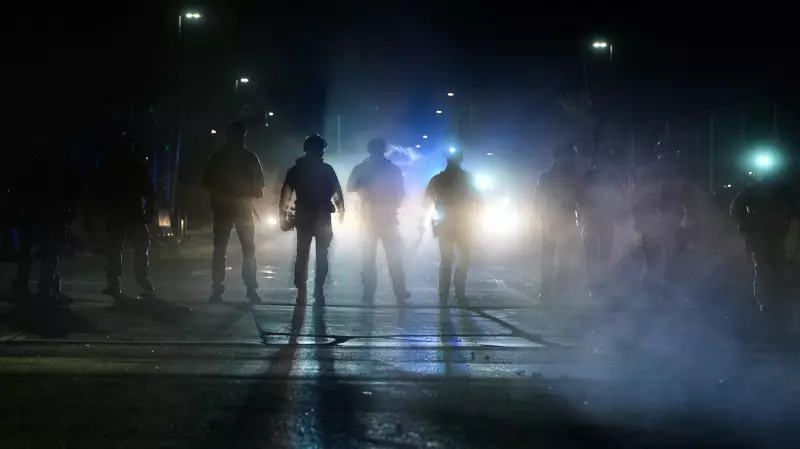
Protesters arrive early as well, gathering in the cold across from the fenced-in federal compound that houses immigration courts and government offices. Their chants of "Go home!" and "ICE out!" echo as the convoys roar past. The scene grows more volatile after dark, when officers return and clashes frequently erupt. Protesters shake fences and sometimes strike passing vehicles, while federal officers respond by firing tear gas and flash grenades before making arrests.
This is the stark reality of Operation Metro Surge, the Trump administration's largest immigration crackdown to date, involving more than 2,000 federal officers. The operation has created a deep rift between city and state officials and the federal government, sparked daily confrontations, and resulted in the death of a 37-year-old mother of three, Renee Good.

An Overwhelming Presence and a City on Edge
The impact of the surge is unevenly felt. In wealthier, predominantly white neighborhoods and suburbs, the convoys and tear gas are rare. Yet across broader swaths of the Twin Cities metro area, home to over 3 million people, anxiety is pervasive. Minneapolis Mayor Jacob Frey, a Democrat, has described the federal presence as an "invasion," starkly contrasting the city's police force of 600 officers with the thousands of federal agents now operating within its limits.
The psychological toll is significant. Children are skipping school or learning remotely, families are avoiding religious services, and many businesses—especially in immigrant neighborhoods—have shuttered temporarily. On Lake Street, a historic immigrant corridor, sidewalks are now lined with activists standing watch, ready to blow whistles at the first sign of a convoy. Restaurants like Taqueria Los Ocampo are closed due to "current conditions," while the Somali community's Karmel Mall displays signs warning, "No ICE enter without court order."
The Shadow of Past Trauma and Escalating Tensions
The crackdown unfolds under the long shadow of George Floyd's murder nearly six years ago, with scars from that tragedy still raw. The recent killing of American citizen Renee Good on January 7, 2026, has further inflamed tensions. Federal officials claim an Immigration and Customs Enforcement (ICE) officer fired in self-defense after Good "weaponized" her vehicle while helping neighbors during an enforcement action. City and state officials reject that explanation, citing bystander video evidence.
Since Good's death, confrontations have become a regular feature of life in the Twin Cities. While many involve only shouted insults and minor vandalism, the potential for escalation is constant. Protesters sometimes provoke officers by throwing snowballs or shouting through bullhorns. Federal agents have responded with significant force, breaking car windows, pepper-spraying crowds, and detaining individuals—both immigrants and citizens—sometimes for days. Most clashes conclude with the deployment of tear gas.
Community Resilience in the Face of Crisis
Amid the fear and anger, a characteristically Minnesotan response of community solidarity has emerged. Following Governor Tim Walz's plea for constructive action, residents have mobilized. They hand out bottled water to help flush tear gas from protesters' eyes, stand watch at schools to warn immigrant parents of approaching convoys, and deliver care packages to those too afraid to leave their homes.
Organizations like Open Market MN have seen a surge in requests for aid, assembling food packs for hundreds of families in church basements. This grassroots network arranges rides to work and doctor's appointments, demonstrating a community determined to support its most vulnerable members.

The human cost of the operation is often personal and confusing. Christian Molina of Coon Rapids was driving his car to a mechanic when unmarked vehicles began following him. After they activated a siren, he kept driving, unsure of their identity. The officers eventually rammed his bumper. When they demanded his papers and he refused, a crowd gathered, a clash broke out, and the officers departed—leaving Molina with a damaged car and a single, unanswered question: "Who's going to pay for my car?"
As Operation Metro Surge continues its daily rhythm, the Twin Cities remain a battleground where federal authority, local resistance, and community resilience collide, with no clear end in sight.