Minnesota Residents Express Skepticism Over ICE Drawdown Announcement
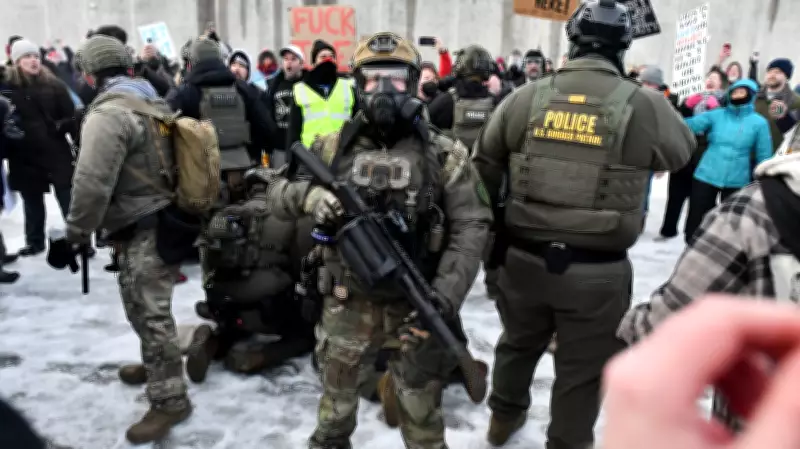
On Thursday, border czar Tom Homan delivered news that many Minnesotans under federal occupation had been anxiously awaiting: an end to the Trump administration's large-scale deployment of immigration officers in the state. Superficially, this appears to be a full-scale retreat by Washington, something Twin Cities residents might celebrate after months of demanding "ICE out." Since December, when President Donald Trump first sent thousands of federal agents to execute his mass deportation agenda, communities have endured a campaign of terror, with agents indiscriminately detaining Black and brown individuals on streets and surveilling elementary schools. Peaceful protesters have faced violence, and two Americans, Renee Good and Alex Pretti, were killed.
Homan's announcement could mark the conclusion of what one resident described as a "dystopian nightmare," leaving countless families separated and communities in disarray. However, frontline defenders of immigrant neighbors are hesitant to declare victory. They recall last week's pledge from top Trump officials to ease operations, which resulted in no tangible changes. Minnesotans show no signs of relenting, vowing to persist in their resistance efforts.
Community Distrust and Ongoing Intimidation
"We'll believe it when we see it," stated Nick Benson, who tracks Immigration and Customs Enforcement flights from Minneapolis, providing real-time data to the community. "None of us trust DHS/ICE, nor should anyone else." Benson emphasized that previous "drawdown" announcements failed to alter on-the-ground realities, suggesting this move might be a tactic to divert press attention from ongoing activities in Minnesota.

Like other federal agencies, ICE maintains a permanent presence in Minnesota through field offices. Nate, a Minneapolis real estate agent who requested anonymity due to fear of government retribution, expressed hope but noted Homan's dishonesty during the announcement regarding ICE targeting of churches, schools, and hospitals. "This is a good day for sure, but I don't trust the fuckers lol," he messaged. Just a day earlier, Nate reported ICE detentions near a grocery store and an incident where a legal observer was tased while driving away.
"They have still been targeting people based on appearing to be an immigrant," Nate added. "So we will know it's over when kids are back at school, families don't have to stay in hiding and people can work, and those unlawfully detained are home."
Political Coordination and Community Harassment
During his announcement, Homan thanked Governor Tim Walz and Mayor Jacob Frey for assisting ICE in coordinating with local law enforcement for detentions of undocumented criminals. This has raised concerns among residents about potential deals between state leaders and federal authorities to reduce the surge.
One heavily targeted area is Columbia Heights, a predominantly Latino suburb of Minneapolis. Here, 5-year-old Liam Conejo Ramos attends school, along with at least five other children detained and sent to a Texas ICE detention center. While Ramos was recently released, two other Minnesota children remain held with hundreds of others. Families and school officials allege intentional intimidation by federal agents, including driving onto school properties and parking near classroom windows.
Mary Granlund, a Columbia Heights school board member, shared that ICE officers frequently park outside her home. "I was like, joke's on them, fuckers, because I am not there," she laughed, noting this was not an isolated incident. Granlund remains doubtful about the crackdown's end, citing previous promises that led to increased agent presence and abductions. "Even if they somehow miraculously leave tomorrow, we will still be here—continuing to clean up the mess of broken doors, broken trust and broken hearts," she said.

Silver Linings and Community Solidarity
Despite the turmoil, the ICE occupation has fostered community unity, according to Peg Nelson, a teacher at Ramos' elementary school. She and other volunteers conduct grocery runs for immigrant families too fearful to leave their homes, leaving food on doorsteps. Nelson, who is white, was moved when immigrant parents expressed pride in her advocacy but also concern for her safety, noting "white people are getting shot in the face."
"I was like, are you kidding me?" Nelson recalled, emotional. "'You're worried about me?' I said, 'I'm going to be fine. It's OK. I need to keep talking about this because it needs to stop.'" This solidarity reinforces her commitment: "I'm not going to shut up now."
As Minnesota awaits concrete changes, the community's resilience and skepticism highlight the deep scars left by the federal occupation, with many prepared to continue fighting for justice and healing.